

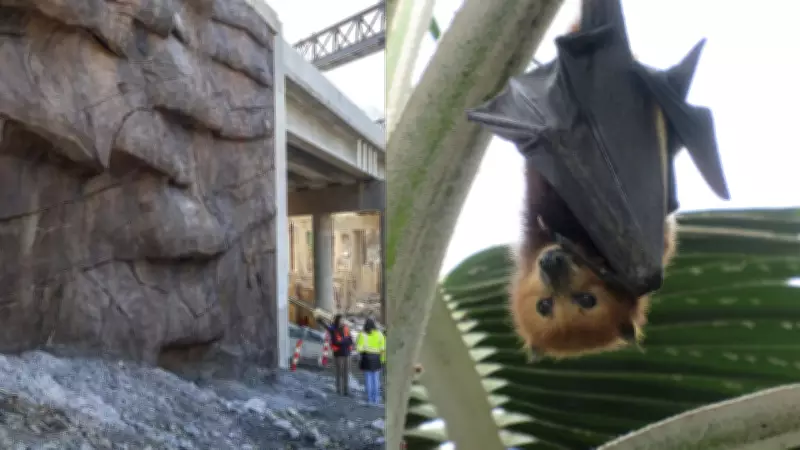
What appears as a standard concrete barrier wall alongside a busy American highway holds an extraordinary secret. This structure, situated on Interstate 40 in North Carolina, has captured global attention not for its traffic management role, but for its innovative purpose in wildlife conservation. Specifically designed to replace lost roosting sites, this wall represents a groundbreaking fusion of engineering and ecological stewardship.
The Purpose Behind North Carolina's Bat Wall
The North Carolina Department of Transportation (NCDOT) installed this unique bat wall as part of a bridge replacement project in the Pigeon River Gorge. The existing bridge had served as a critical roost for grey bats, a species facing habitat destruction due to infrastructural expansion. With the new bridge construction threatening to eliminate this vital space, engineers faced a conservation dilemma.
To address this challenge, they developed an innovative solution: a vertical concrete wall standing approximately 25 feet tall, meticulously crafted with crevices and cavities to mimic natural bat habitats. Wildlife biologist Katherine Etchison emphasized the collaborative approach, stating that the team worked to "really get together and think through what bats would use," brainstorming ideas to create varied roosting environments.

How Engineers Designed a Habitat for Bats
The design process extended beyond mere intuition, incorporating scientific research from studies like 'The Discovery of Gray Bats (Myotis grisescens) in Bridges in Western North Carolina.' Engineers learned that grey bats prefer roosts with vertical drops of 15 to 25 feet, making the wall an ideal choice.
Key design elements included narrow crevices, ventilation spaces, and diverse textures to replicate natural stone formations. Drainage-style openings were strategically placed to offer bats multiple microhabitat options. The inspiration for this project struck NCDOT engineer Kenny McCourt unexpectedly while watching television at home with his daughter, demonstrating how everyday moments can spark conservation breakthroughs.
Impact on Grey Bat Conservation and Future Projects
The bat wall's effectiveness became evident quickly, with grey bats observed around the construction site within weeks of completion. This success is particularly significant given the species' declining population in North Carolina, attributed to habitat loss, human disturbances, and White-nose Syndrome.
With at least 40 bat roosts documented on bridges across the state, such structures are crucial for species survival. NCDOT representatives have announced plans to implement similar designs on other bridges where bats are present, signaling a shift in infrastructure planning that prioritizes wildlife coexistence.
This project exemplifies how human development can harmonize with environmental needs, setting a precedent for future conservation efforts in transportation engineering.






