

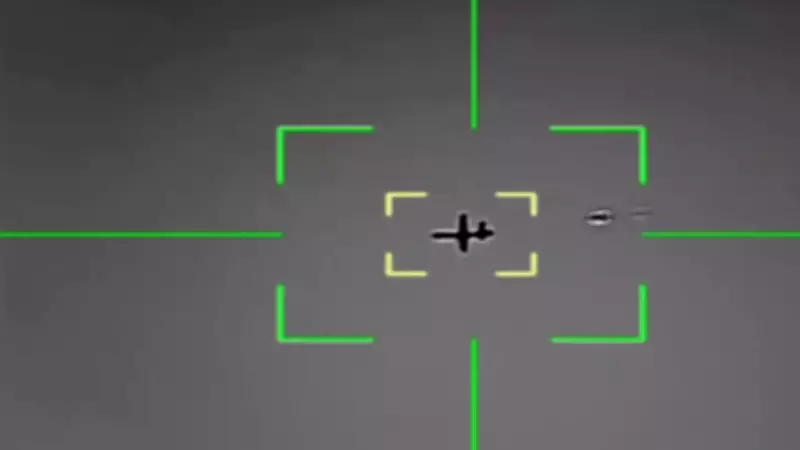
Iran's Revolutionary Guard Claims Downing of US MQ-9 Reaper Drone Over Isfahan
In a significant escalation of regional tensions, Iran's Islamic Revolutionary Guard Corps (IRGC) announced on Tuesday that its advanced air defense systems successfully shot down a US-made MQ-9 Reaper unmanned aerial vehicle over the central Iranian city of Isfahan. The IRGC stated in an official release that the long-range surveillance and attack drone was "intercepted and destroyed" by sophisticated systems integrated into Iran's comprehensive air defense network.
Video Evidence and Regional Context
Iranian state media circulated a video purportedly showing the moment of impact, with the caption claiming it depicted "the explosion of two MQ-9 drones in Isfahan's airspace last night." This incident occurs against a backdrop of heightened military confrontations in the Middle East. Earlier this week, Iranian authorities asserted they had destroyed a US E-3 Sentry surveillance aircraft during a coordinated missile and drone strike on March 27 targeting Prince Sultan Air Base near Riyadh, Saudi Arabia.
Details of the Saudi Arabia Attack Claim
The Prince Sultan Air Base, a critical operational hub for American forces in the region, reportedly sustained substantial damage from the assault, with at least 12 US service members injured according to initial reports. Social media platforms have been flooded with images showing what appears to be a severely burned-out aircraft, identified in defense circles as serial number 81-0005, which was parked on a taxiway during the attack.

While independent verification of the aircraft's destruction remains pending, military analysts from the War Zone website suggest that even a nearby explosion could have caused catastrophic damage. Shrapnel impact and the extreme flammability of aviation fuel make such aircraft vulnerable to indirect hits, potentially validating Iran's claims without a direct strike.
Broader Implications for US-Iran Relations
These consecutive incidents underscore the rapidly deteriorating security situation between Iran and the United States. The downing of the MQ-9 Reaper—a high-value asset used extensively for intelligence, surveillance, and reconnaissance missions—represents a direct challenge to US military capabilities in the area. Similarly, the alleged destruction of the E-3 Sentry, a key airborne early warning and control platform, would signify a major blow to US operational awareness if confirmed.
Experts warn that such exchanges could precipitate a dangerous cycle of retaliation, further destabilizing an already volatile region. The Iranian statements, combined with visual evidence from local media, indicate a calculated display of defensive prowess aimed at deterring future incursions while projecting strength domestically and to regional adversaries.
As both nations navigate this precarious phase, the international community watches closely, concerned that any miscalculation might spark broader conflict. The verification of these claims and the subsequent diplomatic or military responses will be crucial in determining the trajectory of Middle East tensions in the coming weeks.






