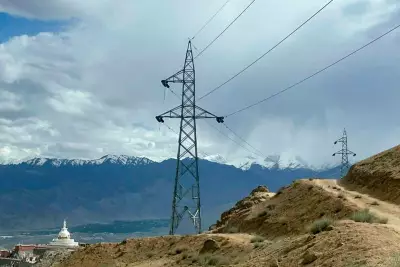
Himachal Pradesh Report Sounds Alarm on Super Pollutants Threatening Himalayan Ecosystem
A comprehensive report released by Himachal Pradesh Chief Minister Sukhvinder Singh Sukhu on Tuesday has called for immediate and decisive action against short-lived climate pollutants (SLCPs), specifically methane and black carbon. The document, titled 'Scientific Assessment of Tackling Non-CO2 Emissions: Pathways for Himachal Pradesh', identifies these substances as "super pollutants" that present critical environmental and socio-economic dangers to the fragile Himalayan state.
Severe Environmental Impacts of Short-Lived Climate Pollutants
The report details how black carbon deposits on snow significantly reduce surface reflectivity, leading to accelerated glacier melting across the region. Simultaneously, methane emissions are driving near-term temperature increases, which in turn heighten the probability of extreme rainfall events, devastating floods, and dangerous landslides. These combined effects threaten both the natural landscape and human settlements throughout Himachal Pradesh.
Primary Sources and Growing Emission Projections
Transportation systems, livestock operations, and residential solid biomass use have been pinpointed as the dominant sources of SLCPs within the state. These activities directly compromise air quality and undermine climate stability. Key findings from the assessment indicate that under a business-as-usual scenario, non-carbon dioxide emissions could experience substantial growth through 2047.

This projected increase is attributed to multiple factors:
- Rising numbers of vehicles on state roads
- Continued industrial expansion
- Growing demand for diesel backup power systems
- Persistent emissions from livestock populations
While household particulate pollution is expected to decline with broader adoption of liquefied petroleum gas (LPG), the report warns that pollution from transportation, industrial activities, and urban dust will likely become increasingly dominant sources of contamination.
Practical Mitigation Pathways and Potential Benefits
The report outlines concrete mitigation strategies that align with existing state programs. Implementing vehicle scrappage policies and accelerating electric vehicle adoption could yield substantial reductions compared to business-as-usual projections:
- Particulate matter (PM2.5) reduction of 29%
- Nitrogen oxide (NOx) reduction of 24%
- Black carbon reduction of 20%
- Methane reduction of 60%
For the agricultural sector, adopting balanced feeding practices, promoting indigenous livestock breeds, improving silage methods, and expanding biogas infrastructure could reduce methane emissions by 12–27% while simultaneously increasing farmer incomes.
Industrial and energy sectors could achieve emissions reductions of up to 80% for sulphur dioxide (SO2), NOx, PM2.5, and black carbon through pollution control devices and solar-plus-storage systems, with diesel backup emissions potentially decreasing by 63%. Enhanced recycling and composting initiatives could reduce methane and particulate matter emissions by approximately 50%.
Achievable Reductions Within This Decade
The report concludes that Himachal Pradesh has the capacity to achieve significant non-CO2 emission reductions within the current decade through a coordinated approach combining multiple initiatives:
- Expanding electric vehicle infrastructure and adoption
- Implementing sustainable livestock management practices
- Ensuring universal access to clean cooking fuels like LPG
- Installing industrial scrubbers and pollution control systems
- Reducing dependence on diesel backup power
- Strengthening waste management and recycling programs
By pursuing these integrated strategies, the state can protect its vulnerable Himalayan ecosystem while addressing the urgent threat posed by short-lived climate pollutants. The report emphasizes that timely action is essential to mitigate the severe environmental and socio-economic risks facing Himachal Pradesh.