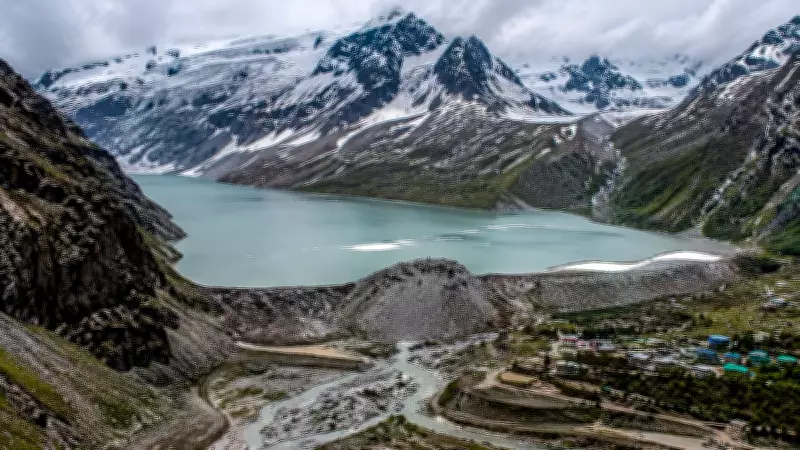
Experts have raised alarms that the expanding glacial lake near Sissu in Himachal Pradesh poses a severe threat to 34 downstream settlements. The lake, which has grown significantly due to rising temperatures, is being described as a 'time bomb' that could trigger a catastrophic flood if triggered by heavy rainfall, avalanches, landslides, or the collapse of glacier masses.
Glacial Lake Expansion Raises Alarm
According to recent studies, the glacial lake has expanded by nearly 40% over the past decade, increasing the volume of water stored behind its unstable moraine dam. Scientists warn that the dam is fragile and could breach at any time, releasing a torrent of water and debris downstream.
Potential Triggers and Impact
Experts have identified several potential triggers for a glacial lake outburst flood (GLOF):

- Heavy rainfall events, which are becoming more frequent due to climate change.
- Avalanches or landslides that could displace water or damage the moraine.
- Collapse of glacier masses into the lake, causing a displacement wave.
If the lake bursts, the flood could devastate 34 settlements in the Lahaul and Spiti region, including Sissu. The floodwaters could destroy homes, infrastructure, and farmland, and potentially cause loss of life.
Government and Community Response
The Himachal Pradesh government has been urged to take immediate action, including installing early warning systems, reinforcing the moraine dam, and preparing evacuation plans for vulnerable communities. Local residents have expressed concern over the lack of preparedness and are calling for more proactive measures.
Climate scientists emphasize that this is not an isolated case: glacial lakes across the Himalayas are expanding rapidly due to global warming, increasing the risk of GLOFs in multiple regions. They stress the need for a comprehensive monitoring and mitigation strategy to protect mountain communities.
The situation in Sissu serves as a stark reminder of the cascading impacts of climate change on fragile mountain ecosystems and the urgent need for adaptation measures.