

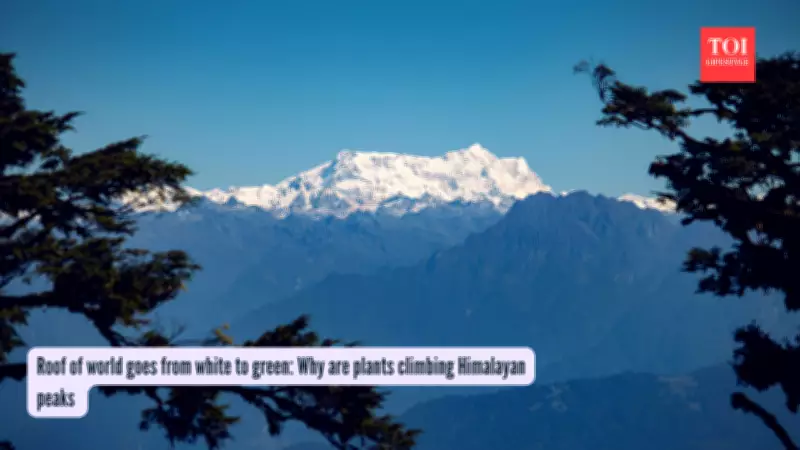
Mountains have always stood as timeless giants, their peaks piercing the clouds and cradling secrets of ice ages. Yet beneath their serene exterior, geological signals hint at profound changes. A new study highlights that plants are now gaining ground at higher elevations in the Himalayas due to rapid warming.
Alpine Vegetation on the Rise
Satellite data from 1999 to 2022 reveals that the upper boundary of continuous plant growth, known as the alpine vegetation line, is gradually rising across six regions of the Himalayas, from Ladakh in India to Bhutan. Near Mount Everest in the Khumbu region, this boundary has advanced by about 1.42 meters each year, while in Nepal's Manthang area, it climbs nearly 7 meters annually. The study, published in Ecography by the University of Exeter, combined satellite images with climate data to confirm increasing greening, though some eastern areas like Khumbu and Bhutan show patches of browning.
Lead author Ruolin Leng from Exeter's Department of Earth and Environmental Sciences explained, “The alpine zone is a harsh environment dominated by smaller plants and woody shrubs. But as the climate changes, conditions in the Himalaya are changing in various ways, from temperature shifts and changes in snow cover to the availability of water and nutrients.”

Why Is the Icy Region Turning Green?
The Himalayas are warming faster than the global average. Increased heating melts snow cover, exposes nutrient-rich soil, and lengthens the growing season. With less ice blocking sunlight and milder conditions, hardy shrubs and small plants find suitable conditions to take root and survive in areas once too harsh and frozen for life.
Impact on Asia's Water Resources
These peaks feed rivers vital to millions across Asia. Professor Karen Anderson from Exeter's Environment and Sustainability Institute noted in a university release, “We tend to overlook these little plants but this is a perfect example of how small-scale processes might have impacts on important catchments, feeding rivers that supply millions of people with drinking water.”
Alpine plants help shade the soil, hold falling snow, and adjust how water moves through the area. Professor Anderson emphasized that these small changes grow much larger when spread across the Himalayas' vast highland areas: “When you consider that we’re talking about a very extensive alpine ecosystem covering a massive area, it has the potential to generate profound effects on the water cycle.”
The findings underscore the delicate balance of mountain ecosystems and the far-reaching consequences of climate change on water supplies for billions of people in Asia.






