

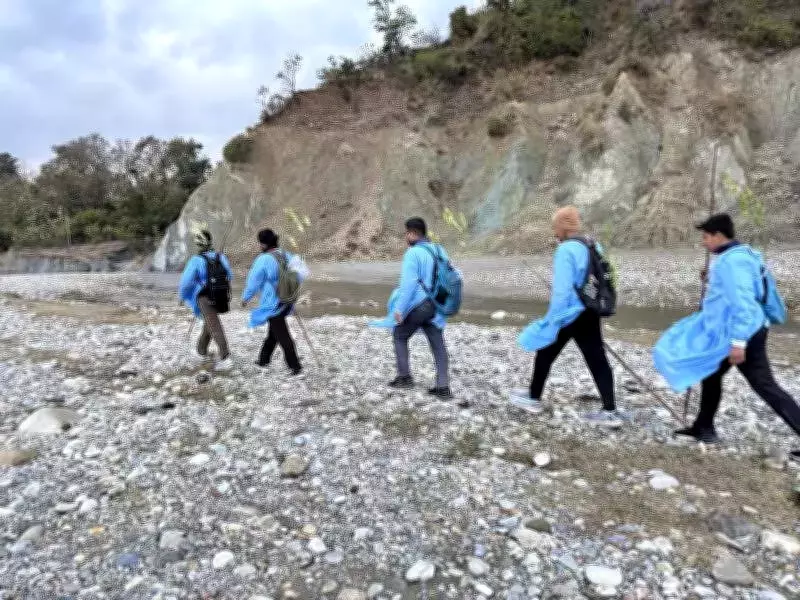
Hindon River Revival: Activists March 225 km to Protest Decade-Long Pollution Crisis
In a powerful display of environmental activism, four dedicated environmentalists from western Uttar Pradesh have embarked on a week-long protest march to draw urgent attention to the plight of the Hindon river. Declared 'dead' nearly a decade ago by the Central Pollution Control Board due to relentless toxic discharge from pulp, tannery, and dyeing units, the river is now at the heart of a critical movement for ecological restoration.
The 'Hindon Bachao, Paschimanchal Bachao' March
Members of the NGO Paschimanchal Vikas Parishad, founded just last year, initiated this significant 225-kilometre walk on January 23. Starting from the river's source in Saharanpur, the march is set to conclude in Delhi by January 30. Leading the charge are the group's founding president, Nitin Swami, along with fellow activists Shekhar Dangi, Gaurav Panchal, and Aryan Shoran.
The primary objective of this march is to spotlight the ecological collapse of the Hindon river and the severe health risks confronting communities residing along its banks. By mobilising public pressure, the organisers aim to advocate for cleaner water, stricter regulations on polluting industries, and a renewed acknowledgment of rivers as vital components of ecological balance.

Severe Pollution Threats and Health Implications
The Hindon river faces an alarming level of pollution, primarily stemming from industrial effluents and untreated sewage discharged through multiple drains across districts such as Ghaziabad and Greater Noida. A recent TOI report revealed that out of 391 industries in the Hindon basin, 13 were found non-compliant, directly pumping effluents into the river via drains like Karedha, Kaila Bhatta, and Hawaliya. This has led to show-cause notices and environmental compensation from 53 defaulters.
Despite the operation of 20 sewage treatment plants (STPs) with a combined capacity of 953.5 MLD along the river's course, significant challenges persist. Huge quantities of untreated sewage, missing sewer links, and untapped drains continue to allow large untreated flows to choke the river. The biological oxygen demand (BOD) in the Hindon far exceeds safe limits, with 2023 averages at Chijarsi bridge reaching 14.40 mg/L, starkly above the WHO's recommended less than 5 mg/L bathing standard.
This high BOD depletes oxygen essential for aquatic life, while total fecal coliform levels, which indicate bacterial contamination from human and animal waste, surpass safe limits by over 30 times. TOI earlier reported that partially treated sewage from 55 drains discharging 944 MLD contributes to these dangerously high levels of fecal coliform in the river water.
Expressing deep concern, Nitin Swami highlighted the increasing cases of cancer, hepatitis, and skin infections among people living around the Hindon. Due to the overwhelming pollution burden in the Hindon and its tributaries like Kali and Krishna, even groundwater sources are becoming contaminated, exacerbating public health risks.
Community Support and Broader Environmental Initiatives
The yatra has garnered widespread support, with students, activists, and volunteers joining at various points along the route to pledge their commitment to environmental protection. The team has already traversed through Saharanpur, Samli, and Baghpat, with Ghaziabad as the next stop before their final destination in Delhi.
Upon reaching Delhi, the activists plan to meet officials from the ministries of health, environment, and water resources to present their concerns and advocate for actionable solutions. In a parallel effort, another environmental initiative titled Paryavaran Sankalp Yatra kicked off in Noida on Wednesday. Organised by the Sahastradhara Gyan Foundation in collaboration with IMS–Design and Innovation Academy, this journey will commence from Noida and pass through Ghaziabad, Meerut, Saharanpur, Roorkee, and Haridwar before culminating in Dehradun.

During the launch, Deepak Ramesh Gaur, chairperson of Gift a Tree Network, symbolically handed over the baton to Deepak Verma of the foundation, entrusting him with the responsibility to advance the yatra. Chirag Gupta, vice president of IMS-DIA, participated in a plantation drive and pledged active student involvement in all future endeavours aimed at protecting the environment.
These concerted efforts underscore a growing public demand for immediate and effective measures to revive the Hindon river and safeguard the health and well-being of communities dependent on it.





