NGT Identifies Horse Droppings as Primary Polluter in Vehicle-Free Matheran
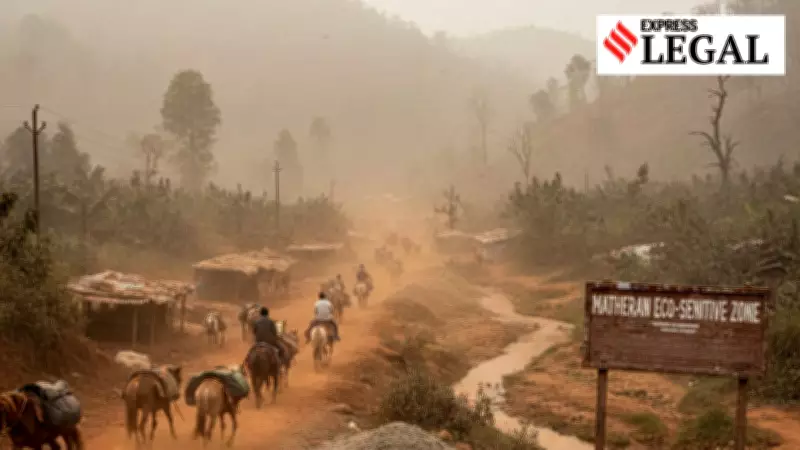
The National Green Tribunal has raised serious concerns about environmental degradation in Matheran, highlighting an unexpected source of pollution in India's only motor vehicle-free hill station. Contrary to industrial pollution concerns, the tribunal's examination reveals that horse droppings have emerged as the main contributor to air, water, and soil contamination in this notified eco-sensitive zone in Maharashtra.
Air Quality Findings: Beyond Industrial Pollution
A comprehensive joint committee report led by the Maharashtra Pollution Control Board presented alarming data to the NGT bench comprising Justice Dinesh Kumar Singh and Expert Member Dr Sujit Kumar Bajpayee. The air quality assessment conducted across pre-monsoon, monsoon, and post-monsoon phases revealed that PM₁₀ and PM₂.₅ levels consistently breached Central Pollution Control Board standards.
The root cause was identified as equine dung emissions and dust from unpaved roads, rather than industrial sources. Interestingly, SO₂ and NO₂ pollutants remained under control, emphasizing Matheran's unique environmental challenge as a vehicle-free ecosystem heavily dependent on horse transportation.

Water Contamination Crisis
The environmental assessment extended to water quality, with samples collected from five sites including lakes, streams, and storage tanks. The results showed Escherichia coli counts ranging from 5 to 100 CFU per 100 ml, violating both Bureau of Indian Standards and World Health Organization norms that mandate zero E coli in 100 ml of drinking water.
This microbial contamination confirms fecal pollution from horse dung entering water sources. Additionally, all five water samples contained heavy metals, raising concerns about cumulative ecological damage and potential public health risks if left unaddressed.
Soil Degradation During Monsoon
The tribunal placed particular emphasis on phase-II monsoon soil quality assessment, which revealed widespread contamination. Fecal indicator bacteria and Salmonella were detected across multiple soil samples, with equine activity posing the highest environmental and public health risk during rainy seasons.
Monsoon runoff significantly amplifies contamination by facilitating the movement of dung and pathogens into soil layers and nearby water bodies, creating a cycle of environmental degradation that threatens Matheran's fragile ecosystem.
Expert Recommendations for Sustainable Management
The joint committee concluded that equine activity at its present scale is environmentally unsustainable in the Matheran eco-sensitive zone. They emphasized that downstream cleaning or short-term remedial measures would be ineffective, requiring instead long-term, source-level regulatory intervention.
Key recommendations include:
- Strict regulation and phased reduction of horse populations
- Relocation of stables outside ESZ limits
- Zoning of equine routes and protection of water catchment areas
- Continuous environmental monitoring over a 3–5 year period to validate outcomes
Effective implementation of these measures could allow Matheran to emerge as a national model for scientifically managed, pedestrian-only eco-tourism, aligned with the precautionary principle and carrying capacity doctrine.
Background and Legal Proceedings
The case originated from applicants contending that unregulated tourism-linked activities, particularly horse-based transport, were undermining Matheran's environmental health. Pursuant to earlier tribunal directions, the joint committee conducted multi-seasonal environmental monitoring involving on-site sampling and laboratory analysis.
The findings attribute environmental stress primarily to equine activity, dung emissions, and dust from unpaved routes, while clearly ruling out industrial pollution sources. Advocate Tushar Kumar represented the applicants, with the state of Maharashtra, the union environment ministry, local bodies, and equine associations as respondents.

The tribunal has granted two weeks for equine associations to file objections and expressed concern over the absence of representation from the Matheran Hill Station Municipal Council. The matter has been listed for further consideration on March 24, 2026, when the tribunal will examine the joint committee report along with objections and submissions from all parties.