

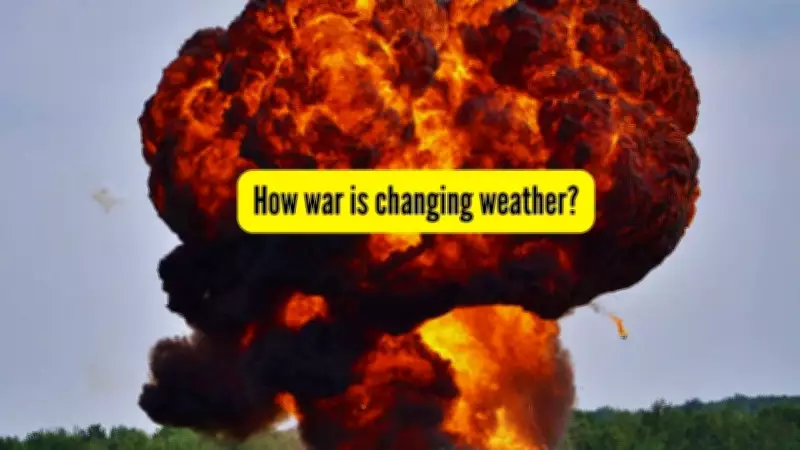
The Silent Environmental Casualty of Modern Warfare
Former United Nations Secretary-General Ban Ki-moon once described the environment as a "silent casualty of war." While conflicts immediately bring to mind human suffering and physical destruction, their profound impact on natural systems represents an equally critical dimension. Scientific discussions and comprehensive studies increasingly highlight how modern warfare not only devastates cities and nations but fundamentally alters atmospheric conditions, pollutes ecosystems, and disrupts climate systems.
The Scientific Basis of Weather Modification During Conflict
From a meteorological perspective, weather patterns are determined by atmospheric composition including moisture levels, temperature gradients, and airborne particulate matter. Military engagements systematically disrupt all three components through multiple mechanisms:
- Large-scale bombing campaigns and explosive detonations
- Massive fuel combustion from military vehicles and infrastructure
- Chemical releases from industrial facilities and weapons systems
- Deliberate or accidental fires at oil wells and energy installations
Environmental research documents how these activities release hazardous pollutants including carbon monoxide, nitrogen oxides (NOx), and sulfur dioxide (SO₂) into the atmosphere. Military operations significantly increase greenhouse gas emissions and airborne toxins, contributing to both immediate weather alterations and long-term climate change patterns.

Toxic Fog and Atmospheric Transformation
One of the most dramatic meteorological effects of warfare is the formation of persistent toxic fog. Created through bombing campaigns and industrial explosions that saturate the air with particulate matter, these atmospheric phenomena can linger for days or even weeks. Large-scale conflagrations at oil wells, liquefied petroleum gas facilities, and industrial complexes generate thick, suffocating smog that transforms local weather conditions.
The 1991 Gulf War provides a particularly stark example, where bombed oil facilities created massive fumes that turned morning skies into near-total darkness. Similar patterns have emerged in more recent conflicts, with international experts describing these events as "black skies" phenomena where pollution becomes so dense it fundamentally alters local meteorological conditions.
Acid Rain and Black Rain Events
Environmental journalists and scientific experts have documented alarming instances of "black rain" following intense military engagements. A recent report in The Guardian detailed such phenomena in Tehran following airstrikes on oil infrastructure, describing the unusual precipitation as a significant symbol of environmental destruction unfolding during conflict.
Acid rain represents another major weather-related consequence of warfare. This occurs when sulfur dioxide (SO₂) and nitrogen oxides (NOx) released from continuous explosions react with atmospheric water particles, creating sulfuric and nitric acids that then precipitate. The resulting acidic rainfall produces multiple damaging effects:
- Severe damage to agricultural crops and food systems
- Pollution of lakes, rivers, and drinking water sources
- Harm to human respiratory health and animal welfare
- Degradation of soil quality and ecosystem balance
Beyond immediate destruction, warfare fundamentally reshapes local weather patterns with potentially lasting consequences. Scientists warn that without stabilization, these atmospheric disruptions could generate broader impacts on regional weather systems and contribute to long-term climate consequences that extend far beyond conflict zones.






