The Hyatt Skywalk Collapse: America's Deadliest Structural Failure
Imagine dancing with full energy and excitement on a crowded floor, completely carefree, when suddenly the structure beneath you gives way. This unimaginable tragedy became a horrifying reality on the evening of July 17, 1981, at the Hyatt Regency Hotel in Kansas City, Missouri. What began as a popular tea dance party on the first floor turned into a scene of devastation that claimed 114 lives and left more than 200 people injured, marking the deadliest structural failure in United States history.
The Night the Floor Disappeared
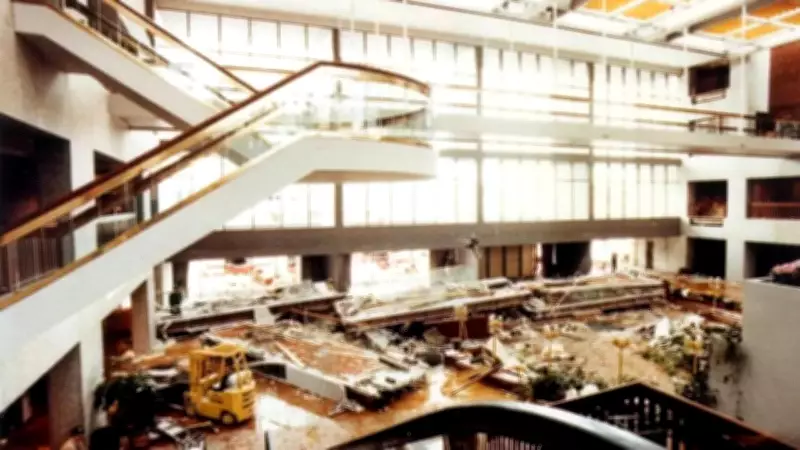
The Hyatt Skywalk tragedy remains a haunting memory that persists to this day. Just one year after the hotel's grand opening, during a crowded Friday evening event, the fourth-floor skywalk collapsed onto the second-floor skywalk. Both structures then crashed down onto the ground floor where approximately 1,500 people were gathered for the dance competition. The American Society of Civil Engineers later described this event as "one of the most devastating structural failures in US history in terms of lives lost."
According to ASCE investigations, when the fourth-floor skywalk fell, it brought down approximately 64 tonnes of concrete, steel, and glass onto the crowded lobby below. The skywalks themselves were packed with spectators who had gathered to watch the dancers from above, completely unaware that the structure supporting them was already compromised by fatal engineering flaws.

The Fatal Communication Gap
The Hyatt skywalk collapse wasn't merely an engineering failure—it was a catastrophic breakdown in communication between design and construction teams. The original design by Jack D. Gillum and Associates called for a single 46-foot hanger rod to support both the fourth and second-floor skywalks. However, the steel fabricator, Havens Steel Company, believed this design would be practically impossible to install without damage.
Instead of using the specified single rod, the fabricator implemented two shorter, offset rods. While this change seemed logical from a construction perspective, it created a fundamental physics problem. With the original continuous rod design, the weight of each walkway would have been distributed independently. But with the revised two-rod system, the fourth-floor walkway was forced to carry not only its own weight but also the entire weight of the second-floor walkway.
This modification effectively doubled the load on the fourth-floor beams. According to ASCE investigations, the revised connection was so fundamentally flawed that it could barely satisfy one-third of the building code requirements.
Accountability and Consequences
The Missouri Board for Architects, Professional Engineers and Land Surveyors conducted a thorough investigation and found the structural engineers at Jack D. Gillum and Associates guilty of professional misconduct. While no individuals served jail time, the firm lost its engineering licenses in multiple states. This accountability marked a significant moment in professional engineering responsibility.
How the Disaster Transformed Modern Engineering
The ASCE used this tragedy to establish strict new precedents in structural engineering practice. The organization clarified that the Engineer of Record bears ultimate responsibility for every structural member and connection, regardless of who suggests modifications.
The ASCE established a crucial rule: Even when contractors or fabricators propose changes (like the double-rod modification in the Hyatt case), the Engineer of Record must personally review and verify all calculations before approval. Engineers can no longer assume that shop drawings are safe simply because they were created by professional fabricators.
This disaster essentially ended the era of 'conceptual' drawings in structural engineering. Today, engineers must provide mathematical proof for every component—from nuts and bolts to major beams—before construction can proceed. The tragedy also led to several critical industry changes:

- Mandatory Independent Peer Reviews: Major structural projects now require review by independent engineering teams
- Revised ASCE Code of Ethics: The professional code was rewritten to emphasize public safety as the primary engineering responsibility
- Enhanced Communication Protocols: Clear documentation and approval processes for any design modifications
The Hyatt Skywalk collapse taught the engineering industry that a signature on a drawing is not merely a formality—it represents a life-safety guarantee. Engineers now recognize that their foremost duty is protecting public safety, ensuring that ease of construction never again comes at the cost of human lives. This tragic event continues to influence building codes, engineering education, and professional standards more than four decades later, serving as a sobering reminder of the profound responsibility borne by those who design our built environment.