Iceberg A-23A's Remarkable 40-Year Odyssey from Antarctica Nears Its End
In 1986, a colossal iceberg known as A-23A first broke away from the Filchner Ice Shelf in Antarctica. Nearly four decades later, this ancient giant is now far from its origins, floating in the South Atlantic Ocean. The iceberg appears darker in certain areas, soaked through with blue meltwater, and is visibly coming apart as it enters warmer seasonal conditions.
From Immense Size to Gradual Disintegration
When it initially calved from Antarctica, A-23A was an immense structure, stretching across approximately 4,000 square kilometres – almost twice the size of Rhode Island. Today, however, the iceberg has significantly diminished. Estimates from early January 2026 suggest its area has reduced to about 1,182 square kilometres after several large fragments broke away during the latter half of 2025.
Despite decades of thinning and breakage, the berg remains larger than New York City, a testament to its original massive scale.

Satellite Images Reveal Dramatic Surface Changes
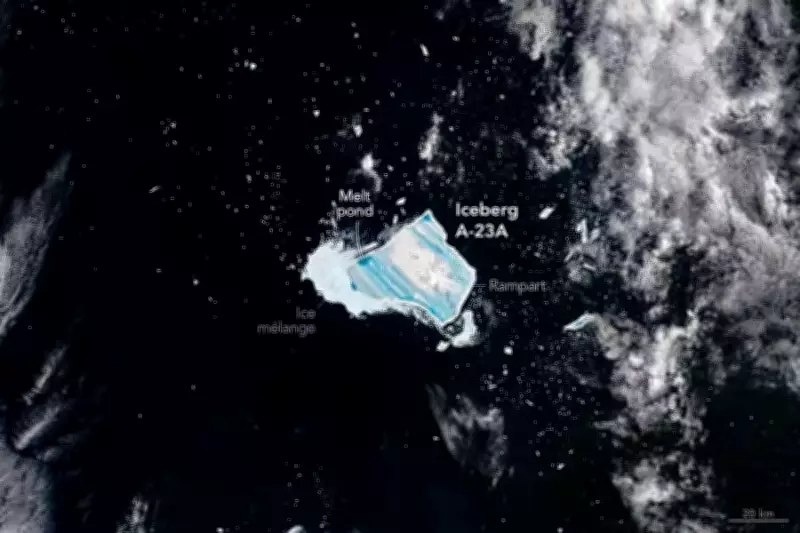
Satellite images captured in late December show the iceberg's current state with striking clarity. Pools of blue water sit across its surface, collected in shallow depressions and long grooves. A photograph taken a day later from the International Space Station reveals the water spread even more widely, creating a surface that looks soft, uneven, and heavy.
Some of the blue areas appear almost mushy, a phenomenon scientists attribute to meltwater gathering inside cracks and slowly forcing them wider. This water isn't merely sitting on the ice but pressing into it with significant force.
Ancient Markings and Modern Melt Patterns
Along the outer edge, a thin white rim circles parts of the berg, holding water back in what scientists sometimes call a rampart moat – formed as the iceberg's edges melt and flex upward at the waterline.
The long straight streaks cutting across the surface represent even older history, likely dating back hundreds of years to when the ice was still part of a glacier scraping across Antarctic rock. That ancient movement carved shallow ridges and channels into the ice that still shape how water flows across the surface today.
Researchers find it surprising these patterns remain visible after all the iceberg has endured – grounding, fracturing, refreezing, drifting, and thinning over decades.
Signs of Impending Disintegration
One area near the edge appears brighter and rougher than surrounding sections, possibly indicating what scientists describe as a blowout. This occurs when the weight of pooled water becomes excessive, forcing a sudden path downward. In such cases, meltwater can drain tens of metres to the ocean surface, spilling out alongside loose ice and creating freshwater plumes.
Collectively, these features suggest an iceberg in its final stages. A-23A is now floating in water close to 3 degrees Celsius and moving toward even warmer currents. This particular region of the ocean has earned a reputation among ice scientists – few large bergs survive long once they arrive here.
An Unusual Journey Across Decades
The iceberg's journey has been anything but ordinary. After breaking free from Antarctica, A-23A remained grounded in the Weddell Sea for more than thirty years. When it finally moved again in 2020, it spent months spinning slowly in place, caught in an ocean vortex known as a Taylor column.
Later, it drifted north, came close to South Georgia island, grounded again, then slipped back into open water where it has been steadily breaking apart ever since. Some scientists have followed A-23A for most of their careers, with satellite records enabling detailed observation of its changes year after year.
Broader Implications for Antarctic Ice
As this particular iceberg fades into history, other massive bergs remain parked along the Antarctic coastline. Several large ones continue to wait near the continent, quiet for now but destined to eventually move northward, change shape, and leave brief marks on the ocean before disappearing.
The story of A-23A serves as a powerful reminder of how climate patterns and ocean currents interact with ancient ice formations, creating narratives that unfold over decades rather than days or weeks.