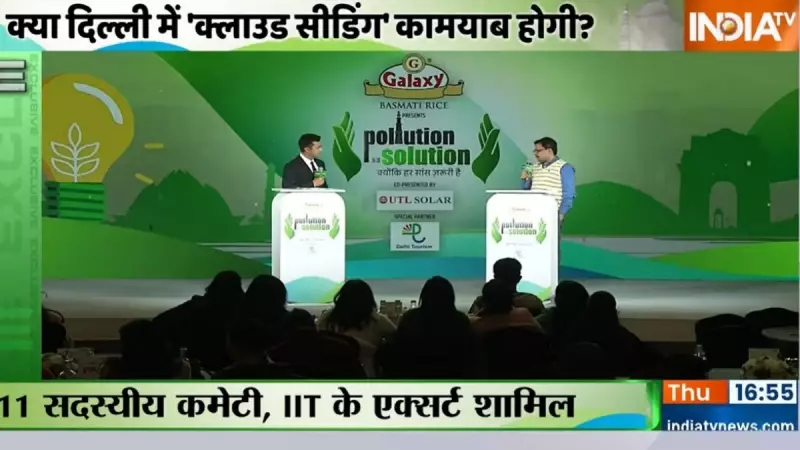
An IIT professor has made a clear statement about cloud seeding and its role in tackling Delhi's notorious air pollution. He says this technological method is not a practical solution for the city's persistent smog problems.
Cloud Seeding Fails to Address Root Causes
The professor explains that cloud seeding involves dispersing substances into clouds to induce rainfall. While this might temporarily wash away some pollutants, it does not tackle the core sources of Delhi's pollution.
Why It Doesn't Work for Delhi
Delhi's air quality issues stem from multiple factors. These include vehicle emissions, industrial discharges, construction dust, and crop residue burning in neighboring states. Cloud seeding offers only a superficial fix without reducing these emissions at their origin.

The professor emphasizes that such methods are costly and unreliable. They require specific weather conditions to be effective, which are not always present in Delhi. Moreover, the environmental impact of the chemicals used in cloud seeding remains a concern.
Proven Solutions Take Priority
Instead of relying on unproven technologies, the professor advocates for implementing established measures. He points to the need for stricter enforcement of emission norms for vehicles and industries.
Expanding public transportation and promoting electric vehicles are crucial steps. Reducing dependency on private cars can significantly cut down on pollution levels.
Long-Term Strategies for Clean Air
The professor outlines several effective strategies for improving Delhi's air quality:
- Enhancing green cover through extensive tree plantation drives.
- Promoting the use of clean energy sources in households and industries.
- Implementing better waste management to prevent open burning.
- Encouraging public awareness and community participation in anti-pollution efforts.
He stresses that a multi-pronged approach is essential. Quick fixes like cloud seeding divert attention and resources from sustainable solutions that address the root causes of pollution.
Public and Policy Implications
This clarification comes at a time when Delhi often grapples with hazardous air quality levels. The professor's remarks aim to guide policymakers and the public towards more reliable and effective anti-pollution measures.
By focusing on emission reduction and environmental conservation, Delhi can achieve lasting improvements in air quality. The professor's insights underscore the importance of science-based decisions in the fight against pollution.