India Expands Ramsar Network with Two New Wetland Designations
In a significant boost to environmental conservation efforts, India has officially added two more wetlands to its prestigious list of Ramsar sites. The Patna Bird Sanctuary located in Etah, Uttar Pradesh, and Chhari-Dhand in Kutch, Gujarat, have been designated as Wetlands of International Importance under the Ramsar Convention. This development elevates India's total count of Ramsar sites to an impressive 98, marking a substantial expansion of the country's protected wetland network.
Official Announcements and Government Reactions
The Ministry of Environment, Forest and Climate Change confirmed this milestone through an official post on social media platform X. The ministry highlighted that India's Ramsar network has experienced remarkable growth of over 276% since 2014, when the country had only 26 designated sites. This exponential increase reflects the nation's intensified focus on wetland preservation and ecological conservation.
Prime Minister Narendra Modi expressed his delight at the new designations, extending congratulations to local communities and conservationists. In his social media statement, the Prime Minister emphasized that these recognitions reaffirm the government's commitment to preserving biodiversity and protecting vital ecosystems. He expressed hope that these wetlands would continue to thrive as safe habitats for countless migratory and native species.

Environment Minister Bhupendra Yadav also welcomed the additions, congratulating both Uttar Pradesh and Gujarat states along with the broader wetland conservation community. He noted the timing of this announcement is particularly significant as World Wetlands Day approaches. Minister Yadav highlighted that both sites host hundreds of migratory and resident avian species, along with important mammals including chinkara, wolves, caracal, desert cats, and desert foxes.
Exploring the New Ramsar Sites
Patna Bird Sanctuary, Etah (Uttar Pradesh)
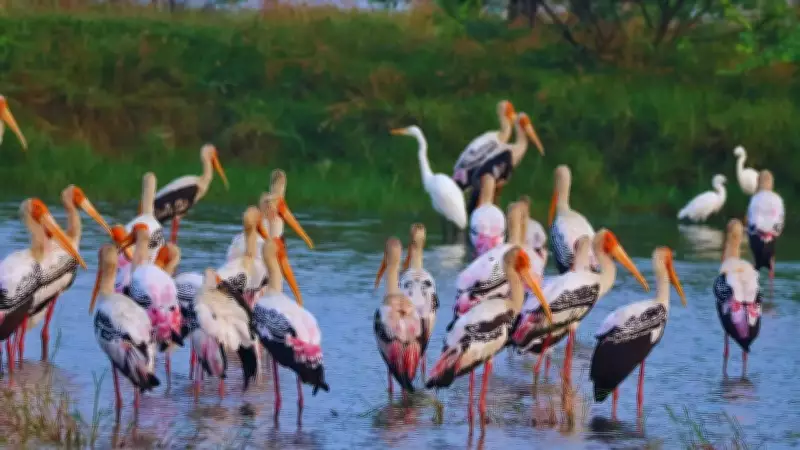
Located in the Jalesar subdivision of Etah district, the Patna Bird Sanctuary represents one of Uttar Pradesh's smallest bird sanctuaries, covering just over one square kilometer. Despite its modest dimensions, this sanctuary serves as a remarkable biodiversity hotspot. During peak winter months, it hosts tens of thousands of migratory birds, including notable species such as the Rosy Pelican, Eurasian Spoonbill, and Northern Pintail.
The sanctuary's freshwater marshes, woodlands, and grasslands support a diverse range of resident birds and plants. With over 178 documented bird species and 252 plant species recorded, the site functions as a critical refuge along the Central Asian Flyway. This ecological significance has earned it designation as an Important Bird and Biodiversity Area (IBA) by BirdLife International.
Chhari-Dhand, Kutch (Gujarat)
Chhari-Dhand presents a striking contrast to the typically arid landscape of Kutch. This seasonal saltwater wetland expands significantly during monsoon season, covering approximately 80 square kilometers. As Gujarat's only Conservation Reserve, it serves as a vital stopover for birds migrating via the western flyway.
The wetland supports substantial populations of Common Cranes, Greater and Lesser Flamingos, and various dryland species adapted to these unique conditions. Mammals including chinkara, caracal, desert foxes, and other species depend on this fragile habitat. These seasonal water bodies provide crucial feeding and roosting sites for migratory birds.
Interestingly, the region is also known for the mysterious "Chir Batti" phenomenon, where unexplained lights appear on the flats after sunset, adding to the area's unique character.
India's Growing Ramsar Network
With the inclusion of these two new sites, India's Ramsar network now encompasses 98 designated wetlands covering over 13.6 lakh hectares of vital habitat. Tamil Nadu currently leads among Indian states with the highest number of Ramsar sites, followed by other states with multiple designated wetlands. The growth from 26 sites in 2014 to 98 today represents one of the most significant expansions of protected wetland areas globally.

Understanding Ramsar Sites
The Ramsar Convention, formally known as the Convention on Wetlands of International Importance Especially as Waterfowl Habitat, represents an international treaty focused on wetland conservation and sustainable use. Originally adopted in 1971 in Ramsar, Iran, India became a signatory to this important convention in 1982.
According to Ramsar Convention criteria, wetlands that demonstrate significant biodiversity, provide critical habitat for migratory birds, or host rare species can be designated as Ramsar sites. These internationally recognized designations serve as formal commitments by host countries to maintain these sites sustainably while preserving their ecological values for future generations.