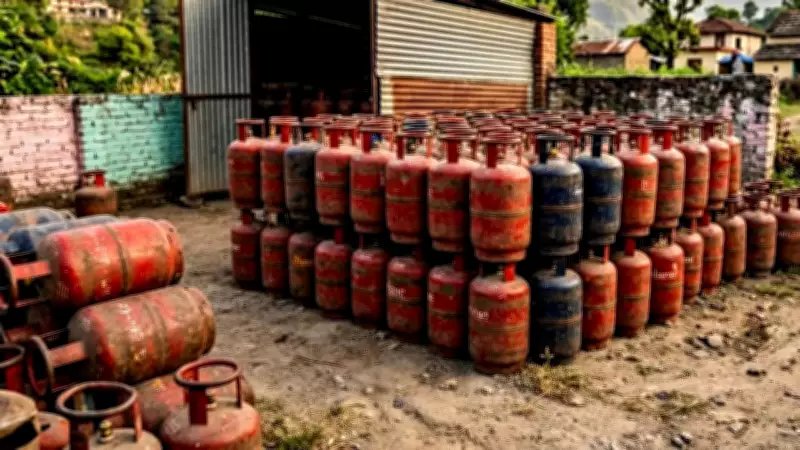
India Moves to Avert LPG Shortage as Middle East Conflict Disrupts Imports
The Indian government has activated emergency provisions to prevent a potential shortage of liquefied petroleum gas (LPG), a critical cooking fuel, in response to the escalating US-Israel-Iran war that has severely impacted the country's energy imports. With the Middle East accounting for 85-90% of India's LPG supplies, the crisis has prompted swift action to safeguard domestic availability.
Emergency Measures to Boost Domestic LPG Production
Under directives issued late Thursday, all oil refiners have been instructed to maximize LPG output by fully utilizing available propane and butane for cooking gas production. This move aims to offset the disruption in imports, as India, the world's second-largest LPG importer last year, consumed 33.15 million metric tonnes of the fuel. The government has also mandated that producers supply LPG, propane, and butane to state-run refiners—Indian Oil Corp, Hindustan Petroleum Corp, and Bharat Petroleum Corp—to ensure uninterrupted distribution to households, which number around 332 million active consumers.
Impact on Petrochemical and Gasoline Sectors
The compulsory diversion of propane and butane toward LPG production is expected to reduce the output of alkylates, a key component used in blending gasoline. This shift particularly affects companies like Reliance Industries Ltd, which exported approximately four alkylate cargoes monthly last year. Additionally, refiners have been directed not to use these resources for petrochemical manufacturing, potentially squeezing margins for producers of items such as polypropylene, as these products typically command higher prices than LPG.

India's Reliance on Middle East Imports and Alternative Strategies
According to the Global Trade Research Initiative, India imported $13.9 billion worth of LPG from West Asia in 2025, representing 46.9% of its total LPG imports. To mitigate risks, the government is actively seeking alternative sources. Officials are in discussions with leading producers and trading firms, including Sonatrach, Abu Dhabi National Oil Company, TotalEnergies, Vitol, and Trafigura, to secure additional crude oil, LPG, and liquefied natural gas (LNG) shipments. India has also increased imports from the United States.
Seeking Maritime Insurance for Energy Security
In a bid to maintain stable energy supplies, India has approached the United States to arrange maritime insurance protection for vessels transporting oil through the Strait of Hormuz. The initiative involves securing cover from the International Development Finance Corporation, as directed by US President Donald Trump, to support maritime trade in the region. However, a fund worth several hundred million dollars must first be established to back the insurance mechanism, with premiums to be borne by cargo contract parties.
These comprehensive efforts underscore India's proactive stance in navigating the energy challenges posed by the ongoing Middle East conflict, ensuring that millions of households continue to have access to essential cooking fuel without disruption.