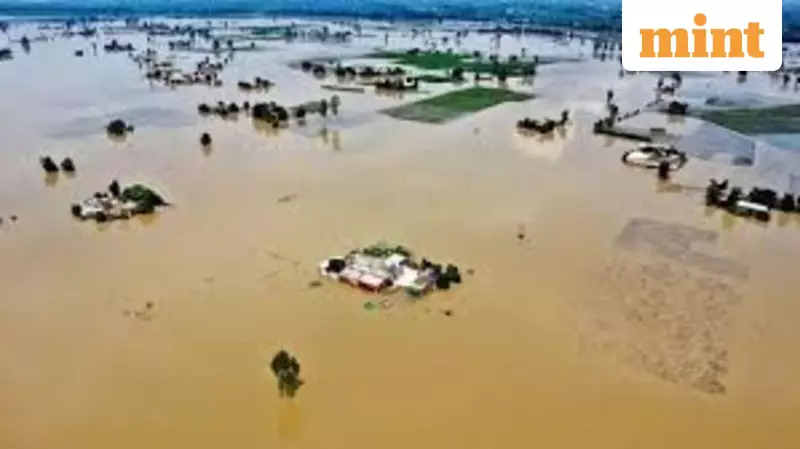
A devastating series of floods that swept through India and Pakistan in 2025, fueled by extreme monsoon rains and landslides, has been ranked among the world's ten most financially damaging climate-related disasters. According to a major new report, the catastrophe resulted in staggering human and economic costs.
The Global Toll of Climate Extremes in 2025
The report, titled Counting the Cost 2025 and released by the UK-based international organisation Christian Aid, paints a grim picture of a year marked by climatic fury. It found that heatwaves, wildfires, droughts, and storms collectively inflicted global damage surpassing $120 billion. The analysis specifically highlights the ten costliest extreme events of the year, each with a price tag exceeding $1 billion.
Topping this dire list were the Palisades and Eaton wildfires in California, USA, which alone accounted for an astonishing $60 billion in economic losses. However, Asia bore a significant brunt of the devastation, hosting four of the six most expensive disasters listed.

Asia Bears the Brunt: Floods and Typhoons Ravage Nations
The South Asian floods, occurring from June to September, stand as a stark example. Triggered by intense monsoon rainfall, widespread flooding, and landslides, the disaster claimed the lives of more than 1,860 people. The economic losses were estimated at approximately $5.6 billion. In Pakistan alone, the calamity affected over seven million individuals.
Similarly, the Philippines faced relentless typhoons and tropical storms from mid-year through November, leading to hundreds of fatalities and forcing more than 1.4 million people from their homes. The financial damage from these storms exceeded $5 billion. Other major Asian disasters included cyclones and flooding in South and Southeast Asia (Thailand, Indonesia, Sri Lanka, Vietnam, Malaysia) causing about $25 billion in losses, and severe flooding in China from June to August with an $11.7 billion price tag.
A Predictable Crisis, Not a Natural One
The report moves beyond mere statistics to deliver a powerful critique on the root causes. Emeritus Professor Joanna Haigh from Imperial College London stated that these disasters are not ‘natural’ but are instead "the predictable result of continued fossil fuel expansion and political delay."
Echoing this sentiment, Patrick Watt, CEO of Christian Aid, emphasised that the suffering stems directly from political choices. "The suffering caused by the climate crisis results from political decisions, continuing fossil fuel use, allowing emissions to rise, and failing to deliver on climate finance promises," he argued. Watt described the year's events as a harsh revelation of climate reality, where violent storms, severe floods, and extended droughts disproportionately impact the poorest and most vulnerable communities first and most severely.
He issued a call to action for world leaders in 2026, urging them to accelerate the transition away from fossil fuels and to urgently support adaptation efforts, particularly in the global South where resources are scarce but vulnerability is high. The report serves as a dire warning and a plea for resources to safeguard lives, land, and livelihoods against an escalating climate emergency.