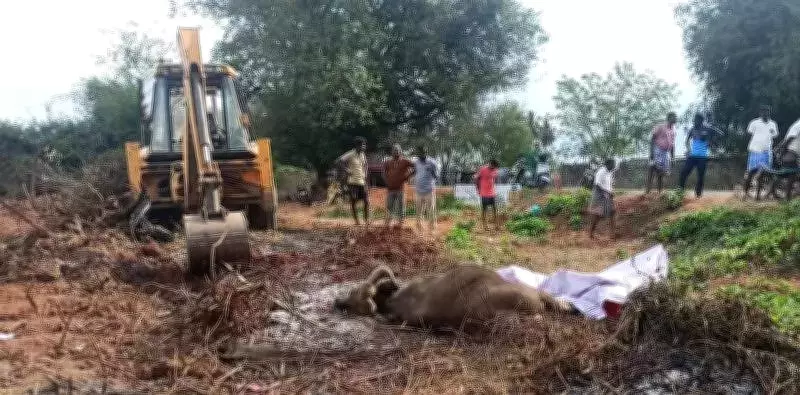
Young Female Indian Gaur Killed in Tragic Vehicle Collision in Trichy
In a distressing wildlife incident, a two-year-old female Indian gaur has died after being struck by an unidentified vehicle near Thuvarankurichi in Trichy district. The tragic event occurred during the early hours of Tuesday, highlighting the ongoing conflict between wildlife and human infrastructure.
Discovery and Recovery by Forest Department
Forest department personnel discovered the carcass with visible injuries near Pillaiyarkoilpatti on the Manapparai-Thuvarankurichi Road. A team from the Manapparai forest range, led by ranger A Maheshwaran, responded to the scene and recovered the remains of the young bovine.
The animal was estimated to be approximately 2.5 years old and weighed around half a tonne, indicating it was still in its juvenile stage. The forest team carefully moved the carcass to a separate location to conduct a thorough autopsy, following standard wildlife protection protocols.

Investigation and Burial Procedures
After completing the post-mortem examination, the forest department personnel excavated a large pit and buried the gaur in accordance with conservation guidelines. The department believes the animal likely emerged from the nearby Karuppur-Reddiapatti reserve forest area, possibly in search of food or water during the night.
Preliminary investigations suggest the collision occurred between 2am and 3am on the Manapparai-Thuvarankurichi Road, when the gaur was struck by a speeding vehicle. Forest officials have launched a formal investigation to gather more details about the incident and identify the responsible vehicle.
Conservation Status of the Indian Gaur
The Indian gaur, scientifically known as Bos gaurus and commonly referred to as the Indian bison, is a large bovine species native to the Indian subcontinent and Southeast Asia. This majestic animal has been classified as vulnerable on the IUCN Red List since 1986, reflecting ongoing conservation concerns.
In India, the species receives significant legal protection under Schedule 1 of the Indian Wildlife Protection Act, which imposes strict penalties for harming these animals. The death of this young female represents not just a local tragedy but a setback for regional conservation efforts aimed at preserving this vulnerable species.
Forest department officials emphasize the importance of driver awareness in forest-adjacent areas, particularly during nighttime hours when wildlife movement increases. They continue to investigate the circumstances surrounding this incident while reinforcing the need for coexistence between human development and wildlife conservation.