India's 6 Remarkable Wildlife Conservation Success Stories
India stands as a beacon of hope in global wildlife conservation, offering several recovery examples distinguished by their scale, scientific rigor, and enduring commitment. Hosting nearly 8 percent of the world's recorded species on just 2.4 percent of the global land area, India navigates the intricate challenge of preserving wildlife within densely populated, shared landscapes. Over recent decades, concerted conservation efforts, bolstered by the Wildlife (Protection) Act of 1972, scientific monitoring, and public engagement, have yielded significant positive outcomes. From majestic tigers to marine turtles, here are six inspiring stories of revival.
Project Tiger: A Global Triumph for Big Cats
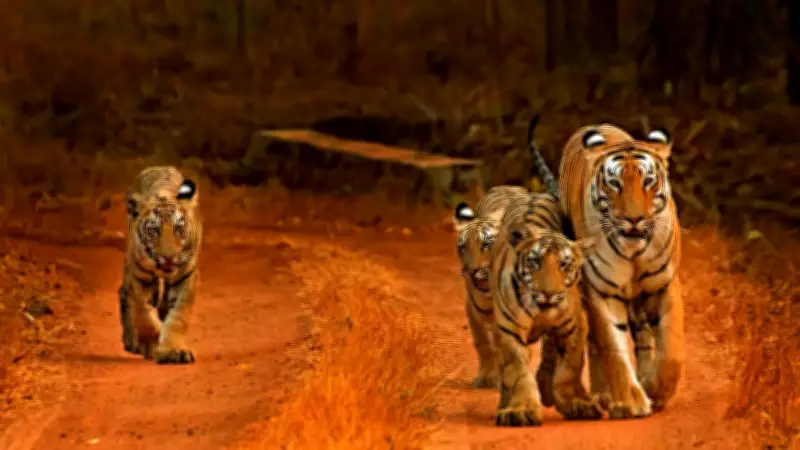
Launched in 1973, Project Tiger emerged as India's flagship wildlife conservation initiative, responding to a severe decline in tiger numbers due to rampant poaching and habitat destruction. In 2006, the official tiger population estimate stood at a mere 1,411 individuals. However, the All India Tiger Estimation 2022, released in 2023, revealed a remarkable surge to 3,167 tigers. India now supports over 70 percent of the world's wild tiger population, a success attributed to rigorous habitat protection, the establishment and expansion of over 50 tiger reserves nationwide, anti-poaching patrols, village relocations from core areas, and extensive use of camera-trap technology for scientific oversight.
Asiatic Lions: A Rare Carnivore Rebound
The Asiatic lion once roamed across West Asia and India, but by the early 1900s, fewer than 50 individuals remained, confined solely to Gujarat's Gir forest. According to a 2020 estimate by the Gujarat Forest Department, the population has rebounded impressively to 674 lions. Notably, these lions have expanded beyond Gir into surrounding districts in the Saurashtra region. Conservation strategies include strict protection measures, habitat management, and community-based coexistence programs. The Asiatic lion now survives in the wild exclusively in India, representing one of the rare global instances of a large carnivore recovering in a landscape shared with agriculture and human settlements.

Greater One-Horned Rhinoceros: From Brink to Boom
At the dawn of the 20th century, fewer than 200 greater one-horned rhinoceroses persisted in India, decimated by hunting and habitat loss. The Assam rhino census report of 2022 indicates that approximately 2,600 rhinos inhabit Kaziranga National Park alone, with India's total population exceeding 3,000. This revival stems from stringent anti-poaching measures, dedicated conservation efforts, and relocation initiatives like Indian Rhino Vision 2020. Kaziranga is now celebrated as a global conservation model, showcasing how targeted interventions can restore species from the edge of extinction.
Olive Ridley Sea Turtles: Safeguarding Mass Nesting Sites
India's eastern coastline, particularly in Odisha, hosts one of the world's largest mass nesting events, known as arribada, for the Olive Ridley sea turtle. During the 1970s and 1980s, extensive poaching and fishing-related mortality led to alarming declines. Over the years, interventions such as seasonal fishing bans, coastal patrolling, legal protection under the Wildlife (Protection) Act, and community awareness campaigns have stabilized and improved nesting numbers. Recently, hundreds of thousands of turtles have nested annually at beaches like Rushikulya and Gahirmatha, marking a significant conservation victory for marine biodiversity.
Vulture Recovery: Halting a Catastrophic Decline
In the 1990s, India experienced one of the fastest bird population declines ever recorded globally. Species like the White-rumped Vulture plummeted by over 95 percent, primarily due to the veterinary drug diclofenac, which proved fatal when vultures consumed treated livestock carcasses. In 2006, India banned veterinary diclofenac, and captive breeding centers were established in Haryana, West Bengal, and Assam. Subsequent monitoring shows that the drastic decline has slowed, with some populations exhibiting early signs of stabilization. As crucial scavengers, vultures play a vital role in controlling disease transmission by swiftly disposing of dead animals, making their recovery a dual success for ecosystem health and public safety.

Project Cheetah: Reintroducing a Lost Icon
The cheetah was declared extinct in India in 1952. In September 2022, India launched "Project Cheetah," reintroducing African cheetahs from Namibia into Kuno National Park in Madhya Pradesh, with additional individuals brought from South Africa in 2023. This initiative marks the world's first intercontinental translocation of a large carnivore for conservation purposes. Since reintroduction, several cheetahs have adapted to the habitat, and cubs have been born in Kuno. While the project faces ongoing ecological and management challenges, it represents a long-term endeavor to restore a lost species to India. In the future, it may revitalize grassland ecosystems, setting a new benchmark for species reintroduction efforts worldwide.