India's Cheetah Reintroduction Project Achieves Historic Wild Birth Milestone
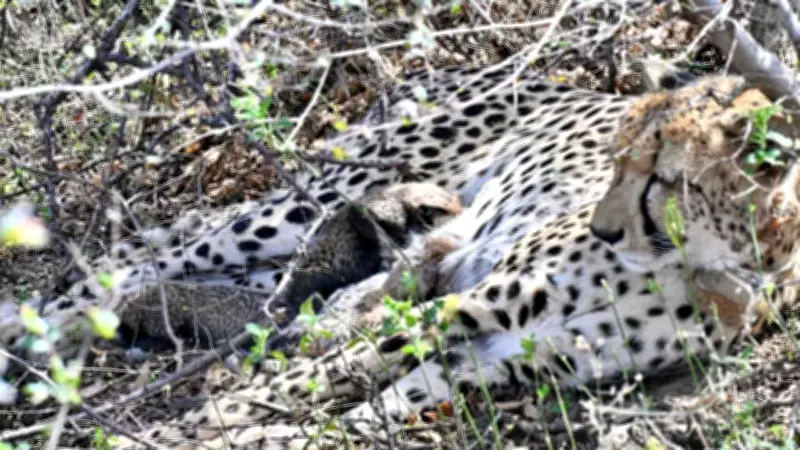
In a landmark achievement for global wildlife conservation, India's ambitious Cheetah Reintroduction Project has reached a pivotal milestone with the first-ever birth of cheetah cubs in the wild from an Indian-born mother. This historic event at Kuno National Park in Madhya Pradesh signifies a major step toward establishing a self-sustaining population of cheetahs in India.
Details of the Birth and Project Significance
A 25-month-old female cheetah, born in India on March 10, 2024, from Gamini's first litter, has successfully delivered four cubs in the wild. This development brings the total cheetah count in India to 57, with 37 of these born within the country. Prime Minister Narendra Modi initiated the project by releasing the first batch of eight cheetahs into Kuno National Park on September 17, 2022, marking the species' return after decades of absence.
Officials highlight that this birth represents a crucial shift from managed conservation efforts to natural population establishment. The female, which has been roaming freely in the wild for over a year, demonstrates that cheetahs can now survive and reproduce independently in open forest conditions.

Official Reactions and Conservation Perspectives
Samita Rajora, the state's chief wildlife warden, described the event as the "benchmark" of the project's success. She emphasized that this confirms an India-born cheetah has successfully bred in the wild, achieving the ultimate goal of a self-sustaining population. However, the identity of the cubs' father remains unconfirmed, with teams analyzing satellite collar data and movement patterns of male cheetahs in Kuno to determine paternity.
Union Environment Minister Bhupender Yadav hailed this as a "historic moment" for India's conservation efforts. In a social media post, he noted the growing adaptation of cheetahs to Indian conditions and praised the dedication of field staff, veterinarians, and wildlife managers, calling it a "proud moment for the nation."
Madhya Pradesh Chief Minister Mohan Yadav stated that the state is emerging as a primary center for cheetah revival. He pointed out that the birth of cubs in open forests proves the land's suitability for cheetah lineage expansion, congratulating Kuno managers and wildlife veterinarians for their commitment.
Internationally, Susan Yannetti of the Cheetah Metapopulation Project noted that reproduction by the F1 generation, or cheetahs born on Indian soil, is a key success criterion. This indicates successful home range establishment in Kuno and ensures a viable future population.
Challenges and Future Monitoring
Despite this success, officials caution that significant challenges lie ahead, particularly ensuring the survival of the cubs amid harsh summer conditions in central India. With temperatures in Kuno expected to exceed 45°C in coming weeks, cub mortality risks from heat stress, dehydration, and predation are high, especially in the vulnerable early months.
Field teams have intensified monitoring efforts while maintaining minimal interference, using ground patrols and surveillance to track the mother and cubs. An official remarked, "Nature has taken its course. Now survival will depend on how well the cubs withstand environmental pressures."
Project Timeline and Background
The Cheetah Reintroduction Programme formally began after the Supreme Court of India approved it as an experimental project in January 2020, with an expert panel appointed for guidance. In 2022, the Ministry of Environment, Forest and Climate Change and the National Tiger Conservation Authority released a national action plan, establishing scientific protocols for introducing African cheetahs to India.
A second batch of 12 cheetahs from South Africa arrived in February 2023, forming the founder population. The journey has included both milestones and setbacks:

- Early successes included cub births to Namibian female Jwala in 2023, though summer conditions led to mortalities, highlighting climatic challenges.
- Losses of adult cheetahs to illness and injuries prompted improvements in veterinary protocols and collar design.
- Key breakthroughs continued with multiple litters from Aasha and Jwala, and Gamini giving birth to six cubs in 2024, with four surviving.
- India conducted its first intra-country translocation of cheetahs to Gandhi Sagar Wildlife Sanctuary in 2025 to expand the population base, with additional sites like Nauradehi Wildlife Sanctuary identified for long-term strategy.
The programme has fostered international cooperation, with cheetah transfers from Namibia, South Africa, and Botswana, reinforcing India's role in global species restoration.
Success Criteria and Long-Term Vision
The Project Cheetah Action Plan outlines a long-term commitment of at least 25 years from various agencies. Short-term success criteria include:
- 50% survival of introduced cheetahs in the first year.
- Establishment of home ranges in Kuno.
- Successful reproduction in the wild.
- Survival of some wild-born cubs beyond one year.
- Successful breeding by the F1 generation of India-born cheetahs.
- Revenue generation supporting local livelihoods.
For long-term success, the plan envisions:
- Stable survival rates of around 70% in adults and 25 to 40% in cubs.
- A viable metapopulation across three to five reserves.
- Maintenance of genetic diversity from the founder population.
- Improvement in habitat quality, prey base, and overall biodiversity.
- Tangible economic benefits for local communities.
Failure is defined as a situation where introduced cheetahs fail to survive or reproduce within five years, or suitable habitats cannot be secured, potentially leading to programme review or discontinuation.