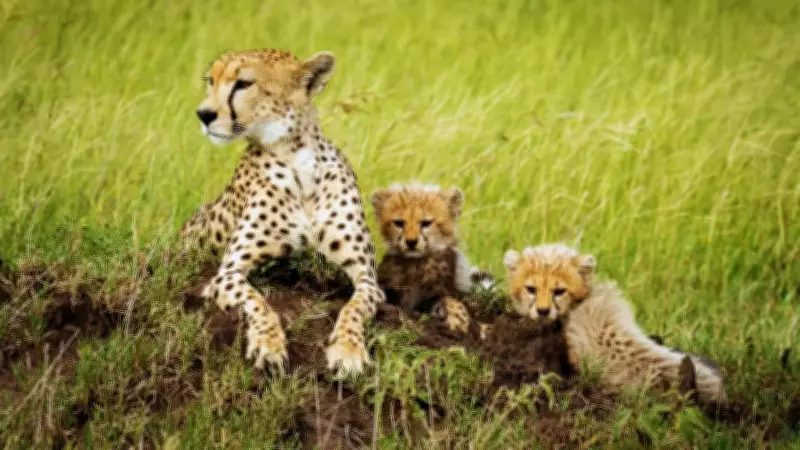
India's Cheetah Reintroduction Programme Achieves Major Milestone with Birth of Five Cubs
India's ambitious cheetah reintroduction programme has reached a significant new high with the birth of five cubs at Kuno National Park. The mother, Aasha, a cheetah translocated from Namibia, delivered the litter on February 7, 2026, as confirmed by officials involved in the project.
This development elevates the country's total cheetah population to 35, marking a heartening success in conservation efforts. The announcement was made by Union Cabinet Minister for Environment, Forest and Climate Change Bhupender Yadav via his official social media account.
Minister's Announcement Highlights Conservation Success
In his post, Minister Yadav celebrated the arrival, stating, "Kuno Welcomes the Birth of FIVE Cubs. Aasha's legacy leaps forward—India welcomes her five adorable cubs!" He emphasized that this event represents the eighth successful cheetah litter on Indian soil since the programme's inception, bringing the number of Indian-born surviving cubs to 24.

The minister praised the achievement as a testament to the dedication of field staff and veterinarians, noting it as a historic moment for wildlife conservation in India under environmentally-conscious leadership.
Details of the Birth and Programme Progress
According to the minister, the litter born on February 7 is Aasha's second, making her a proud second-time mother. Wildlife managers view this rapid reproductive success as an encouraging sign of the cheetahs' adaptation to Indian conditions, including climate, prey availability, and habitat structure.
Aasha's journey began as part of the founding group of cheetahs translocated from Namibia when India launched Project Cheetah on September 17, 2022. On that historic day, eight cheetahs were released at Kuno National Park by Prime Minister Narendra Modi, marking the species' return after being declared extinct in India in 1952.
After arrival, Aasha underwent quarantine and acclimatization before being released into the park. Officials noted she quickly emerged as a stable individual in the population, demonstrating strong adaptation and reproductive behavior. To enhance genetic diversity, twelve additional cheetahs were brought from South Africa in 2023.
Implications for Wildlife Travel in Central India
The steady growth of the cheetah population at Kuno National Park is reshaping wildlife tourism in central India. For decades, travel in this region has focused predominantly on tiger reserves like Bandhavgarh, Kanha, Pench, and Satpura. The cheetah programme introduces a new, distinct wildlife narrative.
Key changes include:
- Kuno is being positioned as a long-term, future-focused destination rather than an immediately commercialized safari park.
- Wildlife travel will remain conservation-first, with sightings potentially rare and safari routes limited, aligning with low-impact, high-awareness tourism.
- Attention to cheetahs in grasslands and open forests may shift tourism patterns, raising awareness of these landscapes and eventually incorporating them into tourist itineraries.
- Tourism growth is expected to be slow and controlled, leading to limited accommodations, controlled safaris, and an emphasis on educational over mass tourism.
- The cheetah programme provides central India with a year-round conservation story, complementing the seasonal nature of tiger tourism.
This milestone not only boosts India's cheetah population but also reinforces the nation's commitment to biodiversity and ecological restoration, setting a precedent for global wildlife conservation efforts.