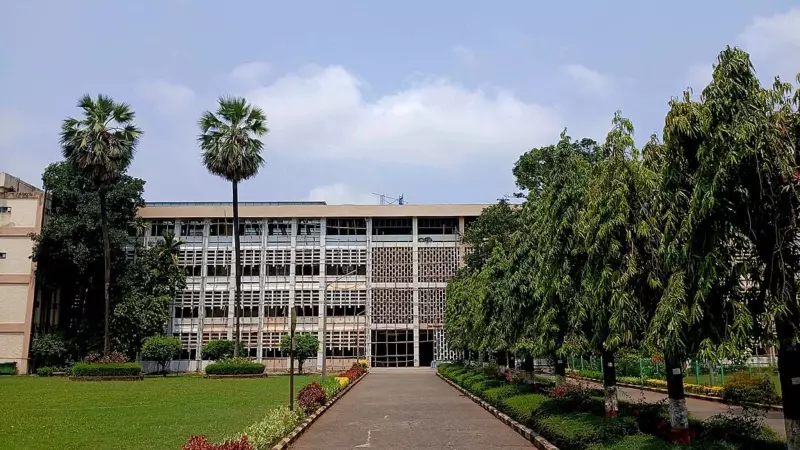
In a landmark achievement for India's climate technology sector, the Indian Institute of Technology Bombay (IIT Bombay) and the National Thermal Power Corporation (NTPC) have successfully completed the drilling of the nation's first dedicated well for testing the underground storage of carbon dioxide (CO2). This pioneering project marks a critical transition from laboratory research to real-world field deployment in the fight against climate change.
A Strategic Academia-Industry Collaboration
This groundbreaking initiative is the result of a strategic partnership launched in November 2022 under the guidance of NITI Aayog. The collaboration brought together NETRA, NTPC's research and development wing, and the Department of Earth Sciences at IIT Bombay. Their primary initial goal was to develop India's first geological storage atlas specifically for coalfields rich in coalbed methane.
The atlas, a crucial foundational tool, provided detailed, layer-by-layer simulation results. This data, validated through experiments, helped quantify the potential for storing CO2 geologically across four major coalfields in India. This preparatory work set the stage for the ambitious field phase.

Drilling Deep for a Sustainable Future
Building on the atlas findings, the project moved to its most significant phase. In September 2025, NTPC and IIT Bombay commenced drilling the country's first dedicated well for potential CO2 storage at a site in Pakri Barwadih, Jharkhand, located near a coal mining area. The drilling operation reached an impressive depth of 1,200 meters and was successfully completed on November 15, 2025.
Demonstrating the project's momentum, a second well drilling was initiated shortly after, on December 21, 2025. These wells will be instrumental for the next stages, which involve actual CO2 injection and plume monitoring to study how the gas behaves and is stored in deep sedimentary formations like coal and sandstone.
From Lab to Field: Assessing India's CCS Potential
Project lead Professor Vikram Vishal from IIT Bombay emphasized that this initiative represents a vital shift in carbon capture and storage (CCS) research within India. He stated that the project will provide essential feasibility and risk assessments necessary for full-scale CCS development. This includes a detailed analysis of the storage complex and the creation of a commercial development plan.
Preliminary studies from the project are highly promising. They indicate a high geological CO2 storage potential in the North Karanpura coalfield. Specifically, the Pakri-Barwadih block has shown the potential to inject up to 15.5 million tonnes of CO2 over a 10-year injection period.
This is not the first collaborative success for IIT Bombay and NTPC in the carbon management space. In 2017, their partnership led to the creation of India's first CO2 capture and utilisation facility in the power sector. That project resulted in the Vindhyachal CCU plant, which captures 20 tonnes of CO2 per day and converts it into fuel-grade methane.
The completion of the first CO2 storage test well is a major milestone for India's Carbon Capture, Utilisation, and Storage (CCUS) ambitions. It provides a tangible pathway to mitigate industrial carbon emissions and positions India as a serious player in developing practical climate change solutions through homegrown innovation and strong industry-academia ties.