

India's Power Sector Set for Major Transformation by 2070
India's power sector is poised for a significant transformation, shifting from a coal-dominated mix to one led by renewables by 2070, according to a new study by NITI Aayog titled 'Scenarios Towards Viksit Bharat and Net Zero'. The report outlines a future where renewable energy sources take center stage, supported by nuclear power as a key baseload provider.
Renewable Energy to Dominate Electricity Generation
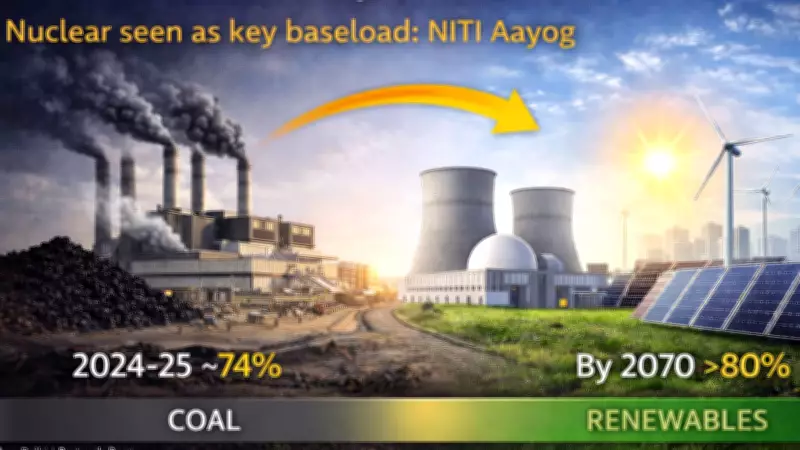
Under the Current Policy Scenario (CPS), which represents a realistically achievable effort based on historical trends and current policies, renewable energy's share in electricity generation is projected to surge from around 20% in 2024-25 to over 80% by 2070. This marks a dramatic increase, highlighting India's commitment to cleaner energy sources.
In contrast, coal's share in electricity generation is expected to decline sharply from its current level of 74% to just 6-10% by 2070 under the same scenario. The study indicates that coal power will transition from being a primary energy generator to serving as insurance against shortages, reflecting its diminishing role in the long-term energy mix.

Nuclear Power Expansion as a Baseload Solution
Nuclear power is also set for substantial growth, with its contribution rising from about 3% at present to 5-8% under the CPS by 2070. This expansion underscores the growing importance of nuclear energy in displacing coal-based generation while providing carbon-free baseload power.
The study emphasizes that nuclear power is crucial for achieving long-term power sector decarbonization goals. It can deliver firm low-carbon electricity, high-temperature industrial heat, and reliable power supply for electrolyzers supporting green hydrogen production.
Capacity Projections and Ambitious Targets
In terms of capacity, nuclear power is projected to grow from the current 8.18 GW in 2025 to 90-135 GW by 2070 under the CPS, representing an increase of 10 to 15 times. Under the more ambitious Net Zero Scenario (NZS), aligned with India's 2070 net-zero emissions target, nuclear capacity could reach 295-320 GW.
The study notes that an earlier and larger buildout under the NZS better matches the flexibility and reliability needs of a renewables-dominant grid, ensuring stability as intermittent renewable sources increase.
Challenges and Strategic Recommendations
The report flags India's continued dependence on coal-based power as a key structural challenge. It highlights that expanding clean and flexible resources will require effective grid management, as the rising share of variable renewable energy increases intermittency risks. Long-duration energy storage and nuclear capacity are yet to scale sufficiently to provide balancing support.
To address these challenges, the study suggests scaling nuclear capacity to 100 GW by 2047 and 200-300 GW by 2070. This includes deploying advanced reactors and Small Modular Reactors (SMRs) to deliver reliable 24x7 clean power. It proposes encouraging large industrial and captive power consumers to transition from coal-based captive plants to SMRs, enabling cleaner baseload generation.
This shift would support national low-carbon transition goals while maximizing the use of existing land, transmission connectivity, and industrial infrastructure. The study further calls for accelerating the development and deployment of indigenous SMRs with private participation in industries, fostering innovation and efficiency in the nuclear sector.
Overall, the NITI Aayog study paints a clear picture of India's energy future, driven by renewables and bolstered by nuclear power, as the country moves towards its net-zero emissions target by 2070.






