

India's Export Ambitions Confront Climate Reality at Ports
India's recent surge in trade agreements with major economies like the United Kingdom, European Union, and United States signals a strategic push toward robust export expansion. These deals are lowering tariff barriers, aligning international standards, and opening global markets for key sectors including electronics and renewable energy. However, this promising trade momentum rests on a concerningly fragile foundation: India's port and logistical infrastructure remains critically unprepared for escalating climate challenges.
The Climate Vulnerability of Maritime Trade Hubs
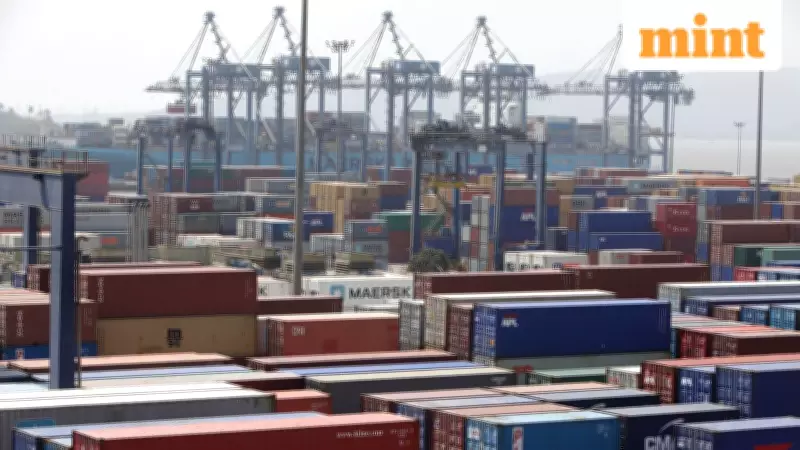
With over 95% of India's international merchandise trade volume moving through sea routes, ports like Kandla, Nhava Sheva, Mundra, Visakhapatnam, and Chennai serve as vital economic gateways, handling hundreds of millions of tonnes annually. While capacity expansion continues under initiatives like the Sagarmala programme, climate resilience planning lags dangerously behind. Scientific projections indicate that India's coastline faces sea-level rise exceeding global averages, with Kandla recording an annual increase of 3.18mm since 1950.
This gradual rise amplifies storm surges, pushing destructive waves deeper into port facilities. Combined with land subsidence in certain regions and intensified cyclonic activity in the Arabian Sea, coastal inundation risks are escalating dramatically. High-exposure areas include Mumbai, the Gulf of Khambhat, and Kerala. Furthermore, extreme heatwaves now regularly exceed 45° Celsius, impairing both heavy machinery operations and worker productivity at these critical logistics nodes.

Institutional Gaps and Infrastructure Deficiencies
The current development model prioritizes capacity over resilience, aiming to increase national port capacity from 1.65 billion to 2.5 billion tonnes by 2030. This expansion relies heavily on an aging, carbon-intensive hinterland network where over 70% of inland freight moves by road. Consequently, logistics costs consume 13–14% of India's GDP, significantly higher than the 8-9% benchmark in efficient economies.
Railways, the logical low-carbon alternative, suffer from severe congestion, with more than 80% of high-density routes operating beyond capacity. Inland waterways and coastal shipping remain underutilized. Institutional fragmentation exacerbates these challenges, as climate adaptation receives inadequate attention in major port plans like Maritime India Vision 2030. Recent cyclones have already caused costly shutdowns at Paradip and Visakhapatnam ports, highlighting the urgent need for systemic upgrades.
Strategic Shifts for Climate-Resilient Trade Infrastructure
To secure its trade future, India must implement three fundamental transformations in its maritime and logistics framework. First, climate risk assessments must become central to port expansion designs, incorporating elevated berths, enhanced drainage, natural storm buffers like mangroves, and reliable backup energy systems.
Second, inland logistics require comprehensive overhaul through electrified rail networks and expanded waterways, as envisioned in the National Rail Plan and Pradhan Mantri Gati Shakti initiative. Third, mandatory life-cycle carbon accounting for infrastructure projects—from material sourcing to operational phases—is essential to reduce environmental impact.
While green port guidelines aim for a 70% reduction in carbon emissions per cargo tonne by 2047, these remain voluntary rather than enforceable. Transforming them into binding requirements would accelerate adoption of renewable energy, shore power for docked vessels, electric equipment, and low-carbon construction materials.
Unified Action for Sustainable Trade Growth
India possesses adequate policy frameworks but lacks coordinated implementation and urgency. A unified resilience strategy must align ministries, port authorities, industrial corridors, and exporters under a shared mandate: building for continuity rather than mere capacity. Every infrastructure decision today will impact operations deep into this century, making it imperative to avoid locking in vulnerabilities and emissions.

By embracing timely course corrections, India can transform its maritime trade backbone into a durable, low-carbon system capable of withstanding a hotter, more volatile climate. Trade agreements create opportunities, but resilient infrastructure will ultimately determine whether India can fully capitalize on its export optimism.





