

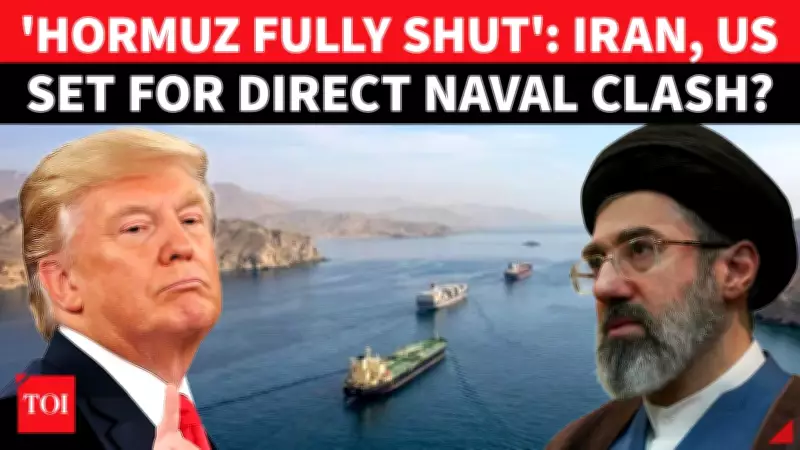
Iran Announces Complete Closure of Strait of Hormuz, Issues Direct War Warning to US Navy
In a dramatic escalation of geopolitical tensions, Iran's Islamic Revolutionary Guard Corps (IRGC) Navy has declared the full closure of the strategic Strait of Hormuz. The announcement, made on Friday, April 19, 2026, states that the vital maritime passage will remain completely shut until the United States lifts its blockade on Iranian ports and commercial vessels.
IRGC Navy's Ultimatum and Toll System Implementation
The IRGC Navy clarified that while the strait is officially closed, vessels may still transit through the area under specific conditions. All maritime traffic must now coordinate directly with Iranian authorities and pay a mandatory toll for passage. This move represents a significant hardening of Iran's position in the ongoing standoff with Western powers.
Recent Military Incident Precedes Announcement
This declaration follows a concerning military incident earlier in the week. According to the British military's United Kingdom Maritime Trade Operations center, two IRGC gunboats opened fire on a commercial tanker that was transiting through the Strait of Hormuz. While details about damage or casualties remain unclear, this aggressive action underscores the rapidly deteriorating security situation in the region.

Strategic Implications of the Hormuz Closure
The Strait of Hormuz serves as one of the world's most critical maritime chokepoints:
- Approximately 20-30% of global oil shipments pass through this narrow waterway
- The closure threatens to disrupt international energy markets and shipping routes
- Regional stability faces immediate jeopardy as military posturing intensifies
Iran's decision to close the strait completely represents a calculated escalation in its ongoing confrontation with the United States and its allies. The IRGC Navy's warning suggests that any attempt by the US Navy to challenge this closure could trigger direct military confrontation between the two powers.
International Response and Regional Security Concerns
Global observers are closely monitoring how the United States and its regional partners will respond to Iran's provocative actions. The situation creates a dangerous flashpoint that could potentially draw multiple nations into conflict. The requirement for vessels to pay tolls to Iran for passage through international waters sets a controversial precedent that challenges established maritime norms.
As tensions continue to mount, the international community faces critical decisions about how to address Iran's closure of this vital shipping lane while avoiding a broader military conflict in the already volatile Persian Gulf region.






