

Expert Analysis: Why a Conflict in Iran Could Be Far More Consequential Than Venezuela
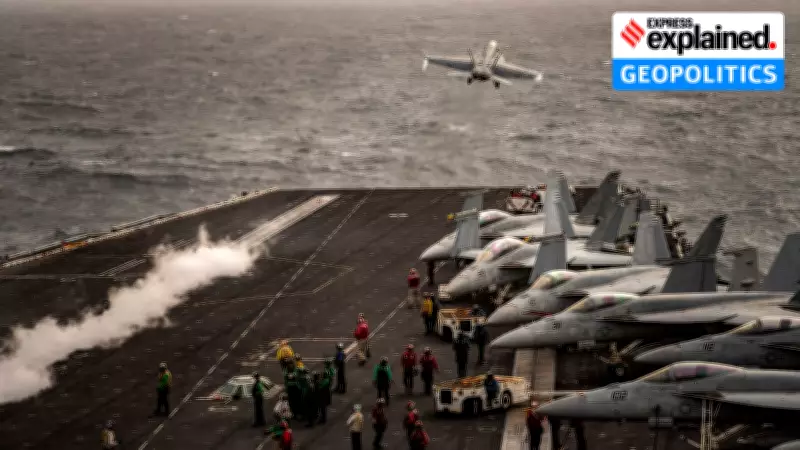
In the complex landscape of global geopolitics, a potential crisis in Iran is poised to have far-reaching and more severe consequences compared to Venezuela, according to expert insights. The United States' threat of military force in the region could significantly disrupt oil flows and impact prices worldwide, highlighting Iran's strategic importance.
Heightened Tensions and Upcoming Talks
After weeks of escalating tensions, marked by the build-up of American forces, the US and Iran are scheduled to hold talks in Oman on Friday regarding Tehran's nuclear programme. This development underscores the volatile situation that could have broader implications than the ongoing crisis in Venezuela.
Impact on Oil and Gas Markets
Anil Sasi, in a discussion with Ajay Singh, a management advisor based in Tokyo, explored how the US threat of force might upend oil flows and affect prices. Oil prices have already experienced wide fluctuations as the US-Iran military conflict seemed imminent, before negotiations were agreed upon.

The US is leveraging the threat of force to coerce Iran into a fundamental policy shift. Spot oil and gas prices are expected to remain sensitive, given the persistent possibility of war. If a conflict erupts, Iran could attempt to blockade the Strait of Hormuz, which would halt the flow of approximately 20% of the world's oil and liquefied natural gas from various Persian Gulf nations.
Such a blockade would likely cause prices to spike dramatically, as replacing that volume at short notice is not feasible. However, if the blockade can be prevented or cleared quickly, prices might recede rapidly. Damage to production facilities in some Gulf countries could also occur, though it would be of a smaller scale and could be compensated by other sources.
Currently, OPEC and other nations maintain a surplus oil production capacity of 3-4 million barrels per day. Additionally, several new LNG supply projects are set to come online in the near future in the US and elsewhere, which could mitigate some disruptions.
Iran's Geopolitical Significance Compared to Venezuela
Iran holds a position of much greater consequence in the current geopolitical context. It possesses the world's third-largest oil reserves, strategically located near Asian and European markets. Iranian oil is of high quality and can be produced using conventional techniques at low cost.
In contrast, most Venezuelan oil is a highly viscous sludge that requires expensive underground heating to extract. Iran boasts many highly productive "super-giant" oilfields, such as the Azadegan field, which stretches into Iraq. These fields contain billions of barrels with multiple reservoirs stacked above each other.
Iran's oil production peaked at over 6 million barrels per day before the Iran-Iraq war but has remained below 4 million bpd since. Of even greater importance are Iran's gas reserves, the second largest globally. The South Pars field, shared with Qatar, is the world's largest gas field, holding over a thousand trillion cubic feet of gas.
In the early 2000s, Iran nearly invested in LNG plants with European and Chinese partners, but these plans were thwarted by nuclear programme concerns and sanctions. Meanwhile, Qatar has developed its side of the field, exporting gas worth over $40 billion last year alone and expanding capacity.
US Goals and Geopolitical Rivalries
The US aims to secure its global petroleum dominance and political primacy in West Asia. As the world's top oil and LNG producer, the US seeks to eliminate the risk of Iran going nuclear, which would allow for ending sanctions and developing Iran's petroleum resources.
Iran's petroleum industry requires major investments, new technology, and access to global markets, a role the US would like its companies to fulfil. Achieving a stable legal framework for profit sharing could attract international oil companies.
China has grown close to Iran due to US sanctions, reportedly buying over 1.5 million barrels of Iranian oil daily and serving as Iran's largest trading partner. The US is keen not to cede this space to its geopolitical rival in West Asia.

Iran, with a population of 90 million—larger than Germany's and half under 35—could become an attractive market for goods and services if petroleum revenues increase and are used for public welfare, provided there is a stable government and peace.
Regime Change and Historical Context
It may be premature to conclude about regime change in Iran. While there is hardship and discontent among Iranians, and US demands require a total policy reversal, Iranians are conscious of their civilisational power and unlikely to accept foreign overlordship.
They remember the 1953 overthrow of democratically elected Prime Minister Mohammad Mossadegh, which the US later admitted engineering to protect Western interests. For any regime to succeed, it must rapidly deliver economic benefits and maintain independence.
The history of Iraq after the 2003 invasion serves as a sobering warning. The dissolution of the Iraqi army and Ba'ath party created a power vacuum filled by sectarian factions and foreign actors, leading to deadly chaos from which the Middle East has yet to recover.
Ajay Singh is a management advisor based in Tokyo and a former executive at Shell and Japan Petroleum Corporation with extensive experience in West Asia.





