

Iranian Air Defense Reports Interception of Enemy F-15 Near Strategic Hormuz Island
In a significant military development, the Iranian Air Defense Headquarters declared on Sunday that it successfully intercepted and engaged an 'enemy' F-15 fighter jet flying over Iranian airspace near Hormuz Island. The announcement, made through an official statement, detailed that ground-to-air missiles were fired at the aircraft several hours prior to the release of the information.
Official Statement and Visual Evidence
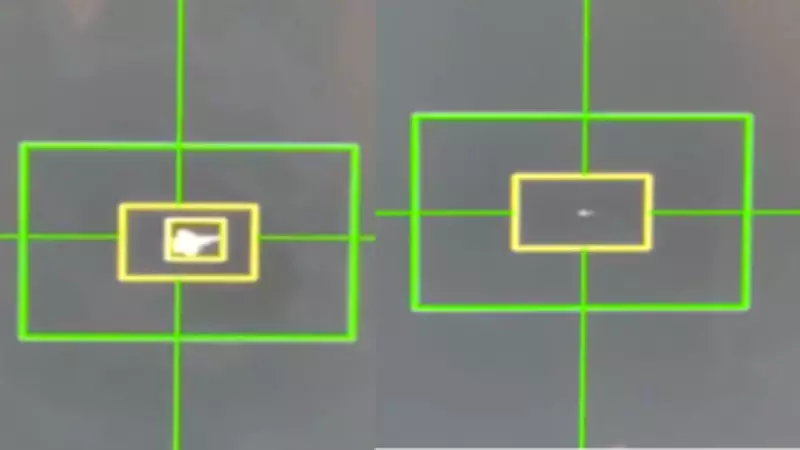
The statement, as quoted by Iran's Fars News Agency, explicitly noted: "A short while ago, one F-15 enemy invading fighter jet in the skies over the country's southern coasts and near Hormuz Island was targeted by the army's air defense force's ground-to-air systems after being intercepted and struck by a missile." To corroborate this claim, Fars News Agency disseminated a video clip showing the fighter jet being targeted by a missile, adding visual weight to the Iranian military's assertion.
Investigations are currently ongoing to determine the ultimate fate of the F-15 aircraft, with authorities working to ascertain whether it was destroyed or managed to evade complete destruction. This incident underscores the heightened state of alert within Iran's defense apparatus.

Escalating Regional Military Tensions
This latest claim emerges against a backdrop of rapidly intensifying military confrontations in the region. Just days earlier, American officials confirmed that a US F-35 stealth fighter sustained damage during a combat mission over Iran, necessitating an emergency landing at a US air base located in the Middle East. Iran has asserted that it successfully struck this advanced aircraft using its air defense systems, potentially marking the first instance where Tehran has hit one of the United States' most sophisticated jets amid the ongoing conflict.
While Washington has not fully verified Iran's claim regarding the F-35, US officials have acknowledged that the aircraft was indeed hit by what is believed to be Iranian fire. This series of events highlights the volatile and precarious nature of current aerial engagements.
Broader Context of Cross-Border Strikes
The interception near Hormuz Island occurred merely one day after missile exchanges between Iran and the Israel-US alliance extended into India's strategic backyard. Tehran launched two ballistic missiles aimed at Diego Garcia, a critically important joint US-UK military base situated in the Indian Ocean. These missiles, targeted at a facility approximately 4,000 kilometers away, ultimately failed to strike the base, but their launch signifies a dramatic expansion of the conflict's geographical scope.
This incident follows recent warnings from the Israeli Defense Forces (IDF) that "Europe is within Iranian missiles range," particularly after the Diego Garcia strike. The United Kingdom has responded by stating there is "no evidence" to fully support some of the broader claims, reflecting the complex and often contradictory information emerging from the region.
The convergence of these events—from the F-15 interception to the F-35 damage and the long-range missile launches—paints a picture of a region on the brink of broader military escalation. Iran's air defense actions near the strategically vital Strait of Hormuz further amplify concerns over potential disruptions to global energy supplies and maritime security.






