Iran's Unprecedented Missile Assault Targets Gulf Nations, Shattering Decades of Stability
The sail-shaped silhouette of Dubai's Burj Al Arab hotel, long a gleaming symbol of the city's boundless opulence and ambition perched on the Gulf coast, was dramatically set ablaze this weekend. This iconic structure has now become a stark emblem of the severe crisis engulfing the wider Middle East, following a massive missile and drone barrage launched by Iran.
Widespread Attacks Across the Gulf Region
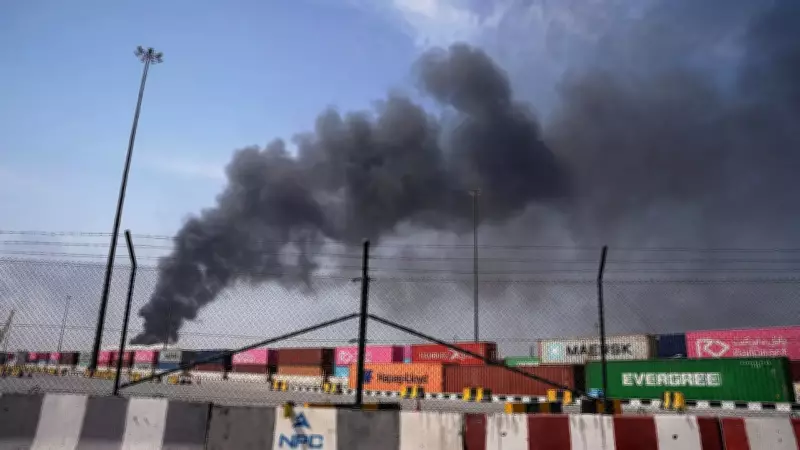
Residents across the United Arab Emirates watched in shock and horror as hundreds of drones and missiles targeted the nation, including the capital Abu Dhabi, and other longstanding US allies in the Gulf. The attacks, which occurred on Saturday and Sunday, also struck Oman, Kuwait, Qatar, and Bahrain—countries traditionally viewed as refuges from the region's persistent conflicts.
According to the UAE's defence ministry, the assault involved over 200 drones and 137 ballistic missiles. While most projectiles were successfully intercepted by defense systems, the ministry confirmed that 14 drones penetrated Emirati airspace and fell into its territory and surrounding waters. The aftermath was chaotic; fragments from intercepted missiles and drones rained down across Dubai, causing significant additional damage and injuries.

No Gulf Nation Spared in Coordinated Strikes
"It is really a tough and serious moment," stated Cinzia Bianco, a visiting fellow at the European Council on Foreign Relations specializing in Gulf affairs. "There was nothing that they valued more than that perception of safety..." This sentiment underscores a profound shift. Dubai had meticulously cultivated close economic and diplomatic ties with Iran, partly to maintain its coveted safe-haven status; the UAE stands as one of Iran's largest trading partners.
Yet, not a single Gulf country was spared in the coordinated attacks, highlighting the conflict's expansive reach:
- Oman: Even Oman, where officials had previously mediated talks between Iran and the United States, was attacked. A drone struck housing at the port of Duqm on the Arabian Sea, injuring one foreign worker, as reported by the state news agency.
- Kuwait: A drone hit Kuwait's airport, resulting in injuries to nine workers, according to the country's state news agency.
- Abu Dhabi: Debris from an intercepted drone fell on Abu Dhabi International Airport, killing one individual identified as an "Asian national" and injuring seven others. Additional debris struck the facade of Etihad Towers, a complex housing the Israeli embassy.
- Qatar: The Qatari interior ministry reported at least 16 injuries, while the defence ministry stated it intercepted 18 ballistic missiles fired across the country.
- Bahrain: The government announced it had shot down 45 missiles and 9 drones during the onslaught.
Foreign Worker Population Bears Significant Impact
A particularly distressing aspect of the attacks is the heavy impact on foreign workers, who constitute a large proportion of the population in Gulf nations. Reports from multiple countries indicate that these individuals were among the most affected by the falling debris and direct strikes.
The attacks mark a dangerous escalation, directly challenging the Gulf's long-cherished stability and security, with the burning Burj Al Arab serving as a powerful visual testament to the region's new, volatile reality.