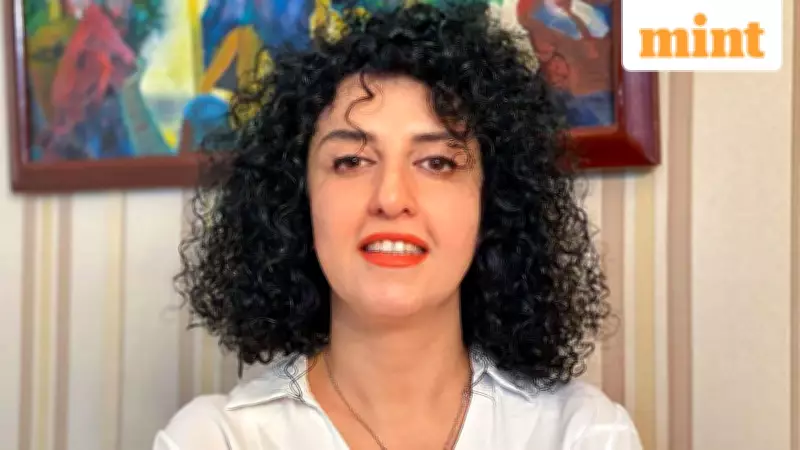
Iran Imposes Harsh New Sentence on Nobel Peace Prize Winner Narges Mohammadi
In a significant escalation against dissent, Iran has sentenced prominent human rights activist and Nobel Peace Prize laureate Narges Mohammadi to more than seven additional years in prison. This development was confirmed by her supporters on Sunday, revealing that Mohammadi continues to endure a hunger strike while detained under challenging conditions.
Legal Ruling Details and Official Silence
Mohammadi's lawyer, Mostafa Nili, detailed the sentencing in a social media post after speaking with her. According to Nili, she has been handed a six-year prison term for charges of 'gathering and collusion' and an additional one and a half years for propaganda activities. The court also imposed a two-year travel ban as part of the verdict. Notably, Iranian authorities have not made any official statements regarding this sentence, maintaining a pattern of opacity in such cases.
Hunger Strike Protests Detention and Prison Conditions
Supporters report that Mohammadi initiated a hunger strike on February 2 to protest what her family describes as unlawful detention, severe prison conditions, and restrictions on communication. In a statement shared with international media, her foundation emphasized that the strike aims to shed light not only on her personal plight but also on the broader struggles faced by political prisoners across Iran.

Family Expresses Deep Concern Over Health Risks
Mohammadi's son, Ali Rahmani, voiced the family's escalating fears about her health as the hunger strike persists. He described the situation in Iran as a 'crime against humanity,' highlighting his mother's longstanding advocacy for 'solidarity, unity, and peace.' The foundation has issued warnings that her detention is 'extremely dangerous' due to her medical history, which includes previous heart attacks, high blood pressure, chest pain, and spinal disc problems.
Arrest During Memorial Ceremony and Communication Blackout
Mohammadi was arrested in December in Mashhad, Iran's second-largest city, during a memorial service for Khosrow Alikordi. Alikordi, a well-known lawyer and human rights defender, was found dead in his office under circumstances that activists have labeled as suspicious. Since her arrest, Mohammadi's family has had limited contact with her, with her last direct communication being a phone call with her brother on December 14. No further communication has been permitted since then.
Demands for Basic Rights and Alleged Censorship
According to her Paris-based lawyer, Chirinne Ardakani, Mohammadi has been actively demanding her fundamental rights while in custody. Ardakani stated that Mohammadi is seeking her right to make phone calls, access her lawyers in Iran, and receive visits. Her foundation alleges that authorities have conditioned phone calls on her adherence to strict rules set by prosecutors, which they characterize as an attempt to make her legal rights 'dependent on silence and self-censorship.'
Her husband, Taghi Rahmani, added that officials have attempted to dictate what she can say during calls. He affirmed, 'The Narges we know refuses to submit to such pressure; she insists on speaking her truth.'
International Concern Grows Over Human Rights in Iran
Narges Mohammadi, awarded the Nobel Peace Prize in 2023, has spent much of the past two decades in and out of prison for her advocacy of women's rights, democracy, and civil liberties. She received the prestigious award for her courageous role in challenging repression in Iran, particularly after supporting the 'Woman, Life, Freedom' protests that erupted following the 2022 death of Mahsa Amini in custody.
Human rights organizations report that Iran has responded to dissent with mass arrests and harsh prison conditions. According to estimates from the US-based HRANA, more than 50,000 individuals have been detained during recent protest crackdowns, underscoring the broader context of political repression in the country.