

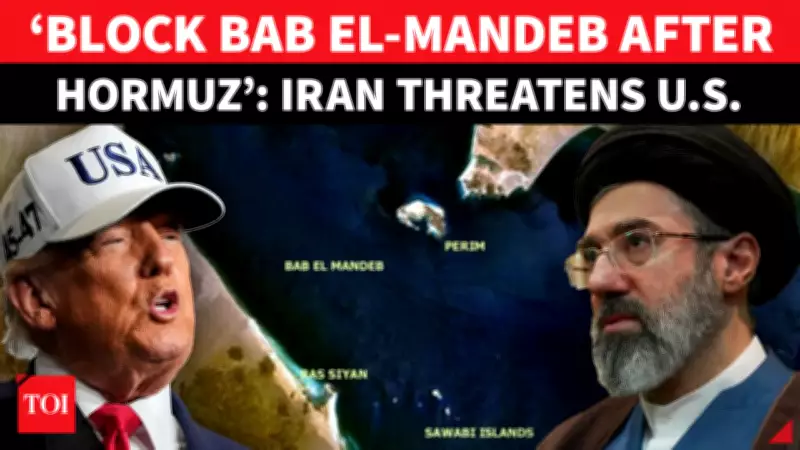
Iran's Revolutionary Guard Threatens Dual Strait Blockade Amid US Tensions
The geopolitical chessboard in the Middle East is witnessing dangerous escalation as Iran issues a stark warning that could disrupt global maritime trade on an unprecedented scale. Following former US President Donald Trump's announcement of a potential naval blockade of the strategic Strait of Hormuz, Iranian military officials have responded with a counter-threat targeting another crucial waterway.
Bab El-Mandeb: The Next Flashpoint
Iranian military spokesperson Ebrahim Zolfaghari has explicitly warned that the Bab el-Mandeb Strait could become the next conflict zone if tensions with the United States continue to escalate. This strategic chokepoint connects the Red Sea to the Gulf of Aden and serves as a vital corridor for international shipping between Europe, Asia, and Africa.
The Islamic Revolutionary Guard Corps has declared that any US military movement through the Strait of Hormuz would constitute a violation of existing ceasefire agreements and trigger a forceful response. According to reports from Iran's Tasnim News Agency, military activities in the Persian Gulf region could have consequences extending far beyond the immediate area.

Global Trade Implications
The simultaneous blockade of both the Strait of Hormuz and Bab el-Mandeb would represent an unprecedented disruption to global commerce. Together, these waterways facilitate approximately 25% of the world's total trade volume, including:
- Substantial portions of global oil shipments from Middle Eastern producers
- Containerized goods moving between Asian manufacturing hubs and European markets
- Liquefied natural gas exports critical to energy security worldwide
- Agricultural products and raw materials essential to global supply chains
Such a dual blockade would force shipping companies to reroute vessels around the African continent, adding thousands of nautical miles to journeys, significantly increasing transportation costs, and creating massive delays in global logistics networks.
Escalating US-Iran Confrontation
The current crisis represents a significant deterioration in US-Iran relations, with both sides adopting increasingly confrontational postures. The Trump administration's consideration of a naval blockade follows failed diplomatic efforts and represents a dramatic escalation in pressure tactics against Tehran.
Iranian officials have framed the Strait of Hormuz as "non-negotiable" territory, asserting their right to control access through what they consider their strategic backyard. This hardening of positions has created a volatile situation where miscalculation or accidental confrontation could trigger broader regional conflict.
Regional Security Concerns
The threat to Bab el-Mandeb adds a new dimension to Middle Eastern security concerns. This waterway has previously seen attacks on commercial shipping by Houthi rebels in Yemen, who maintain close ties with Iran. An Iranian-backed blockade would significantly complicate international efforts to secure this critical maritime route.
Regional powers including Saudi Arabia, the United Arab Emirates, and Egypt would likely view any Iranian action against Bab el-Mandeb as a direct threat to their economic and security interests, potentially drawing them deeper into the confrontation.
Economic Consequences
Energy markets have already shown volatility in response to the escalating tensions, with oil prices experiencing sharp increases following Trump's blockade announcement. A simultaneous closure of both strategic straits would likely cause:
- Dramatic spikes in global energy prices affecting consumers worldwide
- Supply chain disruptions across multiple industries
- Increased insurance premiums for maritime shipping
- Potential shortages of critical goods in import-dependent nations
The global economy, still recovering from recent challenges, would face significant headwinds from such a comprehensive disruption to maritime trade routes.
As diplomatic channels appear increasingly strained, the international community watches with growing concern as two of the world's most vital shipping corridors become potential battlegrounds in an escalating US-Iran confrontation.






