

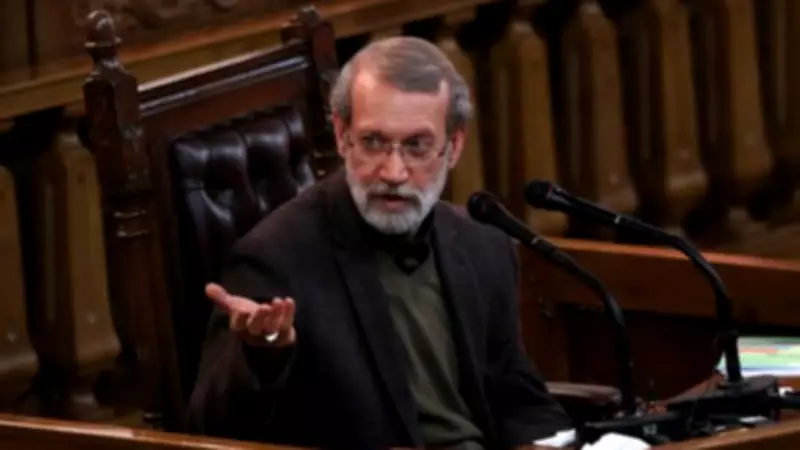
Iran's Top Security Official Vows Retaliation and Outlines Transition Plan After Khamenei's Death
In the immediate aftermath of Supreme Leader Ayatollah Ali Khamenei's killing, Iran's top security official Ali Larijani has struck a defiant tone, vowing severe retaliation against the United States while simultaneously outlining plans for a transitional leadership structure to stabilize the nation.
Defiant Threats of Retaliation Against the United States
Ali Larijani delivered a fiery statement, declaring, "The Americans have stabbed the Iranian people in the heart and we will stab them in their heart." According to reports from Al-Jazeera, Larijani warned that the reaction from Iran's armed forces would be significantly stronger than any previous engagements. He emphasized, "They must know they cannot just hit and run," signaling an impending and forceful military response.
Establishment of an Interim Leadership Council
Simultaneously, Larijani confirmed the activation of a temporary leadership mechanism to ensure political continuity. As reported by the Times of Israel, he stated, "An interim leadership council will soon be formed. The president, the head of the judiciary and a jurist from the Guardian Council will assume responsibility until the election of the next leader. This council will be established as soon as possible. We are working to form it as early as today." This move aims to prevent a power vacuum and maintain governance during this critical period.

Who is Ali Larijani?
Ali Larijani, aged 67, stands as one of the most influential figures within Iran's political and security establishment. A former commander in the Islamic Revolutionary Guard Corps (IRGC) and a longtime conservative politician, he currently serves as the secretary of the Supreme National Security Council, Iran's paramount national security body. In recent months, as tensions with the United States and Israel escalated and nationwide protests intensified, Khamenei reportedly relied heavily on Larijani to steer the country through turmoil.
Conservative analyst Nasser Imani noted that Khamenei "fully trusts Larijani," describing him as the ideal figure for this "sensitive juncture" due to his extensive political experience and strategic acumen.
Expanding Responsibilities and Strategic Roles
Larijani's duties have expanded significantly in recent times. He has overseen internal security measures during widespread protests, coordinated with key regional actors including Russia, Qatar, and Oman, and played a pivotal role in nuclear negotiations with Washington. Additionally, he has been deeply involved in contingency planning for potential war scenarios or leadership disruptions.
Coming from an elite political and religious family, Larijani served as Speaker of Parliament for 12 years and previously held the position of secretary of the Supreme National Security Council from 2005 to 2007, before reassuming the role on August 5 this year. In 2021, he was entrusted with negotiating a 25-year strategic agreement with China worth billions of dollars, underscoring his high standing within the Iranian system.
Leadership Limitations and Contingency Planning
Despite his central role, Larijani is not considered a likely successor to Khamenei because he is not a senior Shiite cleric, a fundamental requirement for the position of supreme leader. However, as reported by The New York Times, officials indicate that he sits at the top of contingency lists for managing the country in the event of leadership disruption.
Observers characterize Larijani as a calculating conservative who blends pragmatism with nationalism. While critics associate him with harsh crackdowns on dissent and allege complicity in human rights abuses, supporters view him as one of the few remaining figures capable of holding together a system under immense pressure.
Larijani's dual announcements of retaliation and transition reflect a strategic approach to navigating one of the most critical moments in the history of the Islamic Republic, balancing external threats with internal stability.






