

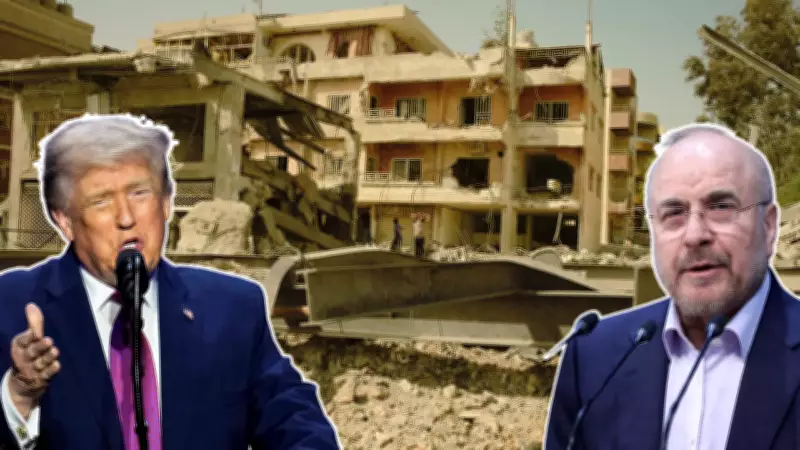
Iran Issues Stark Warning Over Strait of Hormuz Amid US Naval Blockade
Iran has issued a sharp warning that the Strait of Hormuz could be shut down again if the United States continues its naval blockade, while launching a fierce attack on President Donald Trump's recent claims. In a post on X, Iran's parliamentary speaker, Mohammad Bagher Qalibaf, accused Trump of spreading "seven lies in one hour", dismissing the US leader's remarks as entirely false.
Qalibaf's Direct Accusations Against Trump
Qalibaf stated bluntly, "The President of the United States made seven claims in one hour, all seven of which were false." He added that Washington "did not win the war with these lies, and they certainly will not get anywhere in negotiations either", signaling a hardening stance from Tehran as tensions over the critical waterway escalate. This comes despite Iran's earlier announcement that it had reopened the strait to commercial shipping after days of disruption linked to conflicts involving the US, Israel, and Iran-backed forces.
Conditional Reopening and Iranian Control
However, Iranian officials have made it clear that any reopening remains highly conditional. Qalibaf emphasized, "With the continuation of the blockade, the Strait of Hormuz will not remain open." He underlined that access to the route—through which approximately one-fifth of the world's oil flows—remains firmly under Iranian control. Authorities have indicated that passage will be tightly regulated, with ships required to follow "designated routes" and operate with "Iranian authorisation".

Operational Decisions and Market Impact
Qalibaf insisted that decisions on whether the strait is open or closed "shall be determined by the field, not by social networks", a direct swipe at Trump's claim that the waterway was "fully open". Data from maritime tracking firms suggests that vessel movement is still restricted to corridors requiring Iranian approval, casting doubt on how open the strait truly is. This uncertainty has kept global energy markets on edge, even as oil prices briefly eased on hopes of renewed diplomacy.
US Stance and Future Negotiations
On the other side, President Trump has asserted that the US blockade will remain "in full force" until a broader agreement with Iran is secured, including over its nuclear program. He has also hinted at potential fresh talks, suggesting that Tehran "wants to make a deal". The ongoing standoff highlights the fragile nature of this vital maritime chokepoint and its significant implications for international trade and energy security.






