Iranian Women's Defiance: 'Woman, Life, Freedom' Echoes Through Decades of Struggle
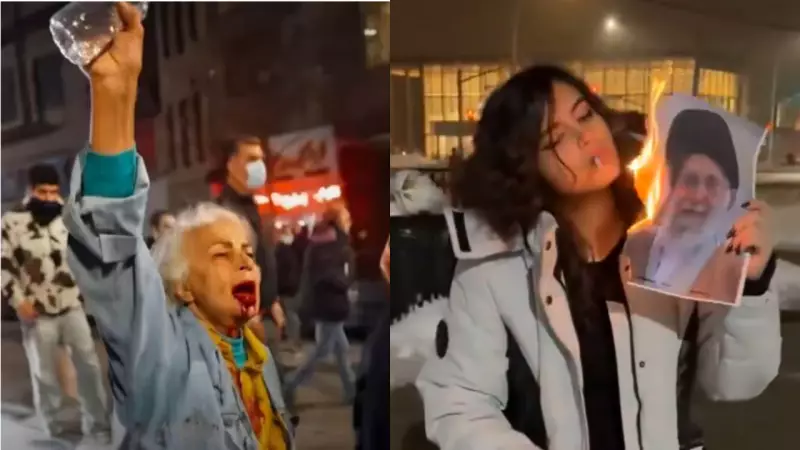
On a frigid night in Tehran, an elderly woman marched through a crowd of demonstrators, her voice rising in chants against the state. Her lips appeared stained with blood, yet she did not falter. "I'm not afraid," she declared boldly. "I've been dead for 47 years." This powerful moment, captured in a viral video during Iran's recent anti-government protests, resonated deeply with millions. Whether the red on her mouth was blood or paint became irrelevant—her words articulated a painful truth lived by generations of Iranian women: a profound sense that life, in its fullest expression, was stolen long ago.
Economic Despair Fuels Ancient Grievances
Today, as Iran contends with a collapsing economy, soaring inflation, and international isolation, women are once again at the forefront of dissent. While economic hardship has ignited mass demonstrations, the streets echo with something far older and deeper than anger over prices. Women are seizing this moment to reclaim a struggle that has defined generations—a fight for bodily autonomy, dignity, and the fundamental right to exist without fear. The rallying cry "Jin, Jiyan, Azadi"—Woman, Life, Freedom—now reverberates across cities and villages, both within Iran and beyond its borders.
Jin, Jiyan, Azadi: A Slogan Born of Blood and Resistance
The phrase "Woman, Life, Freedom" did not originate as a mere chant. It emerged from Kurdish feminist movements long before becoming a global symbol of resistance. In Iran, its meaning crystallized tragically on September 16, 2022, with the death of Jina Mahsa Amini, a 22-year-old Kurdish woman detained by morality police for allegedly wearing her hijab improperly. Witnesses reported she was beaten, while authorities denied wrongdoing. The United Nations later held Iran responsible for the "physical violence" that led to Amini's death in custody, sparking public fury.

Her death triggered the largest protests Iran had witnessed in years. Women burned headscarves, cut their hair publicly, and confronted armed security forces with bare faces and raised voices. The crackdown that followed was brutal: over 500 people were killed, and more than 22,000 were detained. Mahsa Amini has since become the enduring face of the Kurdish-led movement for women's rights in Iran.
When Morality Becomes Mandatory: The 1979 Turning Point
To comprehend why Iranian women continue to risk everything, one must return to 1979. Iran was already in turmoil during the late 1970s, with street battles between demonstrators and forces loyal to Shah Mohammad Reza Pahlavi. Ayatollah Ruhollah Khomeini returned from exile, promising justice and independence. However, many Iranians—including women—did not fully grasp the implications of his vision of 'Velayat-e Faqih', or 'Guardianship of the Jurist'.
The consequences unfolded rapidly. Thousands of former officials, writers, activists, and military officers were executed, followed by a brutal eight-year war with Iraq. Then came a quieter, more enduring transformation: the imposition of mandatory hijab and the systematic rewriting of women's lives through law. What began as ideological control hardened into a legal framework designed to discipline women's bodies, choices, and futures.
Law as a Tool of Submission: Systemic Barriers Faced by Women
Today, Iranian law permits girls to marry at 13, or even younger with approval from a male guardian and judicial consent. Women encounter enormous barriers to divorce and often lose custody of their children if they leave abusive marriages. Domestic violence remains widespread, yet police routinely dismiss it as a "family matter." Iran has not ratified the Convention on the Elimination of Discrimination Against Women (CEDAW), and protective mechanisms for abuse victims are virtually nonexistent.

Leaving home frequently means forfeiting financial support and children—a reality that traps women in violent households and, in many cases, leads to fatal outcomes. Control extends beyond the home: in recent years, the government has restricted which university majors women may pursue, limiting access to fields like engineering, education, and counseling. Professors who resist face harassment or dismissal, while protesting students are detained.
Despite these challenges, universities remain among the most defiant spaces in Iran. Every major protest movement—from the 1999 student uprising to the present—has been powered by young people, many of them women. As one Iranian expression puts it, they keep alive koorsoo—a small, stubborn flame of hope.
Symbols of Defiance: From Viral Videos to Public Confrontations
In moments of repression, symbolism becomes a powerful language. In one viral video, a woman believed to be an Iranian refugee in Canada set fire to a photograph of Supreme Leader Ayatollah Ali Khamenei. She lit a cigarette from the burning image and let the ashes fall. In 34 seconds, she broke multiple taboos:
- Appearing without a hijab
- Destroying the image of the country's highest authority—a crime punishable by death
- Smoking, an act deemed immodest for women
Whether staged or spontaneous, her gesture resonated globally, inspiring similar acts from Israel to Germany, Switzerland to the United States. Inside Iran, defiance is even more dangerous. In Mashhad, a woman climbed naked onto a police vehicle after allegedly being assaulted for improper hijab, using her body as a weapon against shame. At Tehran's Mehrabad Airport, another woman confronted a cleric who challenged her attire, removing his turban and placing it on her own head. "So you have honour now?" she asked, cutting through centuries of imposed morality.
The Steep Cost of Resistance: Lives Lost and Voices Silenced
Resistance in Iran carries a heavy price, and women are paying it with their lives. Human rights groups have documented the killing of female protesters during recent crackdowns. Among them was Sholeh Sotoudeh, a pregnant mother of two shot dead in Gilan Province, and Ziba Dastjerdi, reportedly killed in front of her daughter. Executions continue as a tool of terror: Zahra Tabari, a 67-year-old engineer and activist, was sentenced to death following what supporters describe as a sham 10-minute remote trial. Her alleged crime was holding a banner that read "Woman, Resistance, Freedom." According to Iran Human Rights, over 40 women have been executed in 2025 alone.
Even art is punished. Pop singer Mehdi Yarrahi was flogged 74 times for releasing a song titled 'Soroode Zan', which urged women to remove their headscarves. "The person who is not willing to pay a price for freedom is not worthy of freedom," he wrote afterward. His words have echoed across campuses, where his music remains an underground anthem.
A Global Echo: International Solidarity and Condemnation
The world has not remained silent. More than 400 prominent women worldwide—including Nobel laureates and former heads of state—have demanded the release of Zahra Tabari. UN experts warn that her case reflects a broader pattern of gross human rights violations and the misuse of capital punishment. Nobel laureate Malala Yousafzai has highlighted the eroding freedoms of Iranian women, stressing that restrictions extend far beyond education into every aspect of public life. Iranian activists in exile, journalists, and artists continue to amplify voices from inside the country, despite threats to their families back home.
When Women Lead: The Heart of Iran's Protest Movements
Every protest wave in Iran eventually returns to women, because women experience the state most intimately—on their hair, their clothing, their marriages, their classrooms. Economic collapse may bring crowds to the streets, but it is women who articulate what is fundamentally at stake. Their protest is not solely against poverty or corruption; it is against a system that demands submission as the price of survival.
History suggests that regimes which wage war on women and intellectual institutions lose more than control—they lose legitimacy. Iran's universities, homes, and streets are becoming spaces where fear no longer fully works. The elderly woman in the night march understood this profoundly. She had survived decades of repression, her body bearing the cost, yet she walked on. "I've been dead for 47 years," she declared—not as surrender, but as a powerful indictment.
For Iranian women, protest is not merely a moment; it is a condition of life. And as long as they keep chanting 'Jin, Jiyan, Azadi!' the struggle—whether quiet or loud, symbolic or bloody—will not end.