Political systems sometimes reach a breaking point where repression no longer works. Instead, it reveals deep exhaustion. Iran appears to be experiencing exactly such a moment right now.
A Reckoning Long Deferred
What we see across Iran today is not just another protest cycle. The country has seen many of those before. This time feels different. It resembles a reckoning that has been delayed for too long. The conditions making this possible were largely created by the regime itself.
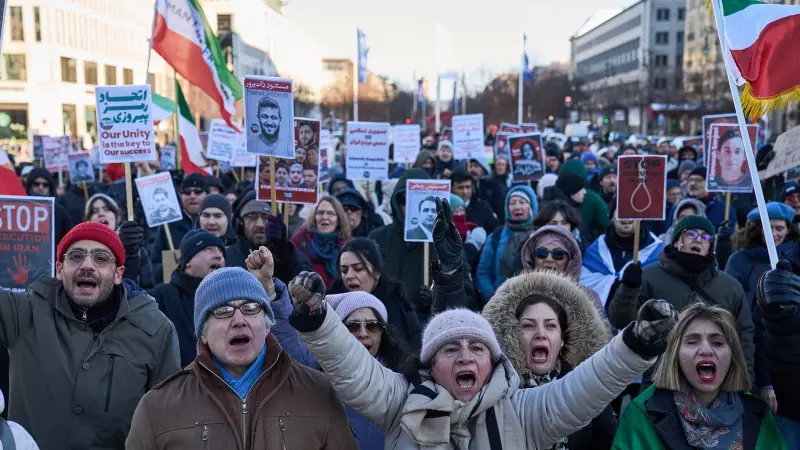
Demonstrations have spread from Tehran to provincial towns and smaller cities. They are fueled by a long list of grievances, not just one issue. Economic collapse provided the immediate spark. The currency is in free fall. Inflation has made wages meaningless. Daily life erodes the dignity of people who were once promised moral purpose in exchange for material sacrifice.

Beyond Economic Pain
Economic suffering alone does not explain why the unrest persists. What makes the current moment distinct is a widely shared belief. More and more Iranians feel there is no corrective mechanism left within the system itself. The state can still punish its citizens. It can no longer persuade them.
The regime's response has been both violent and predictable. It follows a decades-old script: internet blackouts, mass arrests, lethal force, and blaming foreign plots. Repeating these tactics has drained them of their authority. When a government relies solely on coercion, it admits something crucial. It shows that public consent, the quiet but essential lubricant of rule, has evaporated. What remains is fear, and fear is a wasting asset.
Resisting Simple Narratives
It is tempting, especially from outside Iran, to frame this as imminent collapse or a democratic breakthrough. History advises caution. States often survive long after they deserve to. Revolutions rarely follow the schedules of those who anticipate them.
Still, calling this uprising just another chapter in a familiar cycle would be a mistake. Several features mark it as different and potentially more consequential.
A New Focal Point Emerges
For the first time since the Islamic Republic's early years, an opposition figure has gained prominence. Former Crown Prince Reza Pahlavi functions less as a savior and more as a focal point. His appeal does not come from promising a restored monarchy. There is little appetite for that idea. Instead, he serves as a symbolic transitional figure. He acts as a placeholder for a future not yet fully imagined.
His rise reflects a hunger for political continuity without clerical domination. In a country where opposition has long been fragmented, this development matters significantly.
The Regime's Exhausted Playbook
The regime's predicament worsens because it lacks credible internal alternatives. In past crises, the Islamic Republic could gesture toward reform, however insincerely. It could rotate elites to preserve the system while relieving pressure. That repertoire is now exhausted.
The state cannot meet the protesters' demands. Doing so would require dismantling the very networks of privilege, corruption, and impunity it depends on. Reform is no longer a viable path for the ruling elite or the average citizen.
External Isolation Deepens
Externally, Tehran finds itself more isolated than its rhetoric admits. Russia and China are often called strategic partners. In reality, they maintain unmistakably transactional relationships. Their interest lies in leverage and stability, not ideological solidarity.
An Iran weakened by unrest and economic collapse offers them diminishing returns. They will issue statements opposing foreign interference. They will not provide meaningful guarantees of rescue. The age of revolutionary camaraderie has ended. It has given way to the colder arithmetic of cost and benefit.
The Shadow of the United States
The United States looms over this entire situation. The Trump administration's response combined public threats, economic pressure, and vague offers of engagement. This deepened Tehran's sense of vulnerability without offering a plausible exit.

Iranian leaders remember the deception and miscalculation that preceded the brief but punishing war with Israel and the United States. Negotiation now appears both necessary and dangerous. It is a gamble undertaken from weakness, haunted by precedent, and constrained by domestic unrest that leaves little room for compromise.
A Regime Trapped
The result is a regime caught between fear of its own society and distrust of the outside world. It cannot repress its way back to legitimacy. Nor can it negotiate its way out of isolation without risking further internal fracture. This is what political exhaustion looks like. It is not collapse, but paralysis.
An Uncertain Turning Point
Whether this moment becomes a true turning point remains uncertain. Transitions are rarely linear. History offers no guarantees. One thing is clear. The Islamic Republic has reached the limits of its governing imagination. It no longer knows how to adapt without undoing itself.
That fact, more than the crowds in the streets or the slogans shouted at night, is the most telling sign of change. Iran's future will be decided by Iranians, not by foreign governments or exiled princes. The present unrest suggests the old order has lost its claim to inevitability.
The critical question now is how much damage it will inflict on ordinary Iranians before accepting that its time, at last, is up.