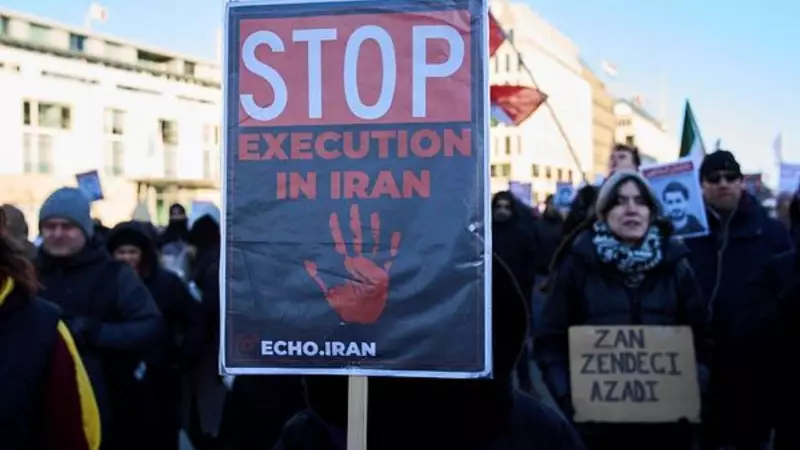
Iran stands at a critical historical juncture. The old order appears to be nearing its end, while a new one struggles to be born. This situation creates immense tension within the country.
The Unfulfilled Promises of 1979
In 1979, the Iranian people launched a revolution with three clear goals. They sought independence, freedom, and social justice. Today, after forty-seven years, many citizens view the outcome as a profound failure.
The promised independence has shifted dependencies. Iran severed ties with the United States but now moves closer to China and Russia, often in humiliating ways. Political and civil freedoms face severe restrictions. Even personal lifestyle choices encounter surveillance and repression.

Social justice has fallen victim to widespread corruption. This corruption permeates from the highest levels of power down to the lowest bureaucratic layers. The result is a shrinking livelihood for most citizens and a widening gap between rulers and society.
Economic Hardship Fuels Discontent
Chronic inflation plagues the nation. The national currency has collapsed. Unemployment rises steadily. Economic insecurity turns daily life into a constant struggle for survival. These conditions make repeated protest waves entirely predictable.
Each wave of protest faces violent suppression. Yet the dissent never fully disappears. It re-emerges repeatedly in new and more radical forms.
Symbolic Protests Begin in Tehran's Bazaar
The latest protest wave started with strikes and gatherings at Tehran's Grand Bazaar. This location holds deep symbolic significance. The bazaar represents the economic heart of the capital. Historically, it served as a traditional stronghold supporting the 1979 revolution and the Islamic Republic.
Protests beginning there indicate a major shift. Social groups once considered the regime's backbone have now joined the dissent ranks. The movement quickly evolved beyond sectoral and economic demands.
It transformed into nationwide protests with explicit political slogans. These demonstrations spread across both large cities and small towns.
Government Responds with Familiar Repression
The government's response follows a familiar four-decade pattern: harsh repression. Authorities implement widespread internet shutdowns. They impose severe communication restrictions. Some areas even experience electricity cuts.
The objective remains clear. The regime seeks to create an information vacuum. This allows them to control the narrative and carry out violence away from the world's eyes.
Persian-language media outlets abroad report large numbers of protester deaths. These figures cannot be independently verified due to communication blackouts. However, their scale and frequency point to the crisis's severity.
Despite the repression, protests continue. In some areas, they have escalated into direct, face-to-face clashes between citizens and government forces.
A Dual Threat at Regional and Global Levels
Over forty-seven years, the Islamic Republic has demonstrated it obstructs Iranian aspirations for freedom. It also presents a dual threat regionally and globally.
Iran's nuclear programme raises international concerns. Ballistic missile development continues. Support for proxy groups in the Middle East persists. A record of terrorist activities makes Iran a focal point of instability.
Domestically, any demand for reform or change faces routine dismissal. Authorities label such demands as the work of "foreign enemies."
The Challenge of Overcoming the System
Historical experience suggests a difficult path. The Iranian people, acting alone without effective international support, have little chance of overcoming this ideological and violent system.
Conversely, the international community cannot achieve sustainable change without relying on Iran's internal social forces. This reality explains why a large segment of Iranian society hopes the world will now stand with the people rather than the government.
International Response Reaches Decisive Point
Statements by US President Donald Trump have reached a critical juncture. He expressed support for protesters and warned against killing civilians. If the US fails to act after widespread reports of bloody repression, Tehran will receive a clear message.

That message would be that the cost of violence remains manageable. In such a scenario, repression would intensify. Public despair would deepen. The risk of the country sliding into internal violence or even urban warfare would increase significantly.
Three Possible US Response Scenarios
Broadly speaking, the US response could follow three possible scenarios:
- A purely symbolic response: This non-decisive action aims to preserve political credibility but would only embolden the regime.
- A moderate response: Targeting Iran's nuclear and missile facilities could contain regional threats but likely intensify domestic repression.
- A decisive response: Aiming at the apex of power and main repression instruments could significantly shift the balance toward the people.
Internal Dynamics and Opposition Fragmentation
Inside Iran, the government's repression capacity gradually erodes, though its will to suppress remains intact. Internationally, Russia lacks capacity for full Tehran support due to preoccupation with the Ukraine war.
Yet the popular movement's Achilles' heel remains opposition fragmentation. The divide between republicans and monarchists prevents unified leadership emergence.
Monarchists, centered around the son of Iran's last shah, enjoy stronger media presence. Republicans fear reproducing another dictatorship form. The most prominent republican figure, Mir-Hossein Mousavi, remains under house arrest for years, absent from the political scene.
Key Variables Determining Iran's Future
Iran's future now depends on several key variables:
- The response of foreign powers
- The degree of opposition unity
- The level of violence the population can endure
One clear fact emerges: the Islamic Republic has lost legitimacy in the eyes of a large portion of Iranian society. Another decisive factor involves the regime's ageing leader. His death or removal could expose deep internal system rifts and fundamentally alter events' trajectory.
A Historic Crossroads
Iran today stands at a historic crossroads. The nation faces a choice between continued repression and beginning a difficult yet hopeful path toward freedom. The old order may be near its end, but the new one struggles to be born amid complex challenges and uncertain outcomes.