

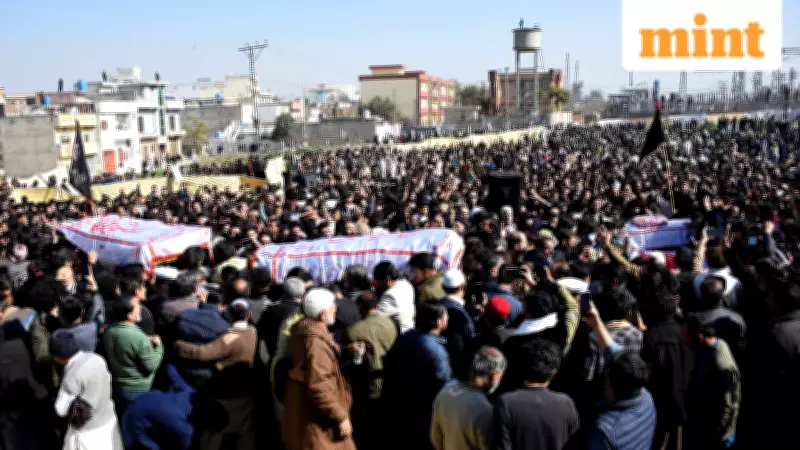
ISIS Affiliate Claims Responsibility for Deadly Mosque Bombing in Pakistan
An affiliate of the Islamic State group has taken responsibility for a devastating suicide bombing at a Shiite mosque on the outskirts of Pakistan's capital, Islamabad. The attack resulted in the tragic deaths of 31 individuals and left 169 others injured, marking a severe escalation in sectarian violence in the region.
Details of the Attack and Investigation
According to reports, the regional Islamic State branch, known as Islamic State in Pakistan, issued a statement through its Amaq News Agency claiming the attack. The statement described how the attacker fired at security guards attempting to stop him at the main entrance before detonating his explosive vest upon reaching the mosque's inner gate.
Authorities have made significant progress in the investigation, identifying the bomber and his facilitators. Pakistani officials have arrested the alleged mastermind of the attack, along with several other suspects, including the bomber's brother, mother, and other relatives, during overnight raids in Islamabad and northwestern Pakistan. Tragically, a police officer was killed during these operations.

Rising Militant Violence and Regional Tensions
This mosque bombing represents the deadliest attack in Islamabad since the 2008 suicide bombing at the Marriott Hotel, which killed 63 people. The incident occurs as Prime Minister Shehbaz Sharif's government grapples with a surge in militant strikes across Pakistan. Officials revealed that the attacker was a Pakistani citizen who had recently visited Afghanistan, highlighting cross-border security concerns.
The Islamic State group explicitly stated it considers Pakistani Shiites as legitimate targets, referring to them as a "human reservoir" supplying recruits to Shiite militias fighting against IS in Syria. This declaration underscores the group's intent to deepen sectarian divisions within Pakistan, a predominantly Sunni country where Shiites constitute a significant minority.
International Condemnation and Government Response
The attack has drawn widespread condemnation from the international community, including the United States, Russia, and the European Union. Prime Minister Sharif expressed gratitude for global messages of sympathy and support, describing the incident as a "heart-wrenching suicide attack." He emphasized that international backing remains crucial for Pakistan's counterterrorism efforts and vowed to bring the perpetrators to justice.
Pakistan's Defence Minister Khawaja Mohammad Asif stated that the attack demonstrates how Pakistan-based militants operating from Afghanistan continue to pose a threat capable of targeting the capital. These remarks prompted a strong response from Afghanistan's Taliban government, which condemned the mosque attack while criticizing the Pakistani defence minister for "irresponsibly" blaming Afghanistan.
Historical Context and Sectarian Targeting
Islamic State, a Sunni extremist group, has previously targeted Pakistan's Shiite minority in apparent attempts to fuel sectarian strife. In 2022, IS claimed responsibility for a suicide bombing at a Shiite mosque in Peshawar that killed at least 56 people and injured 194. The recent attack follows other incidents in the capital, including a November suicide bombing at a court that killed 12 individuals.
While Islamabad has experienced relatively fewer attacks compared to other regions, Pakistan has witnessed a concerning increase in militant violence recently. Much of this violence has been attributed to Baloch separatists and the Pakistani Taliban (Tehrik-e-Taliban Pakistan or TTP), which operates separately but maintains alliances with Afghanistan's Taliban.
The investigation has reportedly uncovered that the bombing was planned by IS in Afghanistan, presenting what officials describe as a threat to both regional and global security. As of now, there has been no immediate response from Kabul regarding these specific claims, though the broader tensions between Pakistan and Afghanistan over militant sanctuaries continue to simmer.






