

Massive Protest in Jaisalmer to Safeguard Traditional Grazing Lands
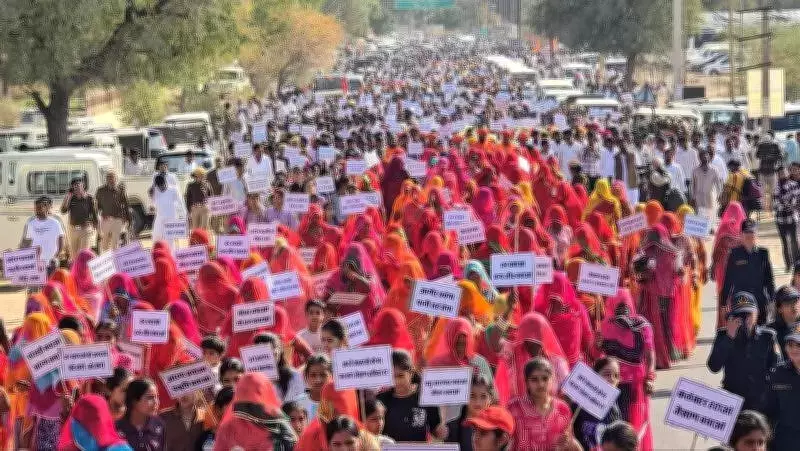
In a significant display of grassroots mobilization, thousands of villagers from across Jaisalmer district gathered at the district headquarters on Tuesday. The diverse crowd included women, pastoralists, farmers, youth, saints, and environmentalists, all united in their demand for the protection of Oran and Gochar lands. These traditional grazing grounds and vital water sources are reportedly being allocated to solar energy companies, sparking widespread concern among local communities.
Growing Movement for Land and Livelihood Protection
The protest commenced in the morning at the historic Veer Alaji temple premises, with participants arriving from numerous villages and hamlets throughout the border district. As the day progressed, the gathering swelled into a formidable assembly. Speakers at the event framed the movement as a crucial battle to preserve land, forests, and water resources, emphasizing that these elements are fundamental to sustaining livelihoods and supporting the rural economy.
Following the initial meeting, protesters organized a foot march through the city's main thoroughfares, culminating in a demonstration at the Collectorate. Throughout the march, participants raised slogans criticizing both the district administration and the state government for their handling of the land allocation issue. The involvement of spiritual leaders, including Pokhran MLA Mahant Pratap Puri and other members of the saint community, added a profound social and religious dimension to the mobilization, highlighting the cultural significance of the lands in question.

Environmental and Economic Concerns Raised
Environmentalists and representatives from various social organizations presented detailed arguments against the land allocations. They pointed out that land officially classified as government wasteland is, in practice, essential grazing ground for thousands of cattle. Additionally, these areas serve as hubs for ancient wells and traditional water systems that have sustained communities for generations.
The central demand of the protesters is to have the district's Oran and Gochar lands, estimated to cover approximately 20 lakh bigha, along with the old wells, officially recorded in government revenue records. This formal recognition is seen as a critical step to prevent their diversion for industrial or commercial purposes. Environmentalist Sumer Singh Sanwata articulated the broader implications, stating that Oran, Gochar, forest areas, and water sources collectively form the backbone of the rural economy. These resources support livestock rearing, provide employment opportunities, and maintain ecological balance.
Sanwata issued a stark warning about the potential consequences of unchecked exploitation. He cautioned that continued diversion of these lands could lead to long-term shortages of water and fodder, severely reducing livelihood options for future generations. Furthermore, he emphasized that Oran is traditionally regarded as sacred land, with villagers historically taking responsibility for its protection. However, he noted with concern that the area of these sacred lands has been steadily shrinking, exacerbating the urgency of the current protest.
The protest in Jaisalmer underscores a growing conflict between renewable energy development and traditional land use practices. As solar companies seek to expand their footprint in the region, local communities are rallying to defend their cultural heritage, economic stability, and environmental sustainability. The event marks a pivotal moment in the ongoing dialogue about land rights and resource management in rural India.






