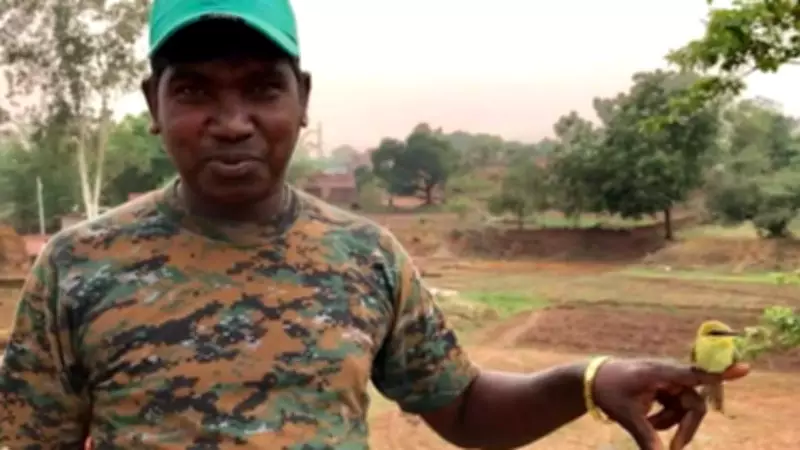
Jharkhand's 'Birdman' Takes on Sparrow Decline with Homemade Nest Initiative
Across India, the once-common house sparrow has experienced a dramatic population collapse, a crisis driven by rapid urbanization, vanishing nesting sites, environmental pollution, and shifts in agricultural practices. While many lament this loss, one man in rural Jharkhand is taking direct, hands-on action to reverse the trend.
A Village Transformed by Handmade Bird Homes
Panna Lal Mahto, a resident of a small village in Ramgarh district, has embarked on a personal mission to provide shelter for sparrows. "Last year, I made nests for sparrows in every home in my village, and we saw nearly 80% habitation," Mahto states with evident pride. "This year, I've just finished installing nests in the last house, and we expanded to other villages too. You won't believe it—by the time we completed the work, sparrows had already started settling in three to four houses."
His work operates without any official grants or institutional funding. Every nest, every outreach effort, is financed from his own modest pocket, powered solely by passion and an unwavering commitment to avian welfare. This dedication has earned him the affectionate local nickname "Birdman."

More Than a Hobby: A Lifelong Devotion to Avian Life
Panna Lal's connection to birds is profound and deeply personal. His journey began in the mid-1990s when his uncle rescued a grey partridge and a parakeet. "I used to feed these two birds," he recalls. "When I would go to them with their food, they would show their love and gratitude by flapping their wings, and it filled my heart with love. These are very expressive creatures, and they communicate with us if we are ready to listen."
This early experience blossomed into a lifetime of self-taught expertise. He is a completely self-made naturalist, having debunked bird-related myths through meticulous observation rather than formal ornithology degrees. His knowledge is both wide and deep; he knows the names and behaviors of hundreds of species and possesses an extraordinary talent for mimicking bird calls.
"Most naturalists will see a bird and then tell you about it," he says. "But I can simply hear a bird’s call and tell you everything about it." His ability to accurately reproduce the distinct calls of doves, sparrows, and countless other birds is so remarkable it feels as if the forest itself is speaking through him.Family Support and Community Outreach
His mission is supported by his nephew, Om Prakash Mahto, who lives in Delhi while preparing for the UPSC examinations. Om Prakash manages Panna Lal's Instagram presence and often joins him on birding trips. "Whatever time he finds in between work, he spends it improving the lives of these fellow creatures," Om Prakash says of his uncle. "He knows them, and they seem to know him."
Together, they run free awareness programs in local schools and colleges, educating the next generation on the critical importance of protecting birds and their natural habitats. "We don't charge anything; we do it for free," Om Prakash emphasizes. "Being an ornithologist is an expensive affair. You need high-quality equipment. Our Birdman is self-taught and has been managing it all with whatever little income he has."
Observing Avian Intelligence and Fostering Symbiosis
Panna Lal's observations reveal the sophisticated intelligence of birds. He cites the Ashy-crowned Sparrow-Lark, which performs a deceptive "broken-wing" act, fluttering clumsily like a helpless chick to distract predators from its real nest. "Birds are very smart and have interesting ways of staying alive," he notes.
The bond he shares with birds is visibly reciprocal. When he is present, birds gather around him, flapping wings and chirping softly, behaviors he interprets as communication and trust. This unique relationship stands as a powerful testament to the potential for harmonious coexistence between humans and nature.

For Panna Lal Mahto, this is not a temporary project but a lifelong vocation. He is committed to spending his free time and limited resources to ensure the well-being of birds—providing food and water, securing nesting areas, and rescuing the injured. In the quiet villages of Jharkhand, the Birdman's work is slowly rebuilding a world where sparrows, and the symphony of birdsong they bring, can thrive once again.