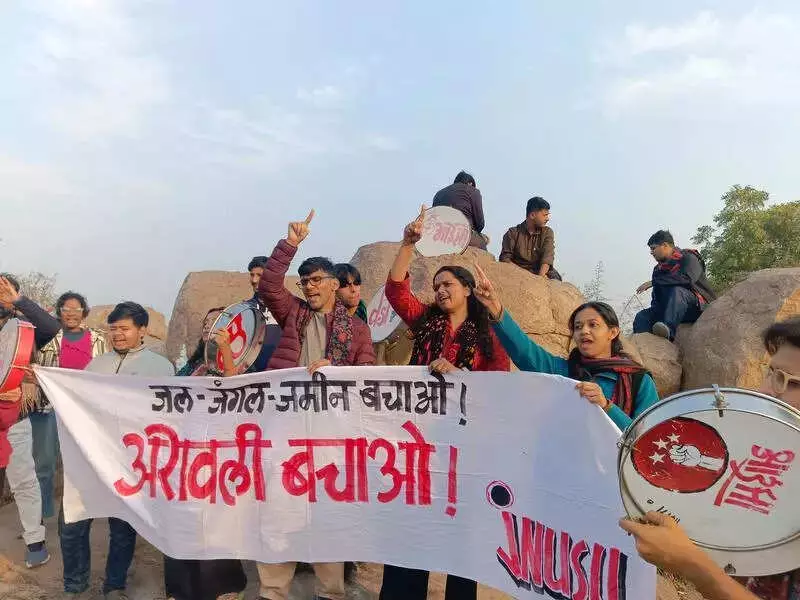
Students at Jawaharlal Nehru University (JNU) in New Delhi took to the campus streets on Saturday, voicing strong opposition against a recent government notification concerning the definition of the Aravali range. The protest march, spearheaded by the Jawaharlal Nehru University Students' Union (JNUSU), highlighted growing fears that the move could lead to severe ecological damage.
The 'Save Aravali' March: A Walk for Conservation
The demonstration, named 'Save Aravali', saw a gathering of concerned students who walked from the popular Ganga dhaba to Parthasarathy Rocks. This spot is the highest natural point on the JNU campus and lies along the southern edge of the Aravali range itself. The march served as a direct response to the central government's revised definition of the Aravalis, which was notified following a Supreme Court order dated November 20.
Why Are Students and Environmentalists Worried?
The core of the protest revolves around a critical change in the legal definition. Protesters and environmental groups argue that the new criteria, which excludes areas below 100 metres in height from being classified as part of the Aravali range, is dangerously flawed. They believe this revision could strip protective legal status from vast stretches of the ancient hill ecosystem.

Addressing the participants, JNUSU president Aditi Mishra alleged a broader pattern where forests and hill regions across India are being opened up for private commercial interests, leading to community displacement and ecological harm. Students cited expert assessments warning that a significant portion of the existing Aravali landmass could become vulnerable to mining, excavation, and real estate projects if the definition is implemented.
Broader Consequences and Solidarity
The protesters warned of far-reaching impacts beyond the immediate hills. They stated that further degradation of the Aravalis could disrupt the ecological balance of the entire western Indo-Gangetic plain, potentially leading to rising temperatures, desertification, and worsened air and water pollution.
JNUSU joint secretary Danish Ali specifically pointed out that the move could further aggravate Delhi's already critical pollution levels and urged authorities to reconsider the decision. The JNU students also expressed their solidarity with similar ongoing movements in Rajasthan and other regions fighting against the revised definition.
The primary demand from the gathering was for stronger legal safeguards for the Aravali range, which they described as absolutely critical for maintaining the environmental health of North India.