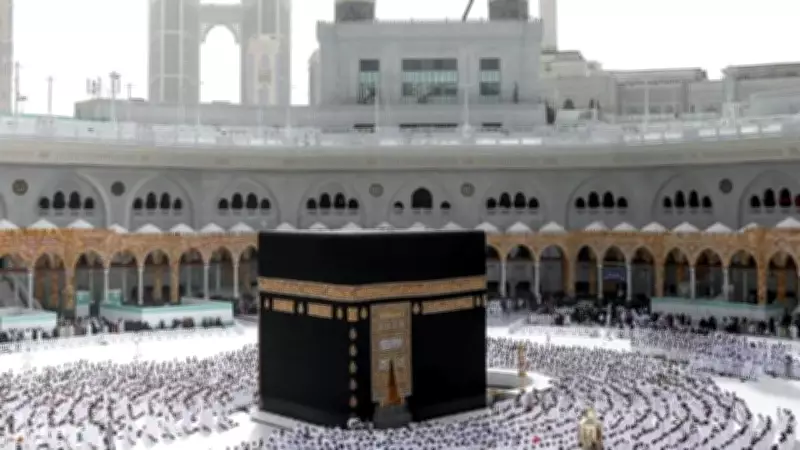
The Science Behind the Kaaba's Cool Marble in Scorching Heat
Anyone who has walked barefoot around the Kaaba during peak summer knows the sensation intimately. The sun beats down relentlessly, and the air hangs heavy with intense heat, yet the marble underfoot remains surprisingly cool to the touch. In a location where temperatures frequently soar past 45°C, this remarkable detail often leaves visitors quietly puzzled and intrigued.
High-Quality Marble with Exceptional Properties
The courtyard surrounding the Kaaba is paved with high-quality, light-coloured marble, widely identified as Thassos marble. This dolomitic stone is renowned for its high solar reflectance and low heat absorption coefficient. Unlike darker paving materials that absorb and store solar radiation, Thassos marble reflects a significant portion of incoming sunlight. Consequently, surface temperatures stay markedly lower compared to materials like concrete or asphalt, even under prolonged exposure to direct sun.
Scientific Research on Thermal Behavior
Scientific research has delved deeply into this unique behavior. A 2022 study published in the Journal of The Institution of Engineers (India) Series D, titled Investigating the Unique Thermal Properties of Thassos Marble, analyzed the thermophysical characteristics of the stone. Researchers discovered that Thassos marble exhibits higher thermal conductivity than conventional white marble. This property allows heat to disperse more efficiently through the material instead of accumulating at the surface. The study also emphasized that the marble's microstructure and mineral composition enhance both reflectivity and internal heat redistribution.

Supporting these findings, a 2021 peer-reviewed study titled Cool White Marble Pavement Thermophysical Assessment at Al Masjid Al-Haram, Makkah City, Saudi Arabia utilized local weather data and thermal modeling under real climatic conditions. The researchers concluded that the marble's high reflectance significantly reduces surface temperatures. They determined that the use of cool white marble plays a critical role in maintaining safe and comfortable walking conditions for barefoot pilgrims.
Architectural Design Reinforces Cooling
The cooling effect is further reinforced by thoughtful structural design. The marble slabs are thick and installed over specialized insulating layers and air-permeable spaces. This layered configuration enables heat to dissipate downward and sideways rather than remaining concentrated at the surface. Additionally, the expansive open-air layout of the Grand Mosque allows for continuous airflow across the courtyard, while the steady movement of worshippers contributes to ground-level air circulation.
A Carefully Engineered Thermal System
What appears to be a simple stone surface is, in reality, a meticulously engineered thermal system. Through the integration of high-reflectance marble, enhanced thermal conductivity, layered insulation, and architectural airflow, the Mataf maintains moderated surface temperatures in one of the world's hottest urban environments. This combination of natural material properties and human ingenuity ensures comfort and safety for millions of pilgrims each year.