A crucial environmental panel under the Union Environment Ministry has given its recommendation for the 1200-MW Kalai-II hydroelectric project on the Lohit River in Arunachal Pradesh. This decision comes despite serious concerns raised by environmentalists and local residents about a glaring omission in the project's Environmental Impact Assessment (EIA) report—the complete absence of any mention of the critically endangered white-bellied heron, a bird whose habitat overlaps with the project area.
EIA Report's Critical Omission
The EIA report for the Kalai-II project, prepared by government consultant WAPCOS Ltd, documented 28 avian species in the study area but failed to record the white-bellied heron. This is a significant oversight, as the bird is listed under Schedule-I of the Wildlife Protection Act, granting it the highest level of legal protection. Furthermore, the International Union for Conservation of Nature (IUCN) classifies it as Critically Endangered.
Just a day before the Expert Appraisal Committee (EAC) meeting on December 19, environmentalist Bimal Gogoi and local resident Soblam Malo wrote to the panel flagging this omission. They pointed out that the project-affected area is a contiguous habitat with recent records of the bird in the Lohit River basin, including the Kamlang Tiger Reserve. Gogoi noted that the EIA report only recorded Kamlang as a sanctuary, not a tiger reserve.

A Species on the Brink
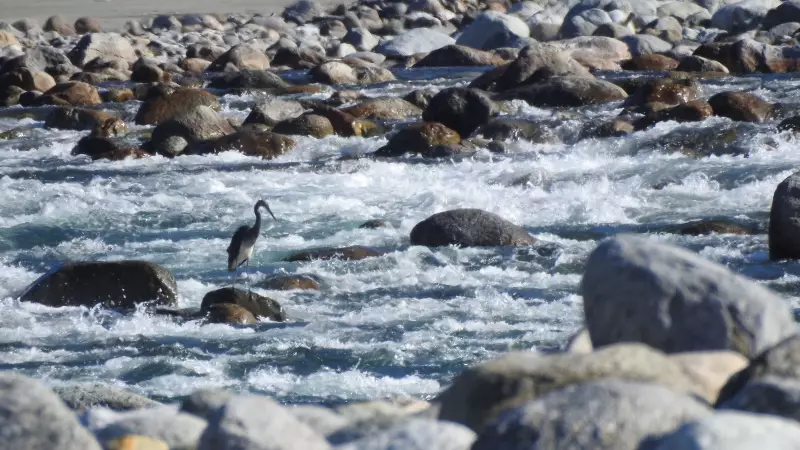
Scientists and researchers emphasize the precarious state of the white-bellied heron. Rohit Naniwadekar, a scientist with the Nature Conservation Foundation, stated that the bird prefers free-flowing riverine habitats with minimal disturbance and relies on fish from river rapids. Its population in Arunachal Pradesh is found in the Lohit, Anjaw, and Changlang districts.
Experts estimate that there may be only about 60 individuals left in the wild globally, with a mere 4-5 breeding pairs in Bhutan and even fewer in eastern Arunachal Pradesh. The IUCN Red List suggests a global population of less than 250. A researcher, who wished to remain anonymous, highlighted that Walong, located upstream of the proposed Kalai-II project, is one of only two known nesting sites in India, the other being Namdapha Tiger Reserve. Nest abandonment due to human disturbance has already been recorded in Walong.
Project Details and Unanswered Questions
The Kalai-II project, to be developed by THDC India Ltd at an estimated cost of Rs 14,176.26 crore, involves constructing a 128.5-meter concrete gravity dam and an underground powerhouse near Hawai village in Anjaw district. The Lohit River is a major tributary of the Brahmaputra.
This is not the first time the EAC has considered the heron's habitat. In 2020, while clearing the 1750 MW Lower Demwe project on the same river, the committee had specifically sought a detailed conservation plan for the species. The current approval for Kalai-II raises questions about the consistency of environmental oversight.
Queries sent by The Indian Express to EAC chairperson Prof Govind Chakrapani (IIT-Roorkee), member secretary Yogendra Pal Singh, and WAPCOS Ltd did not receive any response. The silence from the authorities contrasts with the documented threats to the heron, which, as noted in a June 2023 article in the journal Indian Birds, include habitat loss, hunting, human disturbances, dams, and collisions with power lines.