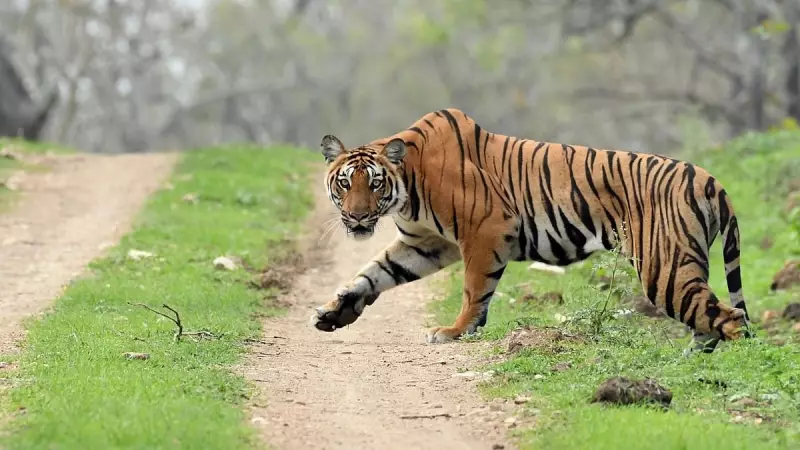
In a significant expansion of its flagship wildlife monitoring exercise, the Karnataka Forest Department will now assess the population of other major carnivores and mega herbivores alongside the tiger census. The announcement was made by the state's Forest Minister, Eshwar Khandre, outlining a comprehensive three-phase plan for the ecological survey.
Beyond Tigers: A Holistic Ecological Assessment
While the tiger estimation remains the central focus, the revised methodology marks a pivotal shift towards a more holistic understanding of forest ecosystems. Minister Khandre stated that the exercise will now systematically track the numbers of other key predators that share the tiger's habitat. Furthermore, the survey will include an assessment of mega herbivores, such as elephants and gaurs, which play a crucial role in shaping the vegetation and overall health of the landscape.
The decision, announced on 05 January 2026, underscores a growing recognition among conservationists that managing a single species in isolation is insufficient. The overall health of a forest is determined by the complex interplay between its apex predators, their prey base, and the large herbivores that modify the environment.

The Three-Phase Execution Plan
The extensive field exercise is designed to be carried out in three distinct phases to ensure accuracy and depth of data. The first phase will involve the collection of ground-level data through traditional methods like patrols and sign surveys. The second phase is expected to leverage advanced technological tools, including camera traps and satellite imagery, for more precise monitoring.
The third and perhaps most critical phase will focus on assessing the carrying capacity of the surveyed areas. This analysis will determine the maximum number of animals, particularly tigers and other large species, that the forest can sustainably support based on available prey, water, and space. This data is vital for formulating long-term conservation strategies and managing potential human-wildlife conflict.
Implications for Conservation Policy
This expanded census approach is set to provide Karnataka's wildlife managers with an unprecedented dataset. By understanding the populations of all large carnivores and herbivores, the forest department can:
- Better evaluate the success of existing conservation programs.
- Identify areas under ecological stress due to overpopulation or resource scarcity.
- Make informed decisions about habitat corridors and protected area management.
- Develop more effective strategies to mitigate conflict between humans and wildlife.
The initiative, spearheaded by Forest Minister Eshwar Khandre, positions Karnataka at the forefront of scientific wildlife management in India. The insights gained from this comprehensive estimation will not only guide state policy but also contribute valuable information to the national understanding of India's rich but pressured biodiversity.