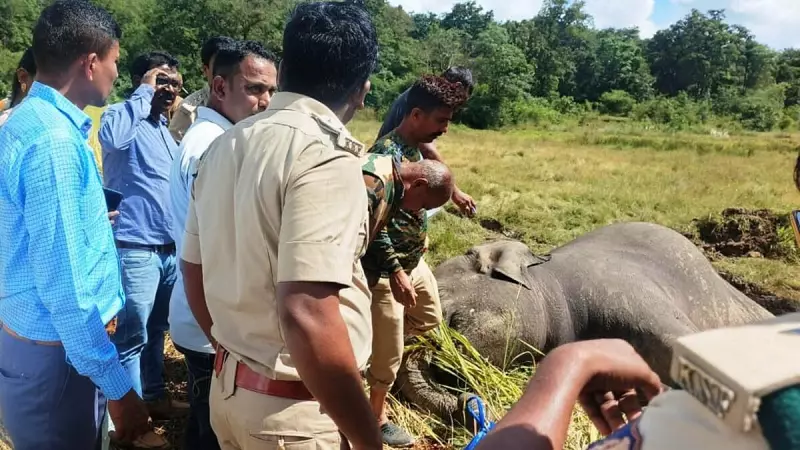
In a significant move to address the escalating issue of human-wildlife encounters, the state of Karnataka has officially launched a centralized Integrated Command and Control Centre (ICCC). The high-tech hub, announced on 03 January 2026, is designed to streamline the monitoring and strategic response to conflicts between people and animals across the state's forest divisions.
A Two-Tiered System for Rapid Response
The new framework establishes a clear division of labor between local and state-level authorities. At the grassroots level, Divisional Command and Control Centres (DCCCs) have been activated. These divisional hubs are the first point of contact, responsible for receiving and addressing specific complaints and grievances from villages and towns. A key function of the DCCCs is to deploy Quick Reaction Forces (QRFs) to conflict sites for immediate intervention.
Meanwhile, the newly inaugurated state-level Integrated Command Centre (ICCC) assumes a broader, oversight role. Its primary mandate is the monitoring and evaluation of all mitigation work undertaken by the divisional teams. By aggregating data from the DCCCs, the ICCC will analyze trends, assess the effectiveness of responses, and help formulate long-term strategies to reduce conflict incidents.

Enhancing Coordination and Data-Driven Decisions
The creation of this integrated system marks a shift towards a more coordinated and data-centric approach to wildlife management. Previously, responses could be fragmented across different forest divisions. The ICCC will provide a unified platform, ensuring that resources are allocated efficiently and best practices are shared swiftly across Karnataka.
This initiative is particularly crucial for a state rich in biodiversity, where encounters involving elephants, leopards, tigers, and wild boars are frequent. The command centre aims to safeguard both human lives and livelihoods in fringe areas while also ensuring the conservation and protection of wildlife.
Looking Ahead: A Proactive Stance on Conservation
The launch, reported by Chiranjeevi Kulkarni, underscores the Karnataka government's proactive stance on a complex environmental and social challenge. By separating operational response (DCCCs) from strategic analysis (ICCC), the state hopes to build a more resilient system.
The success of this model will depend on seamless communication between the two tiers, adequate staffing, and the integration of technology like real-time tracking and sensor-based alerts. If effective, Karnataka's Integrated Command Centre could serve as a blueprint for other Indian states grappling with similar man-animal conflict issues, promoting a future where communities and wildlife can coexist more safely.