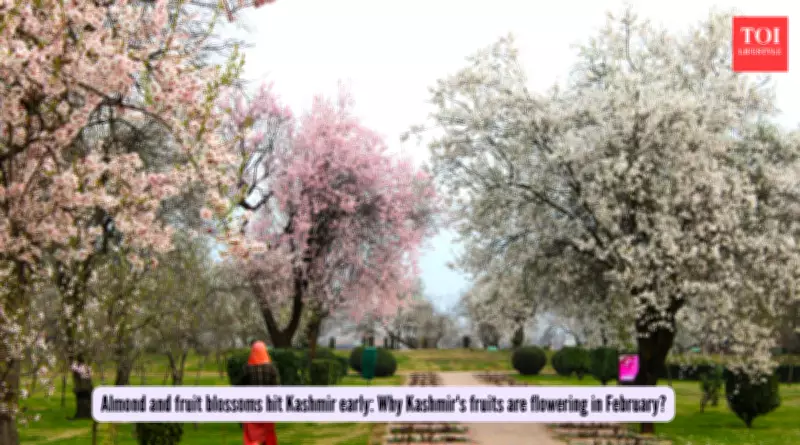
Kashmir's Almond Blossoms Bloom Weeks Early Amid Unseasonal Warm Winter
Imagine strolling through the picturesque orchards of Kashmir in late February, where almond blossoms typically await the gentle arrival of March to burst into bloom. This year, however, nature has taken an unexpected turn, with these delicate flowers painting the Valley in vivid shades of pink and white several weeks ahead of schedule, all amid a strangely warm winter season.
A Subtle Wake-Up Call from Nature
This premature blossoming serves as a subtle yet poignant wake-up call from nature, highlighting the broader impacts of rising global temperatures. Kashmir's horticultural identity is deeply intertwined with crops like apples, cherries, and saffron, which thrive in its lush landscapes. However, climate changes are now shaking the very foundations of this agricultural heartland.
As snowfall patterns shift unpredictably and rains become increasingly erratic, the ripple effects are touching every corner of the region's ecosystem. From vegetable patches to ornamental gardens, the signs of disruption are becoming impossible to ignore. In multiple districts across Kashmir, flowers are emerging weeks before the typical March timeline, leaving growers anxious and uncertain about the future.

Why Are Flowers and Fruits Blooming Unusually Early?
Higher February temperatures and significantly reduced rainfall have tricked plants into accelerating their growth cycles, bypassing the vital rest period they need during dormancy. Horticulture specialists warn that this rushed awakening shortens the essential dormancy phase for fruit trees and seasonal plants, which could severely harm yields and overall plant health.
Dr. Sameera Qayoom, an agrometeorologist at SKUAST-K, attributes this phenomenon to steadily climbing minimum and maximum temperatures in the Valley. "The temperature we usually record in March is being observed now. As a result, plants have accumulated the required heat earlier and entered the blooming stage ahead of time," she explained to Daily Excelsior.
The Science Behind Early Blooming
Dr. Qayoom outlines several key reasons for this early blooming. Plants rely on a specific accumulation of "heat units" to transition between growth stages. "Earlier, February temperatures were lower and plants remained dormant for longer. This year, temperatures are around 9 degrees above normal, which has led to early flowering," she detailed.
The combination of elevated heat and low precipitation is identified as the primary culprit. Dr. Qayoom recalls a similar event 22 years ago when February temperatures spiked to 25°C for a day, only cooling after subsequent rains. "At present, no significant rainfall is expected in the coming days. If temperatures remain high, early blooming may spread to more crops and plants," she added, emphasizing the potential for broader agricultural impacts.
Local Impacts on Plants and Communities
The effects of these temperature changes are visibly taking a toll on local flora. Fruit trees, vegetables, and decorative plants all show clear signs of stress and adaptation. Imtiyaz Ahmad, a resident of the Valley, shared his observations with Daily Excelsior: "Extreme heat affects everything—humans, plants, and even water. We are now seeing its impact earlier in the season. Fruit plants and trees are blooming sooner than usual."
Growers across the region are on edge, grappling with the uncertainty of how this premature blooming will affect harvests that not only feed families but also bolster the local economy. The anxiety is palpable as they wonder if this early flowering signals deeper trouble for Kashmir's horticultural future.
In summary, Kashmir's early almond and fruit blossoms are more than just a beautiful anomaly; they are a stark indicator of climate-induced shifts that threaten the region's agricultural stability and ecological balance.