Iran's Supreme Leader Issues Stark Warning to United States Amid Escalating Tensions
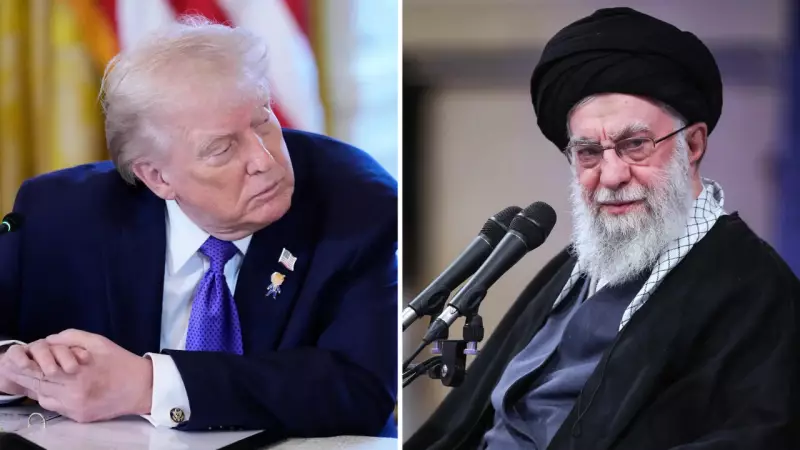
Iran's Supreme Leader Ayatollah Ali Khamenei delivered a forceful message to the United States late on Monday. He demanded that American politicians cease what he described as their "deceitful actions." Khamenei also urged them to stop relying on what he called "traitorous hirelings."
The Iranian leader made these remarks during a period of significant domestic unrest. He emphasized his awareness that "the enemy is always present on the scene." This statement reflects the heightened state of alert within Iran's leadership.
US Response: New Tariffs and Political Rhetoric
President Donald Trump has openly expressed support for the protesters demonstrating against Khamenei's regime. In a related move, the Trump administration announced a substantial new economic measure.

The United States will impose a twenty-five percent tariff on countries that maintain trade ties with Iran. This decision targets nations engaging in commerce with the Islamic Republic. Analysts widely view this tariff as a pressure tactic aimed at Tehran's handling of the ongoing protests.
US Senator Lindsey Graham offered a sharp and sarcastic reply to Khamenei's warning. He posted a message on the social media platform X, directly addressing the Iranian leader.
"To the Ayatollah: we don't talk as much as we used to. Have I offended you?" Graham wrote. He added, "As to your recent warning to American politicians, I hear Moscow is a winter wonderland. Beware of the drones. Make Iran Great Again."
Graham's reference to Moscow hints at unconfirmed reports. These reports suggest the eighty-six-year-old Khamenei might have an escape plan to seek refuge in Russia if the protests intensify further.
Scale of the Unrest and Government Response
The current wave of protests represents the largest since 2022. That earlier period was triggered by the death of Mahsa Amini, a twenty-two-year-old woman, in the custody of Iran's morality police. Those demonstrations rallied under the banner "Woman, Life, Freedom."
Today's protests have spread across all thirty-one provinces of Iran. They are fueled by soaring inflation, severe economic hardship, and growing public frustration with governance. In some regions, ethnic inequalities have also contributed to the demonstrations.
Protesters have been heard chanting "Death to Khamenei," a direct challenge to the supreme leader's authority. Khamenei holds ultimate power over Iran's religious and state institutions.
According to international rights groups, the ongoing unrest has resulted in more than six hundred fatalities. In response, the Iranian government has implemented an unprecedented communications shutdown. This action has largely isolated the country from the global internet during the deadly protests.
Military Posturing and Diplomatic Signals
President Trump has issued his own warning to Iran. He stated that the United States could launch attacks if Iranian security forces use excessive force against protesters. US officials have reportedly briefed Trump on a broad spectrum of military and covert options against Iran.
These options extend beyond conventional airstrikes. They include integrated military, cyber, and psychological operations, according to a CBS News report citing defense department officials.
Despite the rising tensions, Iran has signaled a willingness to engage in dialogue while maintaining a firm defensive posture. Iran's Foreign Minister, Abbas Araghchi, stated that Tehran is ready for discussions but remains "completely prepared" for war if necessary.
"We do not want war, but we are completely prepared for it, even more prepared than before the previous war," Araghchi said. He explained the rationale, noting, "The best way to prevent war is to be prepared for war, so that our enemies do not once again fall into miscalculation."
The exchange between Khamenei and US politicians highlights the sharply rising tensions between Washington and Tehran. US leaders continue to criticize Iran's handling of the nationwide anti-government protests. The situation remains volatile, with economic pressure, diplomatic warnings, and domestic unrest creating a complex international crisis.