The End of an Era: Ayatollah Khamenei's Death and Iran's Turbulent Journey
On January 16, 1979, the Shah of Iran fled the country, abandoning a collapsing monarchy and unleashing a revolutionary wave that would fundamentally reshape the Middle East. From this seismic upheaval emerged a new political order: the Islamic Republic, founded on the doctrine of clerical rule. Nearly half a century later, the very system born from that revolution has been violently shaken by another cataclysmic event—the death of the man who embodied and defined it for over three decades.
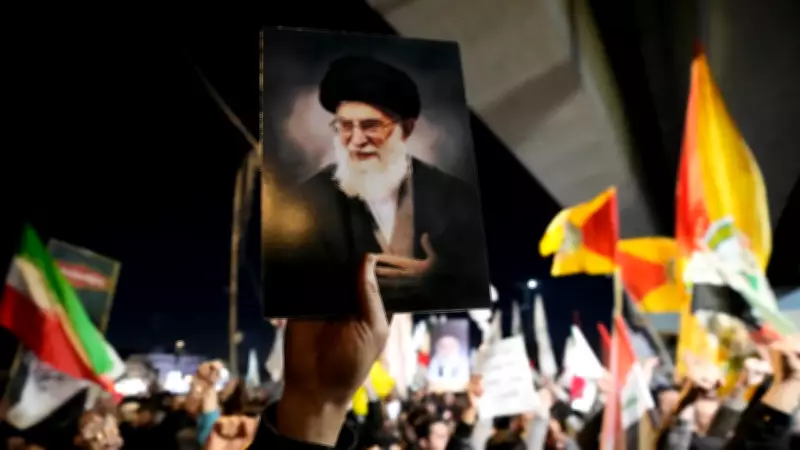
Ayatollah Ali Khamenei, Iran's second Supreme Leader, has died following extensive US and Israeli air strikes on Tehran, as confirmed by Iranian state media. His passing closes a chapter that began with the overthrow of a monarch and concludes with the violent unravelling of a revolutionary state. Born in resistance, the Islamic Republic was molded by perpetual struggle. Under Khamenei's iron-fisted leadership, it hardened into an uncompromising system that tolerated neither dissent nor deviation.
From Mashhad Seminarian to Supreme Authority
Born in 1939 in Mashhad into a clerical family, Khamenei's life was shaped by deep religious study and early political dissent. As a young cleric, he studied in Qom under the guidance of Ayatollah Khomeini and was arrested multiple times by the Shah's security services for his anti-regime activism. Following the 1979 revolution, his ascent was meteoric: he became the Friday prayer leader in Tehran and later served as president during the brutal Iran-Iraq war.

In 1981, Khamenei survived an assassination attempt that left his right arm paralyzed. This traumatic experience profoundly deepened his suspicion of both domestic rivals and foreign enemies. When Khomeini died in 1989, Khamenei—despite lacking his mentor's senior clerical rank—was unexpectedly elevated by the Assembly of Experts to the role of Supreme Leader.
Initially perceived as a weak figure, Khamenei moved with calculated precision to consolidate his authority. Constitutional amendments were enacted to strengthen the office of the Supreme Leader. Over time, he meticulously built extensive networks of loyalists across the judiciary, parliament, state media, and the clerical establishment, transforming himself from a compromise candidate into the system's undisputed and ultimate arbiter.
Building a Security State: Repression and Control
Central to Khamenei's consolidation of power was the Islamic Revolutionary Guard Corps (IRGC). He expanded this force into Iran's dominant military and economic institution, granting it oversight of the ballistic missile program and vast commercial interests. In return, the IRGC became his most reliable instrument of control and enforcement.
The Basij militia and intelligence services were repeatedly deployed to crush any signs of dissent. Student protests in 1999 were brutally suppressed. The 2009 "Green Movement," which erupted following a disputed presidential election, was met with mass arrests and violent force. Economic protests in 2017 and 2019 faced similar harsh fates.
The most profound domestic rupture occurred in 2022 after the death in custody of Mahsa Amini, a young woman detained for allegedly violating Iran's strict dress code. Demonstrations led by women and youth spread nationwide, resulting in hundreds killed and thousands arrested. Khamenei framed the unrest as foreign-instigated sedition and refused any concessions on compulsory hijab or political reform.
His final and bloodiest crackdown followed a catastrophic currency collapse that drove the rial to record lows. When protesters once again chanted "Death to the dictator," Khamenei declared that "rioters must be put in their place." Security forces opened fire, with activists reporting thousands killed—a stark show of force that revealed both the regime's resilience and its deep-seated fear.
Confrontation with the West and Regional Ambition
If brutal repression defined Khamenei's domestic rule, relentless confrontation marked his foreign policy. He consistently cast the United States as Iran's principal adversary, accusing it of seeking regime change. The 1979–81 US embassy hostage crisis, which Khamenei supported as a revolutionary leader, cemented decades of unyielding hostility.

Under his watch, Iran pursued an expansive and assertive regional strategy. Through a network of allies and proxies—from Hezbollah in Lebanon to Hamas in Gaza and the Houthis in Yemen—Tehran projected its influence while skillfully avoiding direct war. Khamenei viewed Israel as an illegitimate state and supported armed resistance as both an ideological duty and a strategic leverage tool.
Iran's nuclear program became the central flashpoint in its relations with the West. The 2015 Joint Comprehensive Plan of Action (JCPOA) offered sanctions relief in exchange for limits on uranium enrichment. Khamenei endorsed it cautiously, describing tactical compromise as "heroic flexibility." When the United States unilaterally withdrew from the deal in 2018 and reimposed crushing sanctions, Iran gradually breached the agreement's limits.
Years of stringent sanctions, economic mismanagement, and systemic corruption hollowed out Iran's economy. Inflation soared, oil revenues dwindled, and public anger deepened. Yet Khamenei refused to abandon missile development or regional alliances, viewing them as essential deterrents against external threats.
His final months were marked by escalating brinkmanship. As US forces massed in the region and Israel struck Iranian assets, Khamenei warned that any attack would trigger a wider war. Diplomatic negotiations flickered intermittently but ultimately faltered. Then came the decisive strikes that targeted key military sites—and his own compound.
An Uncertain and Perilous Future
Khamenei's sudden death leaves no publicly confirmed successor. Constitutionally, the Assembly of Experts must appoint a new Supreme Leader. Intense speculation has ranged from senior clerics to his son, Mojtaba Khamenei. The IRGC, now the country's most powerful institution, is poised to play a decisive role in any transition of power.
Iran now stands at a critical crossroads. The system Khamenei inherited from the revolution, he hardened into a security state sustained by rigid ideology, extensive patronage networks, and brute force. Yet beneath this formidable apparatus lies a society weary of decades of isolation, severe economic hardship, and relentless repression. The future of the Islamic Republic hangs in the balance as it confronts the daunting challenge of navigating a post-Khamenei world.