

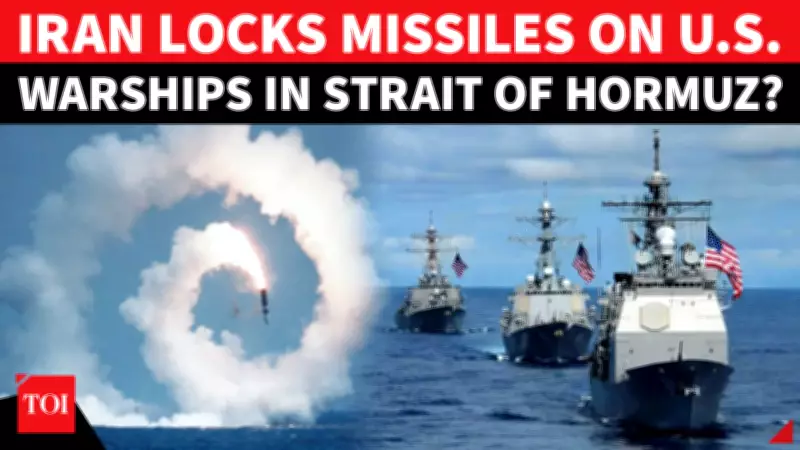
Iran's Revolutionary Guard Navy Issues Stern Warning to US Warships in Strategic Strait
In a significant escalation of tensions in the Middle East, Iran's Islamic Revolutionary Guard Corps (IRGC) Navy has delivered a stern warning to the United States, threatening a "decisive and forceful response" regarding military movements through the Strait of Hormuz. The IRGC asserts full and absolute control over this critical maritime passage and has categorically rejected any claims of authorized U.S. military passage through its waters.
US Confirms Warship Transit Amid Mine-Clearing Mission
This provocative warning comes directly in response to an official confirmation from the United States Central Command (CENTCOM). CENTCOM verified that two U.S. Navy destroyers, including the guided-missile destroyer USS Michael Murphy, successfully transited the narrow strait. The Pentagon stated this naval movement was part of a pre-planned and routine mission focused on clearing sea mines to ensure safe navigation for commercial vessels.
Timing Threatens Fragile Regional Ceasefire and Peace Talks
The timing of this military posturing is particularly delicate and risks further destabilization. This naval standoff coincides with ongoing and sensitive peace negotiations currently being hosted in Islamabad, Pakistan. Analysts fear that such public displays of military force could severely undermine the fragile ceasefire that has been holding in the region, potentially derailing diplomatic progress.

Global Economic Stakes Are Immensely High
The geopolitical and economic ramifications of any conflict in this area cannot be overstated. The Strait of Hormuz is arguably the world's most important oil transit chokepoint. An estimated nearly 20% of global oil shipments and a significant portion of liquefied natural gas (LNG) exports pass through this narrow waterway every day. Any military escalation that disrupts this traffic would trigger immediate and massive shocks to global energy markets, with severe consequences for the worldwide economy.
This incident underscores the persistent volatility in U.S.-Iran relations and highlights how quickly tactical military operations can intersect with—and potentially jeopardize—high-stakes diplomatic efforts. The international community is now watching closely to see if the rhetoric escalates further or if diplomacy in Islamabad can manage to contain this latest flashpoint.






