Kilauea Volcano Erupts Again: Massive Lava Fountains and Ashfall Disrupt Hawaii's Big Island
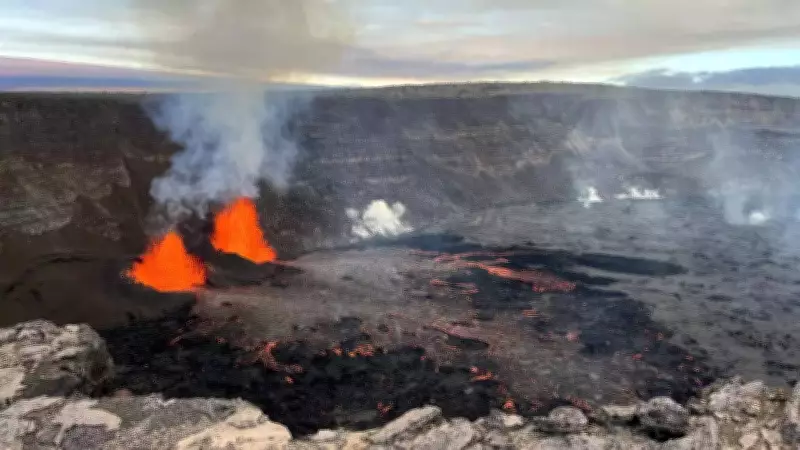
Nature has delivered another powerful reminder of its immense force this week on Hawaii's Big Island, where the Kilauea volcano erupted spectacularly, shooting massive fountains of lava high into the sky. The eruption created a dramatic and almost surreal spectacle, with glowing streams of molten rock reportedly reaching heights of nearly 1,000 feet above the summit crater.
The Eruption Unfolds
The latest volcanic activity began early Tuesday morning, marking the 43rd episode in the current eruptive cycle that started in December 2024. Monitoring cameras operated by scientists captured bright red lava bursting from vents inside Kilauea's summit crater. Two separate fountains rose into the air, sending glowing streams upward along with thick smoke and volcanic gases.
The height of these fountains reached approximately 300 meters, roughly equivalent to the height of many tall city buildings. For those watching livestreams online, the scene appeared almost cinematic, with bright red lava creating a stark contrast against the darker volcanic landscape.

Safety Concerns and Immediate Impacts
While the visual spectacle captivated observers, practical concerns quickly emerged as ash and glassy volcanic fragments began falling in nearby areas. This material, known scientifically as tephra, prompted officials to take immediate safety measures:
- Closure of parts of Hawaii Volcanoes National Park near the summit
- Partial closure of Highway 11, a major transportation route used by residents and visitors
- Opening of a temporary emergency shelter at a district gymnasium
Authorities explained that falling debris posed significant safety risks for drivers and pedestrians, particularly along affected roadways. While the shelter was opened as a precaution, officials reported that no one had utilized it shortly after opening, suggesting that nearby residents were remaining cautious but calm.
Health and Environmental Concerns
The volcanic ash presents multiple health and environmental challenges for Big Island communities:
- Respiratory issues: Volcanic ash can irritate eyes, skin, and respiratory systems, particularly affecting individuals with pre-existing breathing conditions
- Water contamination: Many homes rely on rainwater catchment systems that can become clogged or contaminated by volcanic debris
- Property damage: Previous eruptions have left sufficient ash accumulation on rooftops to require professional cleaning assistance
Affected Areas and Infrastructure
The eruption's impacts have been felt across multiple regions of the Big Island:
Areas experiencing heaviest ashfall:
- Hawaiʻi Volcanoes National Park summit area
- Volcano Golf Course community
- Kilauea Military Camp
- Uēkahuna overlook and nearby summit areas
Nearby communities with noticeable ashfall:
- Volcano Village
- Mauna Loa Estates
- Royal Hawaiian Estates
Areas with lighter ashfall:
- Mountain View
- Glenwood
- Hilo
- Hawaiian Paradise Park
- Hāmākua Coast north of Hilo
Important infrastructure affected includes Highway 11 between mile markers 24-40 and various trails and summit areas within Hawaii Volcanoes National Park.
Kilauea's Persistent Activity
Kilauea is widely recognized as one of the world's most active volcanoes, with numerous eruptions occurring over recent decades. Scientists from the United States Geological Survey continuously monitor the volcano using advanced technology including cameras, sensors, and satellite data to track seismic activity, gas emissions, and ground movement.
Despite sophisticated monitoring systems, predicting eruption duration remains challenging. Some volcanic episodes conclude within hours, while others persist for several days. Currently, experts cannot definitively determine how long the current lava fountains will continue.

The containment of molten rock within Kilauea's summit crater, located within the boundaries of Hawaii Volcanoes National Park, has prevented immediate threats to homes and buildings outside the park. This design allows for safer accommodation of volcanic activity, though residents remain vigilant during significant eruptions.
A Geological Perspective
For observers and scientists alike, this eruption serves as a powerful reminder of the dynamic forces that continuously shape our planet. While lava, ash, and shifting ground can appear destructive in the short term, these same volcanic processes have fundamentally created and continue to build the Hawaiian Islands themselves.
The current activity underscores both the challenges and awe-inspiring nature of living in volcanically active regions, where communities must balance normal life with respect for nature's immense power.