

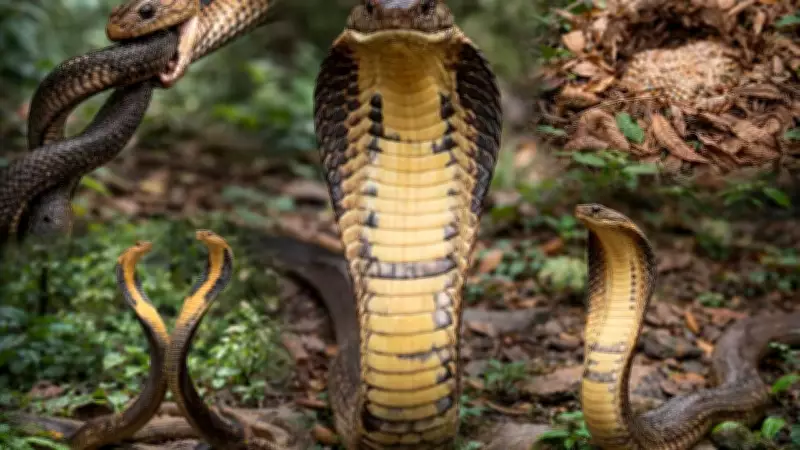
King Cobra: A Distinctive Predator in the Snake World
The king cobra stands out as one of the most distinctive snake species globally, not merely due to its impressive size but also because of its unique behavior and sophisticated survival mechanisms in natural habitats. Scientifically classified as Ophiophagus hannah, this snake differs significantly from others in terms of food habits, locomotion, and ecological niches. Unlike many snakes that rely on venom potency or camouflage for survival, the king cobra exhibits physical and behavioral traits of a specialized predator, finely adapted to its ecosystem.
Dietary Habits: A Snake-Eating Specialist
One of the most defining characteristics of the king cobra is its dietary preference. While most snake species prey on rodents or birds, the king cobra primarily feeds on other snakes, including both venomous and non-venomous varieties. This is not a random behavior but a strategic survival technique. Research published in the Reptiles & Amphibians Journal by the University of Kansas, titled "Observations on a Wild King Cobra (Ophiophagus hannah), with Emphasis on Foraging and Diet," documents that king cobras frequently consume various snake species, sometimes even individuals of their own kind. This dietary habit reduces competition with other predators, allowing the king cobra to carve a unique niche in its ecosystem.
Size Advantages and Physical Adaptations
The king cobra is the longest venomous snake in the world, capable of reaching over 5 meters in length. This substantial size provides a clear advantage when dealing with larger and potentially dangerous prey. Additionally, the king cobra can lift a significant portion of its body off the ground, which is useful for both defense and hunting. This ability allows it to better assess threats and strike compared to shorter snakes. During the breeding season, male king cobras engage in dominance fights by pushing and wrestling each other, rather than biting, showcasing another unique behavioral trait.

Venom Variation Across Geographical Regions
King cobra venom is not only potent but also highly adaptive. Studies indicate that the composition of this venom varies depending on geographical location and prey availability. According to research published in the Journal of Proteomics, there is a wide range of differences in king cobra venom, with these variations linked to the snake's diet. This suggests an evolutionary response to environmental factors over time, highlighting the species' adaptability.
Solitary Behavior and Wide-Ranging Movements
King cobras are predominantly solitary animals, preferring to avoid unnecessary interactions with others of their kind. This behavior is closely tied to their diet, as their primary food source—other snakes—may not be readily available in all areas. Consequently, king cobras are long-distance travelers while foraging, making them more active than many other snake species. This mobility enables them to survive in diverse environments, ranging from forests and grasslands to wetlands.
Unique Nesting Behavior Among Snakes
Another rare trait in the snake world is the king cobra's nesting behavior. It is the only snake known to construct a nest using leaves and other materials. The female king cobra guards this nest for weeks, protecting the eggs from predators. This parental care is uncommon in reptiles and sets the king cobra apart from other snake species, which typically do not guard their eggs at all.
Conclusion: A Combination of Unique Attributes
What makes the king cobra truly different is not a single attribute but the combination of several specialized traits. Its snake-based diet, large size, adaptable venom, and unique behaviors such as nesting and solitary foraging collectively distinguish it from other snakes. Scientific research supports these observations, illustrating how the king cobra has evolved its food habits and venom in response to environmental pressures. Rather than focusing on isolated definitions, it is appropriate to view the king cobra as a highly efficient predator that has adapted remarkably to its surroundings, relying on a suite of attributes rather than just one.






