KMDA Takes Action to Protect Rabindra Sarobar Islands
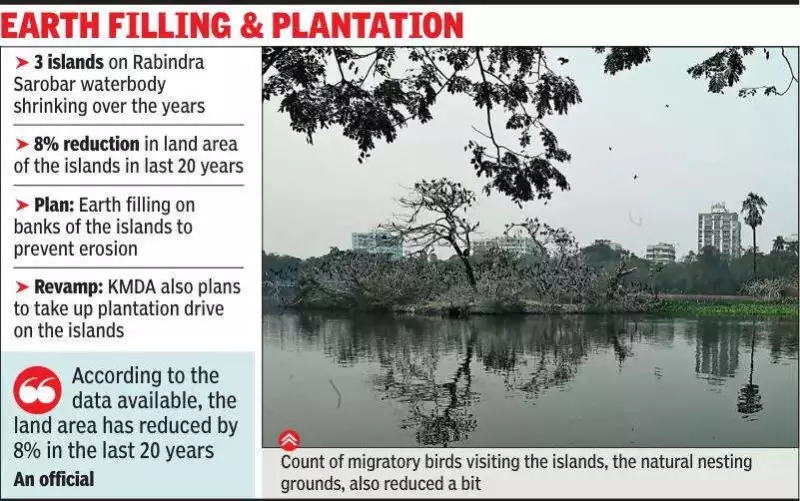
The Kolkata Metropolitan Development Authority has announced a significant initiative to save three large islands at Rabindra Sarobar. These islands have been facing serious erosion problems for many years. The authority plans to use earth filling and tree plantation to rejuvenate the area.
Addressing Land Loss and Tree Damage
Official data reveals a troubling trend. The land area of these islands has shrunk by 8% over the past two decades. An official explained the immediate plan. They will conduct earth filling along the banks to stop further erosion.
The islands have also suffered extensive tree loss. Natural disasters like Cyclone Amphan and subsequent storms have damaged many large trees. Bird droppings have caused additional harm. The organic composition of these droppings proves harmful to tree health. These combined factors have left the islands with very few big trees today.

Impact on Migratory Birds and Replanting Strategy
The decline in large trees has affected local wildlife. Officials note a reduction in migratory birds visiting these natural nesting grounds. To counter this, KMDA plans a careful replanting program.
The authority is consulting experts to identify tree species suitable for the island soil. They aim to plant trees that match the specific character of the land. This approach should help restore the natural habitat.
Broader Ecological Concerns at Rabindra Sarobar
Environmentalists have long warned about gradual ecological degradation at Rabindra Sarobar. A recent bathymetric survey confirms some concerns. The study shows high sediment accumulation on the lake bed in recent years.
The report indicates an average yearly siltation rate of 8.3 cm since 2022. The waterbody maintains an average depth of 3 to 4 meters, with some sections reaching about 5 meters.
Ongoing Efforts to Improve Water Quality
KMDA has been implementing various measures to enhance the Sarobar waterbody. Following expert recommendations, they released grass carp fish last year. These fish help control overgrown submerged aquatic plants and weeds that are hard to remove manually.
The authority also sprayed quicklime on the waterbody. This action aimed to neutralize toxic elements after frequent fish death events. An official described these efforts as part of a continuous process to preserve the lake's water quality and biodiversity.