Kolkata's Concrete Crisis: Nor'westers Uproot 40+ Trees, Exposing Urban Planning Failures
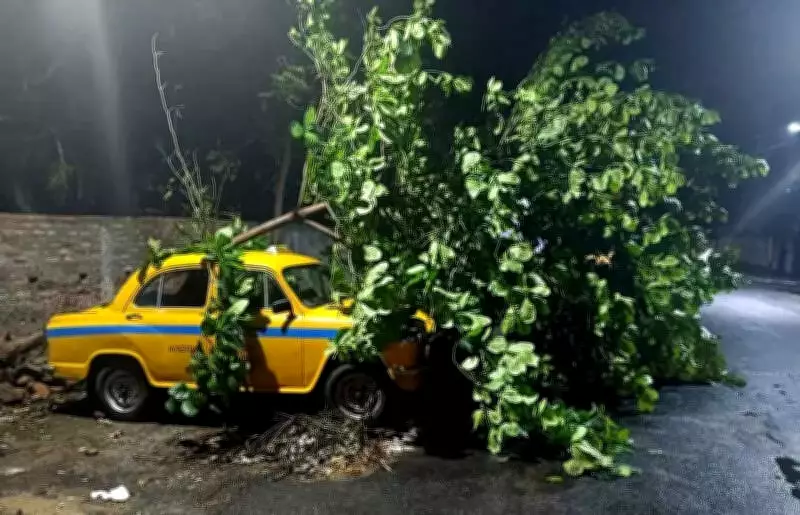
Two back-to-back nor'westers that struck Kolkata on Sunday and Monday have uprooted over 40 full-grown trees, with nearly all casualties concentrated in the southern parts of the city. This devastating event serves as a stark reminder of the perils associated with rampant concretisation and the alarming depletion of the water table in South Kolkata.
Widespread Damage Across Southern Neighborhoods
According to an official from the Kolkata Municipal Corporation's parks department, the areas most severely affected include Alipore, New Alipore, Behala, Tollygunge, Jadavpur, Lake Road, and Southern Avenue. These localities witnessed significant loss of greenery as the majority of the uprooted trees were removed from these zones.
"We observed that the roots of several collapsed trees had been critically weakened due to the concretisation surrounding them," stated a civic official. "Special care must be taken for such vulnerable trees to prevent further environmental degradation." The KMC has announced plans to deploy additional manpower across boroughs in anticipation of more squalls in the coming weeks.
Environmental Activists Sound the Alarm
Speaking to media, prominent environment activist Bonani Kakkar highlighted how improper paving of footpaths, which leaves no breathing space for tree trunks, effectively starves roots of essential water and nutrients, rendering trees highly susceptible to damage.
"This relentless concretisation spree over the past fifteen years has resulted in trees being uprooted every monsoon season," Kakkar explained. "During paving projects, even roots that emerge above ground are callously chopped off. This constitutes a slow murder of trees that require 35 to 40 years to reach maturity."
Kakkar also emphasized the urgent need for selecting appropriate tree species for avenue plantations. "Species like gulmohar are particularly prone to damage. We must strive for a balanced mix of resilient trees that provide seasonal colors, offer ample shade, and even bear fruit," she advised.
Expert Insights on Tree Management and Urban Ecology
Naturalist Arjan Basu Roy pointed to another critical issue: lopsided pruning of tree crowns that disrupts their natural balance, making them prone to toppling during storms like nor'westers.
"When pruning is conducted unevenly, focusing on one side alone, it shifts the tree's center of gravity," Basu Roy elaborated. "This imbalance significantly increases the risk of toppling during severe weather events."
Basu Roy further stressed the imperative for civic authorities to replace spaces left vacant by fallen trees with new saplings, rather than allowing encroachments by hawkers, sculptures, or places of worship. "We must protect these spaces and rejuvenate them with greenery to sustain urban ecology," he asserted.
The Broader Implications for Urban Sustainability
The consecutive nor'westers have not only caused immediate physical damage but have also exposed deeper systemic failures in Kolkata's urban planning. The combination of:
- Excessive concretisation choking tree roots
- Depleting groundwater tables reducing soil stability
- Inappropriate tree species selection for urban environments
- Poor maintenance practices including unbalanced pruning
These factors collectively create a perfect storm for environmental vulnerability. As climate patterns become increasingly unpredictable, such incidents underscore the urgent need for comprehensive urban greening policies, sustainable development practices, and proactive tree conservation measures.
The loss of over 40 mature trees represents not just an aesthetic or environmental setback, but a warning sign about the long-term sustainability of urban ecosystems under current development paradigms.