Kolkata's battle against toxic air has hit a worrying roadblock. Recent data reveals that the city's progress in improving air quality has significantly slowed, leaving it stuck at dangerously high pollution levels despite a national clean air mission.
Stagnant Numbers Tell a Troubling Tale
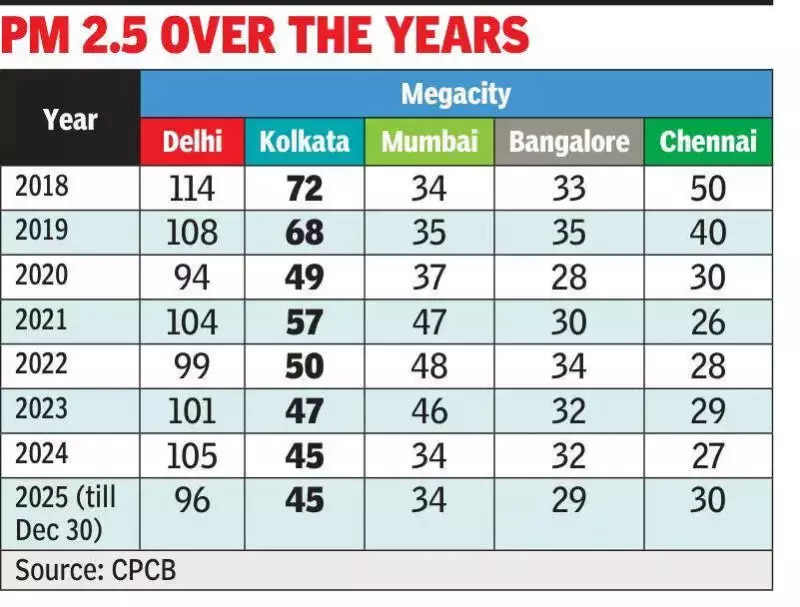
A fresh 2025 analysis by the Centre for Research on Energy and Clean Air (CREA) paints a concerning picture for the Eastern metropolis. The study, which relies on official Continuous Ambient Air Quality Monitoring data from the Central Pollution Control Board (CPCB), shows that Kolkata's annual average PM2.5 concentration in 2025 remained around 45 micrograms per cubic meter (µg/m³). This figure is almost unchanged from the 2024 levels, indicating a stark stagnation.
This plateau mirrors the situation in Mumbai, while Delhi continues to record far worse pollution. Southern cities like Bengaluru and Chennai maintain relatively cleaner air, though their levels also exceed World Health Organization guidelines. Kolkata's experience highlights a broader national challenge: early gains from clean air programs are not being sustained over the long term.

The Moving Goalposts of the Clean Air Programme
Kolkata's journey under India's National Clean Air Programme (NCAP) began in 2019 with a clear, if ambitious, goal. The initial target required the city to reduce PM2.5 pollution by 20% to 30% by 2024, using 2017 as the baseline. Early trends were promising. Helped in part by pandemic-era lockdowns, the city's annual PM2.5 average plummeted from over 70 µg/m³ in 2018 to about 49 µg/m³ in 2020.
However, in 2022, the central government revised the NCAP targets upwards, now demanding a 40% reduction in particulate pollution by 2026. For Kolkata, this meant a dramatic escalation of its task. Experts note that by early 2025, the city had achieved only an approximate 21.5% reduction, with averages falling from about 57.1 µg/m³ in 2019 to the current 45 µg/m³.
Geographical Disadvantage and Unfair Targets?
This slowdown has sparked a debate on the fairness of uniform national targets. Kalyan Rudra, Chairman of the West Bengal Pollution Control Board (WBPCB), has called the NCAP's one-size-fits-all approach "fundamentally unfair." He argues that Kolkata's unique position as a "recipient city" in the Indo-Gangetic Plain is not adequately considered.
"How can the same reduction target apply to both a donor city and a recipient city?" Rudra questioned. He explained that prevailing wind patterns carry pollution from the north-west towards the east, meaning Kolkata lies downstream of transboundary pollutants. "Expecting the city to meet the same targets as other cities in the IGP ignores this reality," he stated.
Key Pollution Sources and the Path Ahead
Beyond transported pollution, local sources continue to choke the city. Experts consistently flag several major contributors:
- Biomass and solid-waste burning
- Dust from rampant construction and road resuspension
- Emissions from nearby industrial clusters
The CREA assessment serves as a stark warning. Without stronger, coordinated action that addresses both local emissions and regional pollution flow, Kolkata risks remaining trapped on a dangerous pollution plateau, failing to secure cleaner, healthier air for its millions of residents. The city's struggle underscores the complex challenge facing India's megacities as they strive to turn policy promises into palpable, lasting change.