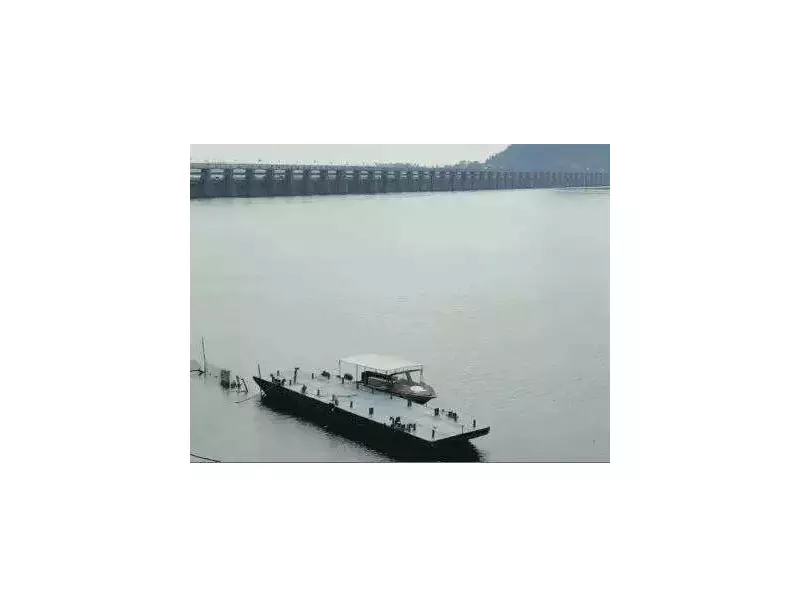
Krishna River Water Turns Blue-Green in Andhra-Telangana Border Stretch
Residents living along the banks of the Krishna river in Palnadu district have raised serious concerns after witnessing a dramatic change in the river's appearance and odor over the past two months. The water has reportedly transformed into a blue-green hue across an extensive 20-kilometer stretch, extending from Pondugala in Dachepalli mandal to Machavaram mandal, creating alarm among communities who depend on this vital water source for their daily needs.
Villagers' Fears Versus Official Findings
The sudden discoloration and foul smell emanating from the river have sparked fears of potential chemical contamination among local villagers. Many families rely on the Krishna river for drinking water, agricultural activities, and household purposes, making this development particularly distressing for their livelihoods and health.
However, the Andhra Pradesh Pollution Control Board (APPCB) has presented contrasting findings from their investigation. Md Nazeena Begum, executive engineer at APPCB, revealed to media that water samples collected from the affected areas underwent thorough analysis at an accredited laboratory last month. According to her statement, no chemical contamination was detected in the tested samples.

Detailed Analysis of Water Samples
The pollution control board conducted comprehensive testing at their zonal laboratory in Vijayawada, examining three crucial samples:
- Samples collected near the pump house showed parameters within permissible limits
- River stream samples similarly demonstrated compliance with safety standards
- One sample from Tangeda Pushkar Ghat displayed minor deviations, though officials described these as marginal and not significant
Nazeena further explained that the biochemical oxygen demand (BOD) report, which provides additional insight into water quality, is expected to be finalized within the coming days. This comprehensive testing approach reflects the board's commitment to thorough environmental monitoring.
Scientific Explanation for the Phenomenon
According to APPCB officials and environmental scientists, the observed changes likely stem from natural biological processes rather than industrial pollution. The slight variation detected at one location has been attributed to excess algal growth, a phenomenon that can occur under specific environmental conditions.
A senior environmental scientist from the zonal laboratory elaborated that several factors could contribute to such visual and olfactory changes:
- Proliferation of water hyacinth in certain river sections
- Accumulation and stagnation of green particles at the riverbed
- Natural algal blooms influenced by seasonal and environmental factors
Upstream Influences and Broader Context
The investigation has revealed additional insights about potential contributing factors. Analysis of samples collected near Tangeda village indicates possible contamination from domestic sewage entering the river system upstream. Particular attention has been drawn to the confluence area near Vadapalli village, where the Musi river merges with the Krishna river.
Nazeena observed that this upstream influence has contributed to algal bloom development downstream near Dachepalli. She emphasized that testing revealed no abnormal concentrations of chemical oxygen demand (COD) or other concerning parameters, with the primary deviation being organic matter originating from algae.
Official Reassurance and Continued Monitoring
In response to growing public concern, APPCB officials have sought to provide reassurance about water safety. Nazeena stated clearly that there is no immediate cause for panic, as all tested parameters remain within permissible limits established for drinking water and other uses.
The executive engineer affirmed that the water continues to be safe for consumption and daily activities based on current test results. However, recognizing the importance of ongoing vigilance, she announced that fresh samples will be collected for additional assessment to ensure continued safety and monitor any potential changes in water quality.

Cross-Border Coordination and Public Response
Given that the affected river stretch spans both Andhra Pradesh and Telangana, the APPCB has proactively alerted the Telangana State Pollution Control Board to conduct parallel testing as a precautionary measure. This inter-state coordination reflects the shared responsibility for managing transboundary water resources.
Despite official reassurances, villagers along both banks of the Krishna river remain understandably anxious. Many report visible sediments on river sand and express desire for greater transparency in the investigation process. Local communities continue to monitor the situation closely, balancing their dependence on the river with concerns about potential health implications.
Future Measures and Environmental Stewardship
Officials have committed to maintaining continuous monitoring of the Krishna river's water quality in the affected regions. Should future testing reveal any deterioration in water parameters, appropriate corrective measures will be implemented promptly to address environmental concerns and protect public health.
This incident highlights the complex interplay between natural environmental processes, human activities, and water resource management in river systems that serve multiple communities across state boundaries.